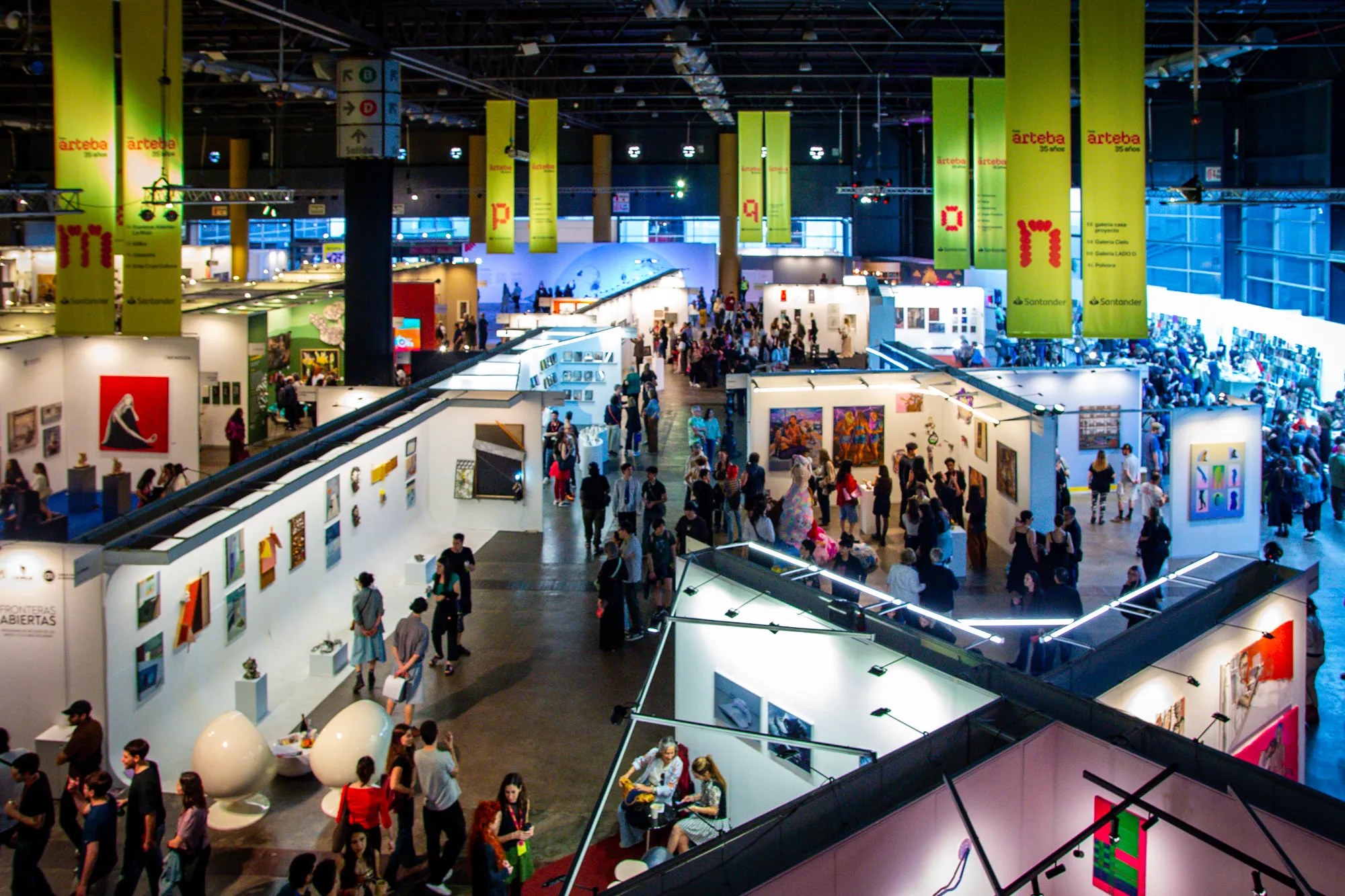
Initial reports listed more than 35 works acquired by some 14 regional institutions. The next day, the show reported more acquisitions by the MCA Chicago, the Guggenheim Museum, and other international museums. But the early success belies Arteba’s recent struggles, its structural changes and its hasty rescheduling to avoid a visit by Pope Leo, which took place on its original date.
arteba is unusual in that it is produced by a non-profit foundation that does not include gallerists among its founding members. Rather, it is an idea proposed by a group of art collectors who wanted to “promote the production, dissemination and development of visual art in Argentina and Latin America, with the main goal of ensuring that artists are able to make a living from their work”.
The fair was launched in 1991; by 2015, it had grown into an international powerhouse with nearly 100 galleries from 18 countries, with an even split of international and regional exhibitors. However, over the next five years, a combination of external pressures (including high inflation) and internal debates (around the desire to improve the quality of the work on display) led to a continued contraction of the fair and its eventual cancellation in 2020 due to the coronavirus pandemic.
Then everything changed. Cancellations, blockades and infighting led to what was essentially a coup—producing a new board of directors, a new management team and, perhaps most importantly, a new executive director, Lucrecia Palacios, who helped return arteba to its roots.
The 2026 show will be smaller in size and staff, and its curatorial focus will be tighter. At the same time, through its revamped Utopia section, it provides more space for different voices: new galleries, emerging artists and the LGBTQ+ community. This diversity is reflected in a variety of historical and contemporary works, including geometric abstract, figurative and surrealist paintings near the entrance. Some material-driven works, like Chris Soule’s bottle cap wall sculpture rapids
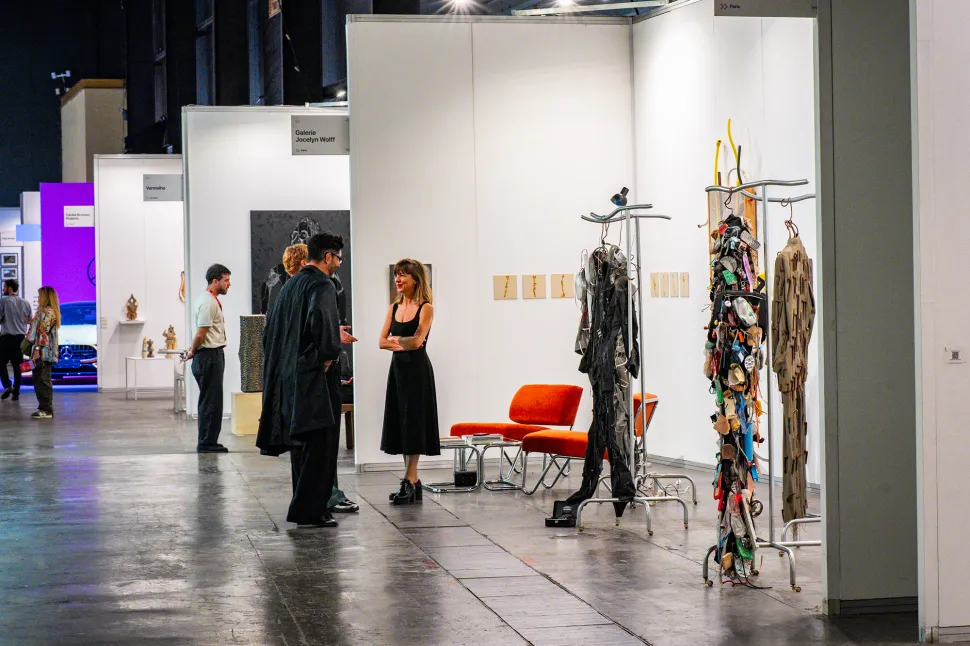
Despite being hailed as a South African artist, Ateba feels more regional than international. In fact, several of the participating galleries from Lisbon, London and São Paulo appear to have been relegated to the corridor along the rear facade, leaving the center to the main galleries of Buenos Aires and Córdoba. Titled “Zona de Diálogo Internacional” and partly sponsored by Mercedes, the gallery showcases the work of Argentinian artists currently living abroad, with the aim of reintroducing these artists and their works to collectors in Buenos Aires.
It is worth noting that regional focus does not equate to “security.” In terms of variety and content, arteba is more adventurous than ArtBO or Pinta Lima, and some of the works, especially sculptures, might even be considered “avant-garde.” The layout of the approximately 65 other participating galleries at the fair was unconventional and somewhat chaotic, but at La Rural it created more interesting sight lines and circulation.
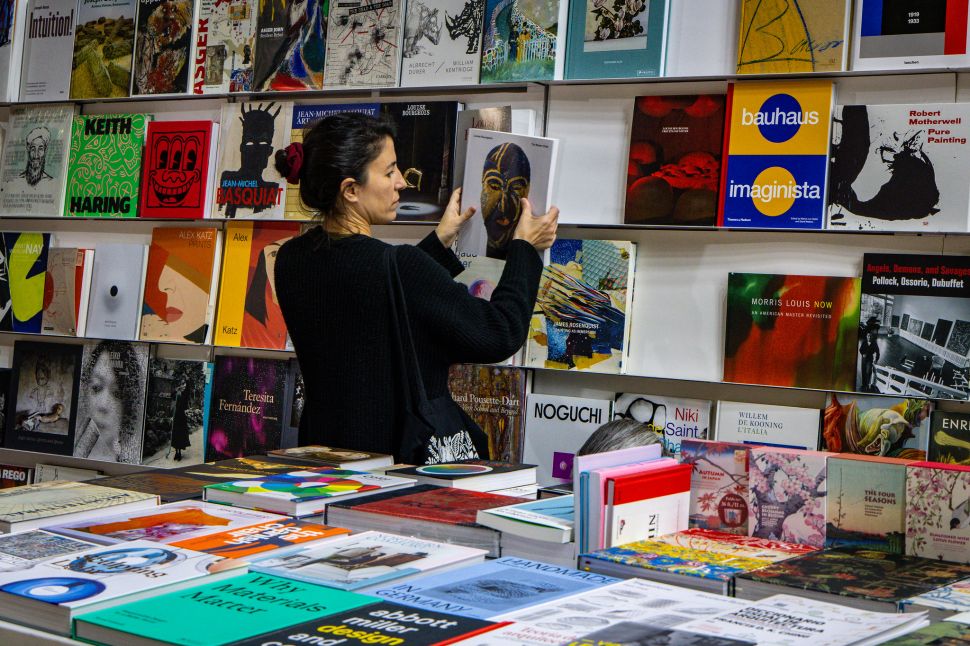
A special installation covers the facade of a sizable VIP area in memory of Argentinian blue-chip kinetic artist Julio Le Parc, who died in May 2026. Le Parc’s kinetic and op art also featured prominently on MC Galería’s stand. Another notable use of the property is the large area dedicated to books, called Isla de Ediciones. For context, Buenos Aires has more bookstores per capita than any other city in the world. It is also home to El Ateneo Grand Splendid Bookstore, one of the oldest continuously operating bookstores and often voted “the most beautiful bookstore in the world”.
The Observer visited arteba 2026 several times and noticed that the booths were re-hanged every time they visited, some of which were of great significance. As mentioned above, a number of institutions have made major acquisitions with the support of the fair’s acquisitions program, which aims to “increase the global visibility of Argentinian contemporary art, enhance the value of the work of the country’s artists and contribute to the museum’s institutional legacy.” Part of the funding came from global insurance giant Zurich and Argentina’s investment and international trade promotion agency PromArgentina.
Private collectors also stepped up in the early hours, according to gallery reps. Roldan Moderno sold A brief history of Emma (1935-1937), a set of 34 single prints by Lino Enea Spilimbergo, visible from the entrance, was sold by a private collector for $900,000. Julio César Crivelli, lawyer, renowned collector and president of the Friends of the National Gallery, acquired an important painting by Antonio Berni, A group of women with doves
Sales continue throughout the fair to institutions and private collectors at a variety of price points. As of the close of the transaction, arteba reports that 16 regional museums and 10 international museums and foundations have acquired 55 items for their permanent collections. Rafael Beltrán of Piedras Galería reports on the sale of a work by Josefina Labourt Splendid stitching government (2019) Travel to Madrid’s Reina Sofia National Park. Herlitzka & Co. reports the sale of three works to private collectors: an important work by Marta Minujín, Hormuz Canal (2026), for over $100,000; Anita Payró’s untitled work from 1965, which sold for $20,000; and one of Francisca Rojas’ Quipu works, Because in certain lights, in these abandoned lands, there is nothing to forget but the idea of memory itself (2026), priced at $5,000.
Elsewhere in the main section, BARRO presents Matías Duville’s pink ash (2024) with the National Gallery for an undisclosed sum. 3+1 Arte Contemporânea sold a wood and steel sculpture by foreign artist Claire de Santa Coloma for $9,000, and Via Margutta Arte Contemporáneo sold several Op Art works by Eduardo Mac Entyre for $6,500-7,000 each.
Despite these successes, some gallerists say last-minute date changes have stifled sales. Dealer Tomás Redrado even told El Observer that he considered this year’s show “a failure.” Mora Bacal of Ruth Benzacar Galería de Arte describes a particularly unfortunate turn: A collector group from MALBA (Museum of Latin American Art in Buenos Aires), which had planned to attend the show on its original date, was instead in Venice this week for the final weeks of the Biennale.
At Utopia, Pionera Galería’s Evelina Lera agreed with Redrado, calling this year’s sale “more difficult” than in previous years and admitting that it was a riskier choice for the gallery to show two Argentine expats this year, but that the change of dates was “very important… super stressful”.
However, just down the aisle, Satélite Galería reported a good arteba experience, selling concrete sculptures and wall decorations by expat artist Juan Guggers to individuals and institutions for $2,000-$8,000.
Dealers, artists and even collectors benefit from the show in ways other than commercial. The arteba Foundation and its sponsors awarded financial and honorary awards in several categories: the “Premio En Obra” (Best Work) awarded $21,000 to five winners, including Guggers; the Premio Jazmín Chebar worth $2,000 was awarded to the artist Daiana Rose for the Calvaresi Moria Galmio Jazmín Chebar. and the $800 Best of Show Award; the Honorary Premio al Coleccionismo (Collector’s Award) was awarded to Patricia Pearson and Juan Vergez.
Despite numerous macroeconomic, geopolitical and internal challenges, most dealers we spoke to believe that this edition of Arteba is the “right size” and consistent with its original mission. However, taking into account dealer concerns about timing, arteba organizers ultimately moved the next show forward to September 8-12, 2027.