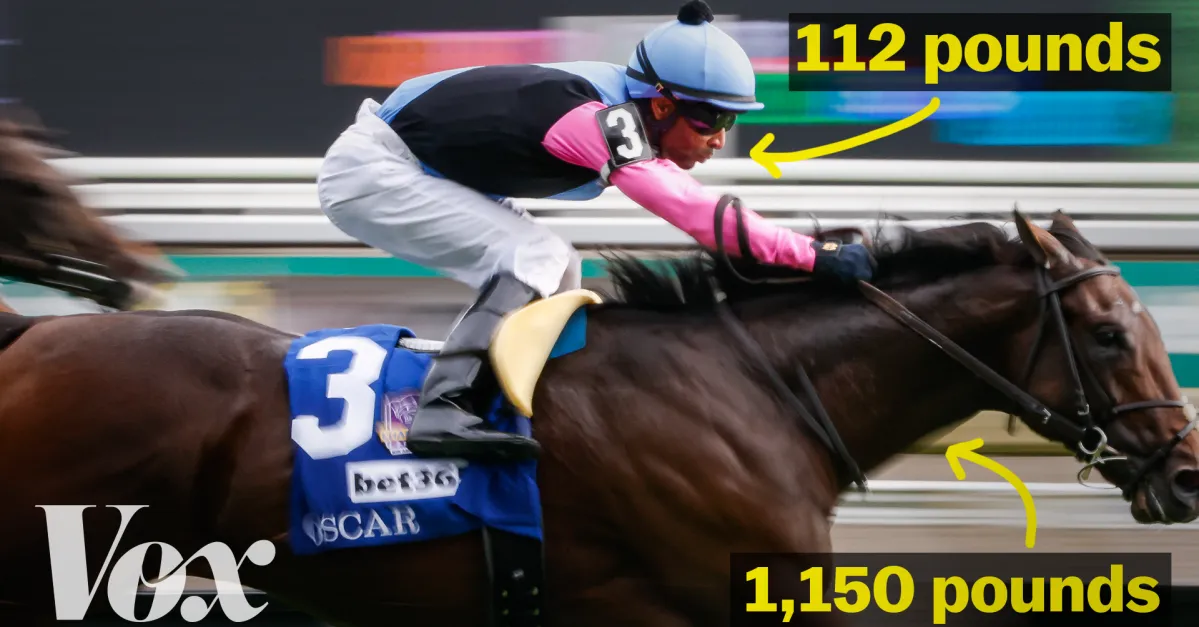
Horse racing is an incredibly dangerous profession for both rider and horse: riding a half-ton animal at nearly 40 miles an hour means your fate depends on the health and performance of both athletes. If a jockey is not physically fit enough to maintain correct technique and lightning-fast reflexes, the horse may be at risk of catastrophic injury.
But new wearable technology and advances in sports medicine are enabling everyone involved in horse racing to identify risks earlier and prevent injuries to horses and jockeys.
To get to know these two athletes better, I went to Belmont Park to watch competitive horses in action and talk with equine veterinarian Dr. Sara Langsham, chair of the American Association of Equine Practitioners’ Horse Racing Committee. To find out what’s happening on the jockey side, I spoke with Michaela Keener, a jockey health researcher at the University of Kentucky, and ReyLu Gutiérrez, a jockey with more than 6,000 starts.
Learn more about horse racing safety and health:
The video was produced by Colgate. Colgate has no say in our editorial decisions, but they make films like this possible.