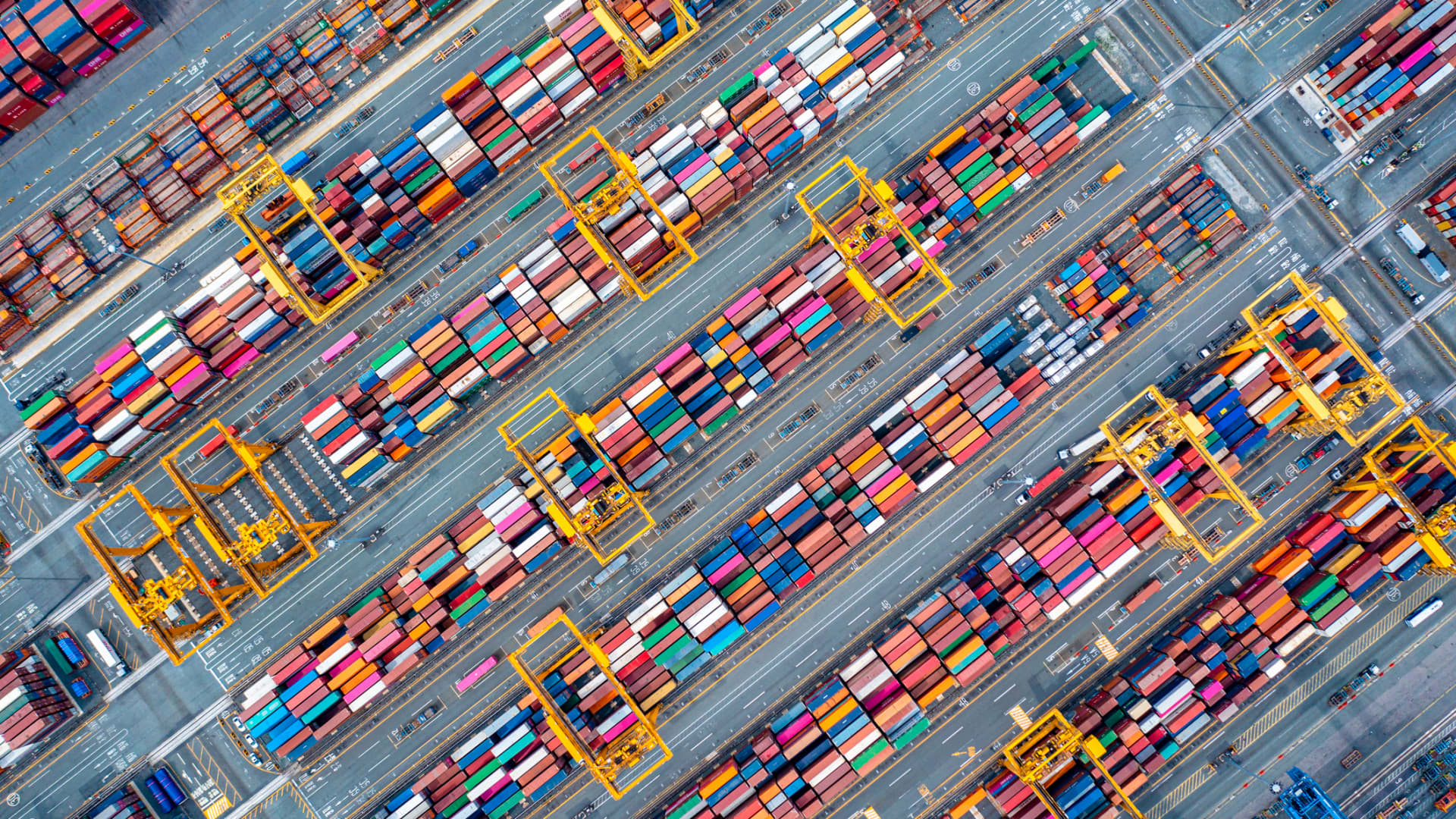
South Korea has found more efforts to disguise foreign products as Korean exports, especially from China, to avoid tariffs that have been imposed by US President Donald Trump, the customs agency said on Friday.
Insung Jeon moment | Getty Images
The World Bank has raised its growth forecast for the East Asia and Pacific region on the back of artificial intelligence-related exports, while warning that reliance on the AI boom leaves it vulnerable to a reversal of global technology payments.
The region includes 23 economies, including China, Vietnam, Indonesia, Malaysia and Thailand.
The EAP economy is expected to expand 4.5% this year, 0.3 percentage points more than the bank projected in April, according to the latest report released on Tuesday. Growth is forecast to slow to 4.4% in 2027 and 4.3% in 2028. Vietnam received the largest forecast upgrade among the region’s major economies, rising 1.1 percentage points to 7.4%.
However, the region’s strength relies heavily on AI-related manufacturing and exports. Trade growth, excluding AI-related items, has been “weak or negative,” the bank said. These products account for more than half of export growth in most of the region’s economies and more than 70% in Malaysia, the Philippines, Thailand and Vietnam.
China, Indonesia, Malaysia, the Philippines, Thailand and Vietnam shipped $1.4 trillion in AI-related goods in the 12 months to April, according to the report.
Official data showed that South Korea’s exports rose 83.5% in September to a record $120.9 billion, with chips making up half of those shipments. Reflecting the dominance of semiconductors in the country’s market, the World Bank highlighted that only two chipmakers – Samsung and SK Hynix – accounted for 43% of the value of the benchmark Kospi index at the end of April.
The risk of AI is on the spending side. AI-related capital spending has reached about 6% of US GDP, similar to the peak of information technology investment in 2000, and the current cycle “has grown faster than previous cycles and is still gaining speed,” the bank said.
The Bank for International Settlements in its annual economic report in June has warned that the scale and speed of the boom will resemble the dot-com frenzy of the 1990s and other “manias”.
The financing driving the boom is also lacking in transparency. Of the $2.9 trillion in AI capex planned for 2025-2028, $800 billion is expected to come from private lending, the bank said, where AI-related lending will increase to 34% of activity in 2025 from an average of 18% over the past five years. The personal loan portfolio has experienced markdowns, outflows and defaults this year.
The private credit market is “less visible, and has not been tested by severe downturns,” the bank said.
That said, the AI boom fueled by ample liquidity could be prolonged by tight financial conditions as major central banks raise rates for the first time since 2023, according to the report. The US Federal Reserve raised rates last month, the first hike in more than three years, and is on track for one more hike this year.
The correction may not mean a bust for the AI supercycle, but the investment “has run ahead of expectations,” the organization said.
A slowdown by 1 percentage point in US growth cuts the growth of other emerging markets by approximately 0.6 percentage points, with a hit to investment about twice as large, the bank said. “A concentrated slowdown in AI will be material for East Asia because of the importance of the region in the supply chain of AI.”
Bank financing is the broadest exposure. Banks’ liabilities in foreign currency are significant in some countries – 29.2% of GDP in Malaysia, 20.7% in the Philippines.
Taiwan’s statistics bureau recently raised its 2026 growth forecast to 11% from 9.6% in AI demand, while warning in June that “if the high-tech sector faces headwinds, the negative impact on the local economy could be greater than expected.”