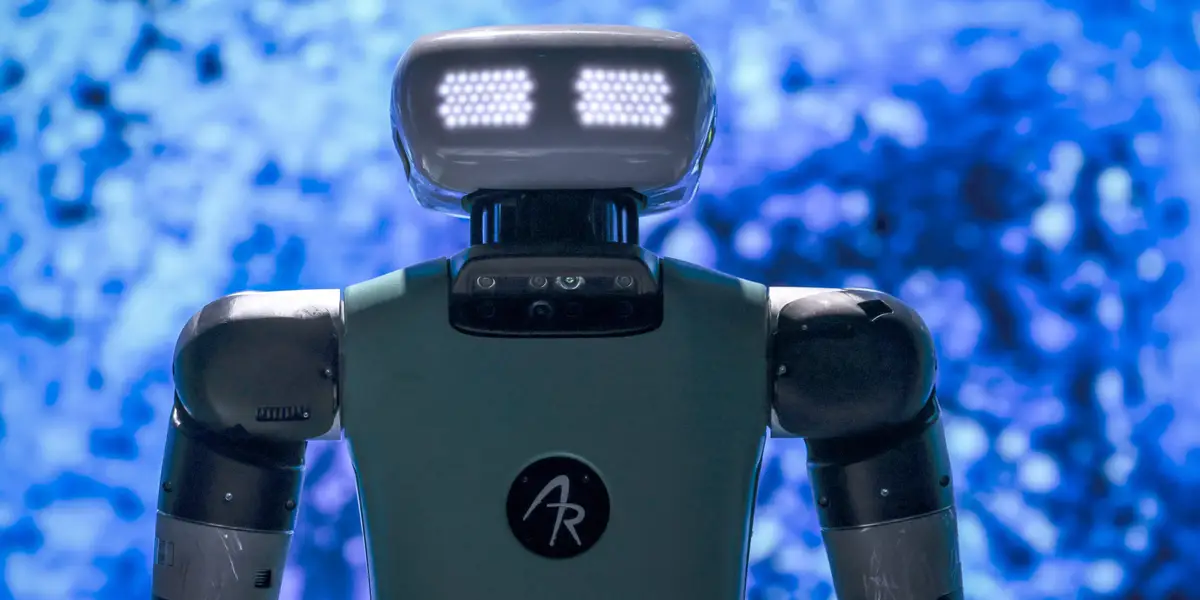
Agility Robotics is about to give Wall Street a reality check on the humanoid robot craze.
The Oregon startup, whose bipedal robots move heavy materials and sort goods in factories and warehouses, is expected to begin trading on Nasdaq on Thursday, becoming the first humanoid robot company to go public in the United States. Its financial revelations show that the industry still has a long way to go before robotics becomes a profitable business.
Agility had revenue of just $1.8 million last year but had a net loss of $138.1 million, according to merger filings. More than half of its revenue comes from five robots purchased by one of its investors.
Agility will go public through a merger with Churchill Capital Corp XI, a special purpose acquisition company (SPAC) led by former Citigroup executive Michael Klein, which completed Wednesday. The combined company is expected to begin trading under the AGLT symbol at the open of trading on Thursday.
The merger values Agility’s existing equity at approximately $2.5 billion. The company expects total capital before fees to be approximately $465 million, of which $100 million has been received.
SPAC mergers boomed in 2020 and 2021, only to collapse in 2022 as interest rates rise. They have seen renewed interest as the IPO market recovers. Johnson said Agility chose to bring in Klein, a prolific SPAC sponsor known for helping take Sam Altman-backed nuclear power company Oklo and electric car maker Lucid public.
Agile Robotics CEO Peggy Johnson Krisztian Bocsi/Bloomberg via Getty Images
Agility has deployed its humanoid robot Digit in nine customer facilities, including those of Amazon, Toyota and logistics company GXO. Its investors include Amazon, Foxconn, Nvidia, SoftBank and Silicon Valley venture capital firm DCVC.
The loss of agility isn’t just on paper. While about $38 million of the company’s $138.1 million net loss came from non-cash charges related to employee stock awards, the company used $99.8 million in cash to operate the business in 2025, the filing showed. Even before research and other company expenses, Agility’s sales losses amounted to $2.7 million.
Agility is betting on its newest robot, Digit 5, to grow its business. Digit 5 is designed to work safely near people without the safety barriers required by earlier versions.
The company’s filings say its single customer order for 1,000 robots is worth more than $300 million. The customer will pay to use the robot for three years. But those orders depend on Agility’s ability to meet deadlines and deliver the robots with promised capabilities.
Agility targets delivery in the first half of 2027 and general availability by the end of the year.
The company’s public debut highlights the deep divide among investors over the valuation of humanoid robot companies.
Agility’s $2.5 billion valuation is far lower than some privately held humanoid rivals, including Bay Area-based Figure AI at about $39 billion, Texas-based Apptronik at about $5.5 billion and Germany’s Neura Robotics at about $7 billion. Tesla is also developing its own humanoid robot, Optimus, but there is no independent valuation for the project.
Agility’s public debut comes as Washington tightens restrictions on foreign-made robots, potentially giving U.S. manufacturers an advantage. In July, the U.S. Federal Communications Commission banned the import of new foreign-made “advanced robotic equipment,” including humanoid robots, four-legged robots and some robot vacuum cleaners. Agility manufactures Digit at its Oregon facility.
The humanoid robot market is currently dominated by Chinese companies such as Unitree, which listed on the Shanghai Stock Exchange this summer and has a market capitalization of about $40 billion. Omdia data shows that Chinese robotics companies accounted for about 90% of humanoid robot shipments last year.
“It’s a good thing that the United States is showing strength in this area,” Johnson told Business Insider.
Any tips? Contact Rya Jetha via email rjetha@businessinsider.com Or the signal at rjetha.07. Using a personal email address and non-work device; Here is our guide Share information securely.