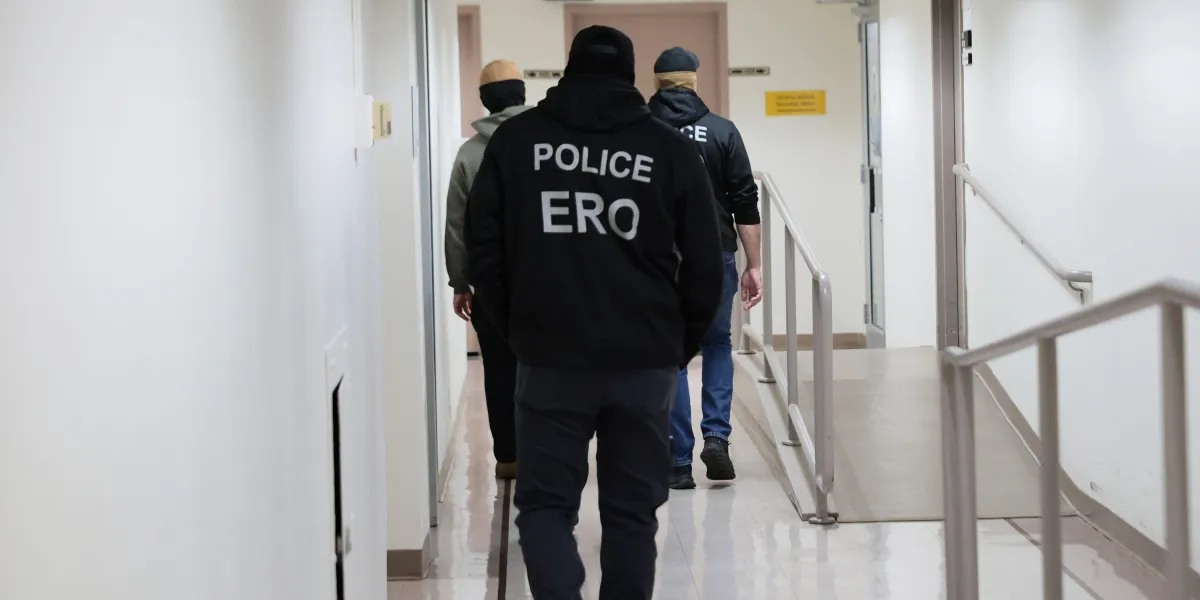
Order content On Monday, word began circulating within U.S. Immigration and Customs Enforcement about what one official called a “National Day Without Enforcement.”
According to ICE officials across the country who spoke to The Intercept, the directive, issued through ICE’s Enforcement and Deportation Operations Division via internal group chats and verbal orders, calls for a halt to all immigration enforcement operations on Election Day.
“We were told all events on Election Day were canceled.”
“We were told all operations on Election Day were canceled,” said an ICE immigration officer operating in the South, who spoke on the condition of anonymity to protect his livelihood. “Word of mouth from our frontline supervisors, no formal email notification.”
According to multiple ICE officials interviewed by The Intercept, the orders were issued quietly to avoid media attention.
“Yesterday was the least active day for ICE ERO all year so far,” said Sherman Austin, creator of StopICE.net, a crowdsourcing platform that tracks reported ICE activity across the United States. “You can tell it starting in the morning. Typically, ICE starts working very early and there’s a huge spike in activity between 5 a.m. and 10 a.m. You don’t see that spike on Election Day.”
Another ICE official working in the Great Lakes region confirmed the orders ahead of Election Day, calling it a “National Day of Non-Enforcement.”
“We were told to ‘manage’ shit,” the official said. ICE deportation officers who frequently conduct street operations were moved to work in administrative offices: “I’m going to have coffee in the office for the first time in a year,” they said.
In total, ICE officers working in four areas of responsibility, known as ICE jurisdictions, in parts of the Northeast, Midwest, North and South-Central United States, told The Intercept they have received orders to stop work on Election Day.
“Something unusual happened”
StopICE, a tracking website with about 500,000 subscribers, did document some ICE activity on Election Day, although most of the reports stemmed from sightings not related to any immigration enforcement activity, according to Austin.
“There were some reports of ICE being present at common locations like jails, or seeing people driving in certain areas of the city, but this was different from the type of activity typically seen at that location. It was clear that something unusual was going on,” Austin said.
AntiFreeze, another crowdsourced ICE tracking platform that allows users to report and receive instant alerts about ICE attacks, also saw unusually low levels of ICE activity on November 3, the site’s creator and developer Josh asked to remain anonymous.
“On Election Day, our network only recorded approximately 56 reports of ICE sightings across the country, making this one of the quietest Tuesdays we’ve ever seen,” Josh said. “We did receive about three sightings reporting ICE activity near polling places, but most of the reports were observations of ICE-related vehicles. We had virtually no reports of actual ICE arrests yesterday.”
Local activists have also observed low levels of ICE activity on the streets.
“There is no evidence of street kidnapping,” said an activist with the Twin Cities Rapid Response Network in Minnesota.
“ICE is still active to some extent, but we have not seen any reports of ICE conducting street detentions or attempting to detain,” the activist said. He said they have received information about ICE arrests in jails but have not seen targeted actions against the public. “There were a lot of people observing, probably more than usual, so I think we can be pretty confident that this was not due to a lack of observation.”
Southern California VC Defensa volunteer Leo Martinez told The Intercept that no one on his rapid response team reported seeing ICE activity on Tuesday.
It’s unclear exactly where the orders to halt immigration enforcement operations on Election Day came from, although some ICE officials believe the orders came from ICE enforcement and deportation leadership and not directly from the White House.
Another ICE official familiar with the matter said that “nobody at the SDDO level” – referring to the supervisory detention and deportation officers in ICE’s top management – “didn’t expect this to happen until the last minute.” “But I think some of us realize that senior leaders are making this decision out of concern for us getting to the polls.”
“It’s crazy that the White House hasn’t grasped this,” the official said.