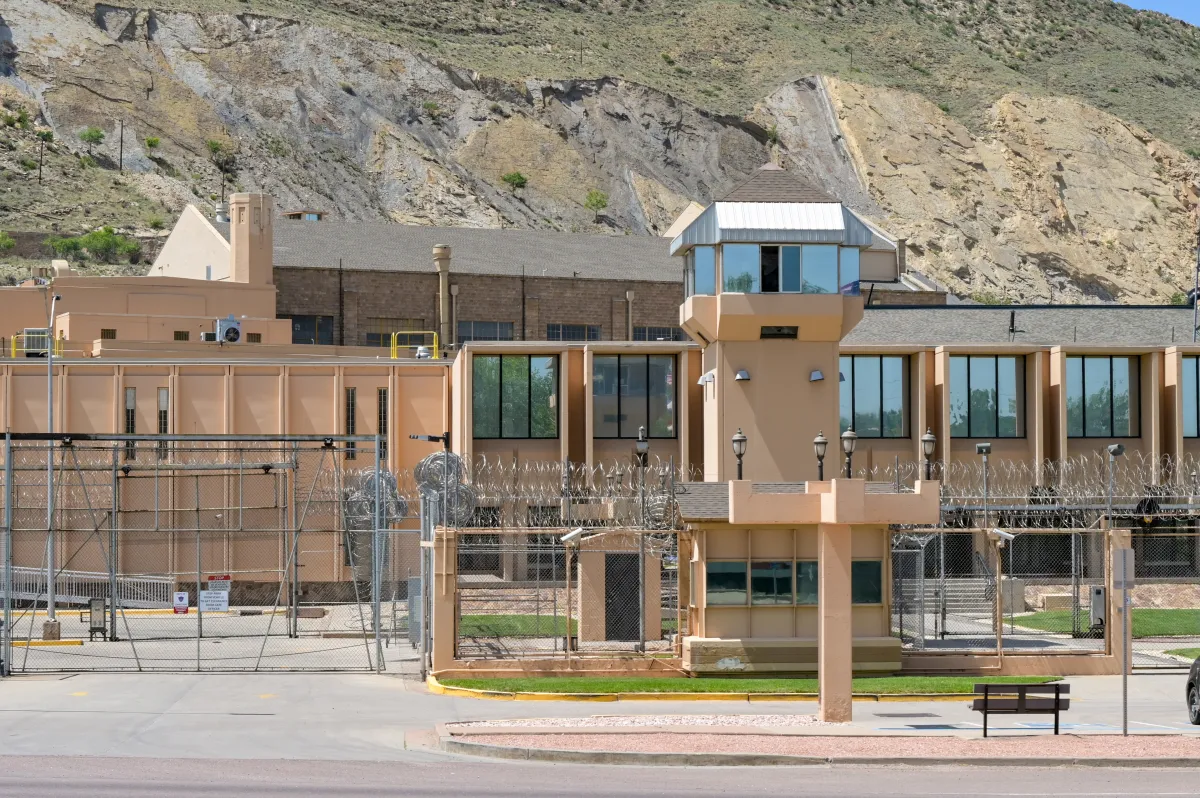
The United States has spent decades debating how to make prisons more efficient, from sentencing reforms to budget hearings. Yet few ask the question that may determine whether one walks out better or worse than when he entered: What do the buildings themselves do to humans?
I spent several years working with correctional facilities across the country, walking the yards of facilities facing staffing shortages, rising costs, mental health challenges, and outdated systems. I see the difference between facilities that are designed to punish and facilities that are designed to help people eventually return to society.
Although the industry is changing, many facilities are still operating in an environment shaped by another era. The data reflects the consequences.
America’s prison problem
The United States has one of the highest incarceration rates in the world, with approximately 1.8 million people incarcerated in state and federal prisons and local jails. However, 66 percent of released state prisoners were arrested within three years, and 82 percent were arrested at least once within ten years. Policymakers continue to look for ways to reduce repeat offending, but these numbers reveal a problem that sentencing policy alone cannot solve.
Environment is important.
A prisoner locked in a small, dark cell for several hours a day will not behave the same way. Prolonged confinement and deprivation can exacerbate depression and aggression. In Alabama, formerly incarcerated people have recently described drug use, assaults and murders inside prisons. These conditions serve as warnings to systems that may be exacerbating the problems they are meant to contain.
This is basic human physiology. Everyone is at least partially affected by the environment in which they live. If we accept this principle elsewhere—from schools and workplaces to hospitals and homes—why are we abandoning it at the prison gate?
Rehabilitation design
Since the First Step Act was signed into law in 2018, federal policymakers have placed greater emphasis on education, behavioral health supports, and post-prison life skills programs. States are investing in specialized behavioral health units and alternatives to separate people with significant mental health needs from situations that may exacerbate their struggles. Purposeful recreational areas, improved living spaces, natural light, technology and meaningful programs can create conditions that support better decision-making and safer facilities.
Regular physical activity can support better outcomes. Physical activity and sports can reduce aggression, improve sleep, and provide a structured outlet for the frustrations that naturally arise from confinement. Meanwhile, incentive-based facilities allow incarcerated people to earn better equipment and living conditions through good behavior.
It’s a controlled demonstration of a simple principle: People respond differently when reward for effort, rather than punishment, becomes the only language of the institution.
Conversely, environments defined by concreteness, isolation, and deprivation may leave people less prepared for society than when they arrived. The alternative, I think, is to have a system where accountability remains firm while the physical environment provides opportunities for rehabilitation to really make a difference. One model perpetuates the cycle; the other perpetuates the cycle. Another gives society a chance to break it.
Some people ask why taxpayers should fund better infrastructure or measures within prisons. It’s a fair question. Public safety must remain a top priority. But so should the price of failure. Which costs more: investing in rehabilitation today or repeatedly incarcerating people tomorrow?
Rehabilitation does not justify criminal conduct. Accountability and recovery can coexist. Some people commit serious crimes and still face significant risks. Others enter the system at a young age and take years to show real behavioral changes. Correctional systems that recognize the human capacity for improvement can create greater opportunities for safer outcomes.
Rethinking public safety
The biggest obstacle may be the mindset developed over generations. Traditionally, correction has been defined through containment. Modern challenges require that this definition continue to evolve. Technology, virtual health care, improved procedures and smarter facility design can help institutions operate safer and more efficiently, especially as staffing shortages continue to strain the correctional system.
The next generation of revisions cannot be based on the assumptions of the previous generation of revisions. Policymakers and correctional leaders should audit facilities and understand whether their physical environment actively supports recovery. Public funding should be guided by evidence, not tradition.
If America wants safer communities, it must stop measuring prisons by how effectively they hold people and start measuring prisons by what happens when they open the doors. Build facilities that make rehabilitation possible. Fund the environment that supports it. Ask for results that prove it works. The next generation of prisons should be built around the idea that public safety is improved when rehabilitation has a real place for it.
Lucas Riphagen is an American entrepreneur and co-owner of TriActive USA, a manufacturer of outdoor fitness equipment for correctional facilities. He is also a partner in RIPCO & Associates, which supplies products including institutional furniture to correctional facilities.
The views expressed in this article are the author’s own.