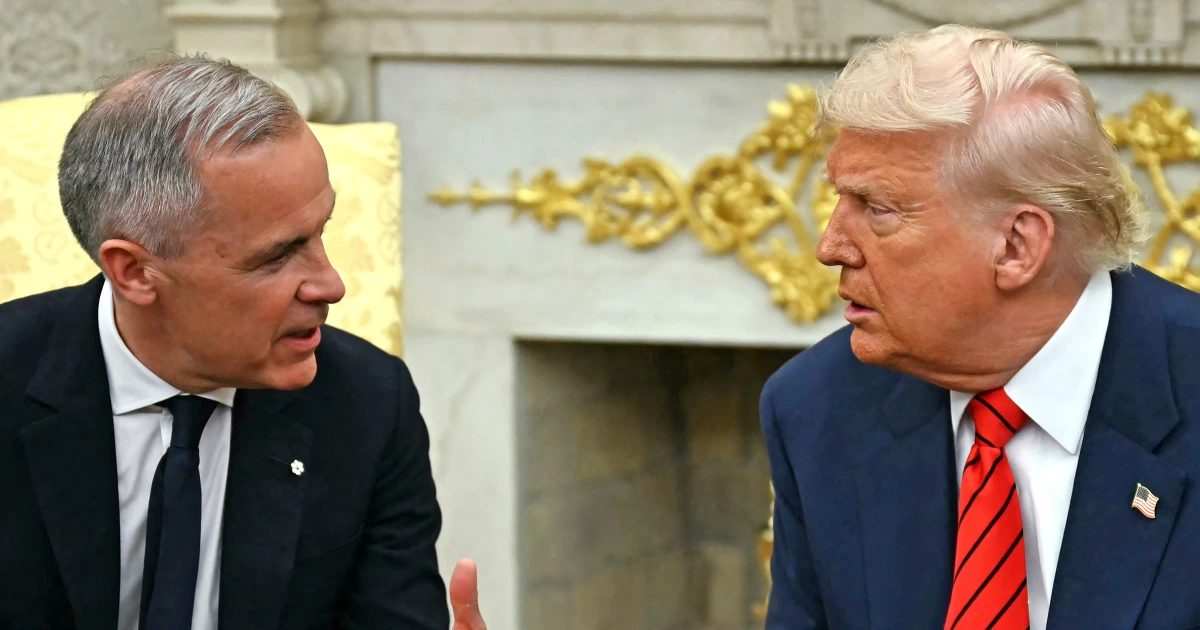
Just days before the U.S. midterm elections, the Trump administration appears to have softened slightly in its combative stance toward Canada, with tariff-induced inflation a top concern among voters.
Canadian Prime Minister Mark Carney said on Monday that trade talks with Washington have “intensified a little bit” in recent days.
Likewise, President Donald Trump appeared to tone down some of his angry rhetoric over the weekend, telling reporters that a potential trade deal with Canada would be “coming soon.”
“They’re willing to give us anything at this moment,” Trump added.
Carney, however, said the opposite. “In terms of the progress that’s been made, it’s because the United States is getting closer to where we are,” he told reporters in Ottawa.
The Trump administration has imposed 50% tariffs on hundreds of Canadian imports since high-level trade talks broke down in August. Ottawa responded in kind.
But the latest statements from the two leaders come after the United States unilaterally announced late last week that it would lift some tariffs on Canada and replace them with others.
The move to change the tariffs came at the urging of Republican Sen. Susan Collins, who faces a tight re-election race in Maine.
Control of the U.S. Senate will be decided on Tuesday in several very close races, including several in Canadian border states where polls show Trump’s tariffs are broadly unpopular.
In Alaska, candidates across the political spectrum say Trump’s trade war with Canada is a drag on consumers.
The same goes for Michigan, where the Republican candidate, former Rep. Mike Rogers, has called for an end to the trade war with Canada.
The economies of all three states are closely linked to their Canadian neighbors.
In Washington, a White House official who is not usually involved in trade negotiations said over the weekend that a trade deal was close.
The United States and Canada are “very close to finalizing a deal,” National Economic Council Director Kevin Hassett said on Fox News.
But statements from the United States and Canada since then seemed to support such an optimistic interpretation of the situation.
The Commerce Department, which oversees trade, did not immediately respond to NBC News’ request for comment Tuesday.
“Canada remains in constructive dialogue with its U.S. counterparts on a range of priorities,” a spokesman for the minister responsible for trade with the U.S. said.
Carney, meanwhile, said he didn’t know whether U.S. officials’ motivations for wanting to restart negotiations were different this time.
“We have a very clear bottom line, a red line, which means we are not willing to sign the deal that was proposed in August,” he said on Monday.