France’s interior ministry said 320,000 people voted on Saturday.
In Italy, Prime Minister Giorgia Meloni’s far-right government also said it would deploy 500 troops alongside police in Milan until the end of the year after a group of masked protesters looted stores and hurled projectiles at police in the fashion capital and elsewhere earlier this month.
Tens of thousands of people took to the streets of Rome and other towns across the country again on Friday.
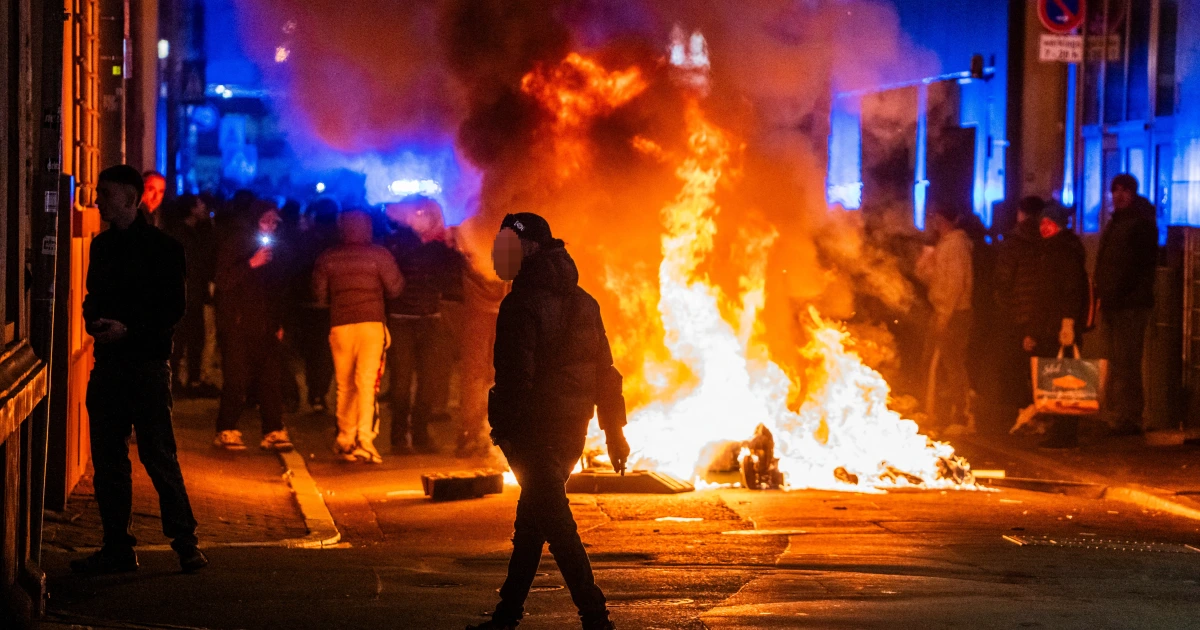
The demonstrations were largely peaceful, but NBC News crews saw police using water cannons on protesters and groups of police charging to disperse protesters.
In Serbia, student-led activism also helped unseat the country’s long-time leader at the ballot box.
Meanwhile, Portuguese police early Sunday forcibly cleared a tent camp in Lisbon set up by activists protesting against high housing costs.
Police used shields and batons to disperse hundreds of protesters who were protecting the tent encampment, Reuters reported.
While comparisons have been drawn between the timing of protests across the continent, Andrew Barclay, a politics lecturer at the University of Sheffield, said it was important to focus on their differences.
He told NBC News that the protests in France, which “brought hundreds of thousands of people to the streets in a matter of weeks, at least initially focused on specific grievances about education funding”.
He said that while protests elsewhere may have been inspired by the French, “so far they have not been as large and while the state of education remains a common theme, the issues protested have proliferated, including more complaints.”
Similarly, Barclays said protests in Germany and France were unlikely to lead to immediate changes in governance as they had in Serbia.
“Typically protests, even fairly large ones, don’t get this level of support elsewhere in the country,” he said. “I would be very cautious in comparing what we are seeing in Serbia to the protests we are seeing elsewhere, where students and others are organizing against state corruption.”