TEL AVIV, Israel (AP) — Israeli police on Sunday released two of three suspects in a voter bribery case, undermining efforts by Prime Minister Benjamin Netanyahu’s Likud party to discredit last week’s parliamentary election.
Meanwhile, Supreme Court Justice Noam Solberg, chairman of Israel’s election committee, said even if separate accusations of foreign interference made last week were proven, it would not undermine the election.
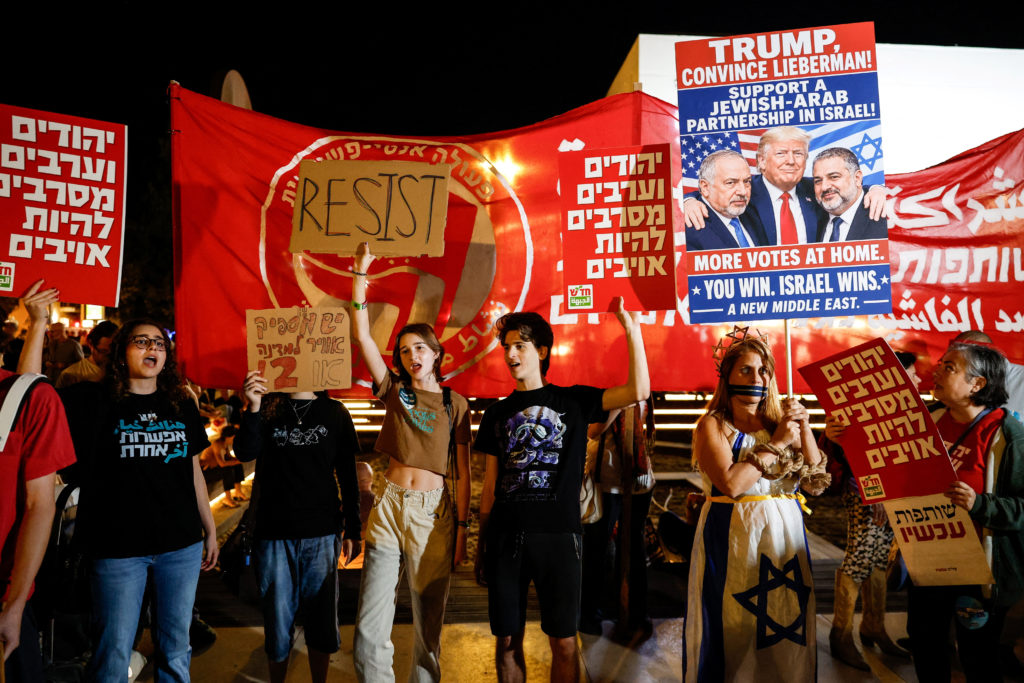
Likud said without providing evidence that Arab-led parties “stole” the election, causing Netanyahu’s party to lose its parliamentary majority. By casting doubt on the vote, Netanyahu appeared to be trying to head off any potential alliance between the opposition and Arab parties that could force him to step down.
WATCH: What Israel’s election deadlock means for Netanyahu and the region
Likud cited a number of cases, including the arrest of three political activists before voting began on October 27, with envelopes of cash allegedly intended to bribe voters. Two days later, police arrested four more suspects. Police said the suspect was linked to the Islamist party Ra’am, but the party denied involvement.
On Sunday, a judge challenged or rejected police requests for further restraints on the three suspects. Police later said one of them was released under unspecified “conditions” and the other was ordered to stay under house arrest for eight days. The detention of the third suspect was extended for two days.
Mansour Abbas, leader of the Ra’am party, which holds eight seats in parliament, denounced the arrests as undemocratic and an “attempt to influence the outcome of the election.”
Netanyahu suggests joining Arab parties is treason
Netanyahu’s parliamentary allies’ seats in the 120-member parliament fell to 53 from 68 in the outgoing parliament.
A bloc of parties led by his main rival Gadi Eisenkot won 48 seats, while Arab-led parties including Raam won the remaining 19 seats. The two anti-Netanyahu blocs combined have enough seats to form a new government, but it is unclear whether they will agree to do so.
The results will be officially certified on Wednesday, after which President Isaac Herzog will meet with the parties elected to parliament to see who they prefer as the next prime minister.
Read more: Israeli election results are in. what might happen next
After these consultations, he will choose the candidate – most likely Netanyahu or Eisenkot – who he believes has the best chance of forming a coalition government.
This will set the stage for weeks of negotiations. If they don’t succeed, Herzog can ask another candidate to try. Otherwise, the country will be plunged into new elections early next year.
Netanyahu said Eisenkot’s membership of an Arab party would constitute treason.
Eisenkot accuses Netanyahu of trying to undermine vote legitimacy
Likud also accused foreign powers of meddling in the vote. The Shin Bet security service has launched an investigation at the request of Israel’s election committee.
But the chairman of the electoral commission, sitting with the Shin Bet chief and the prosecutor general, said in a video released on Sunday that “our position is that even if suspicions are confirmed, this will not compromise the integrity of the electoral process or the overall election results.”
Likud quickly issued a statement asking how the committee chair could acknowledge serious accusations, while saying it would have no impact on the final outcome.
Eisenkot accused Netanyahu on Sunday of launching a “carefully planned and organized campaign to delegitimize the election results,” suggesting Qatar was backing opposition parties to oust Netanyahu. Eisenkot said the Shin Bet briefed him on investigations into foreign interference.
WATCH: Retired Israeli general on what election results tell us
Qatar denies funding any activities aimed at influencing the outcome of the election. Many Israelis view the Gulf Arab state as a patron of Hamas, and accusations of its influence have roiled Israeli politics in other cases, including one in which a close aide to Netanyahu allegedly accepted money from Qatar while working for the prime minister’s office.
Netanyahu’s opponents accuse him of using scare tactics and trying to spin stories to further discriminate against Arab-led parties and Arab citizens, who make up 20% of Israel’s population.
Yusuf Jabalin, leader of the Arab party Joint List, which won 11 seats, noted last week that more than half of the content released by Likud and Netanyahu on election day was aimed at Arab voters as a strategy to encourage right-wing Israelis to vote.
“In times of crisis, he will revert to his familiar tactics: racist incitement and delegitimization of the Arab public,” he said.
A free press is the cornerstone of a healthy democracy.
Support trustworthy journalism and civil dialogue.