In San Francisco, the signs that Tech Week is coming are hard to ignore. Planes tow banners advertising new startups over the city. Inflatable company mascots greet commuters outside bus stops. Hundreds of people lined up outside Anthropic’s Claude Founder’s House for a chance to go inside.
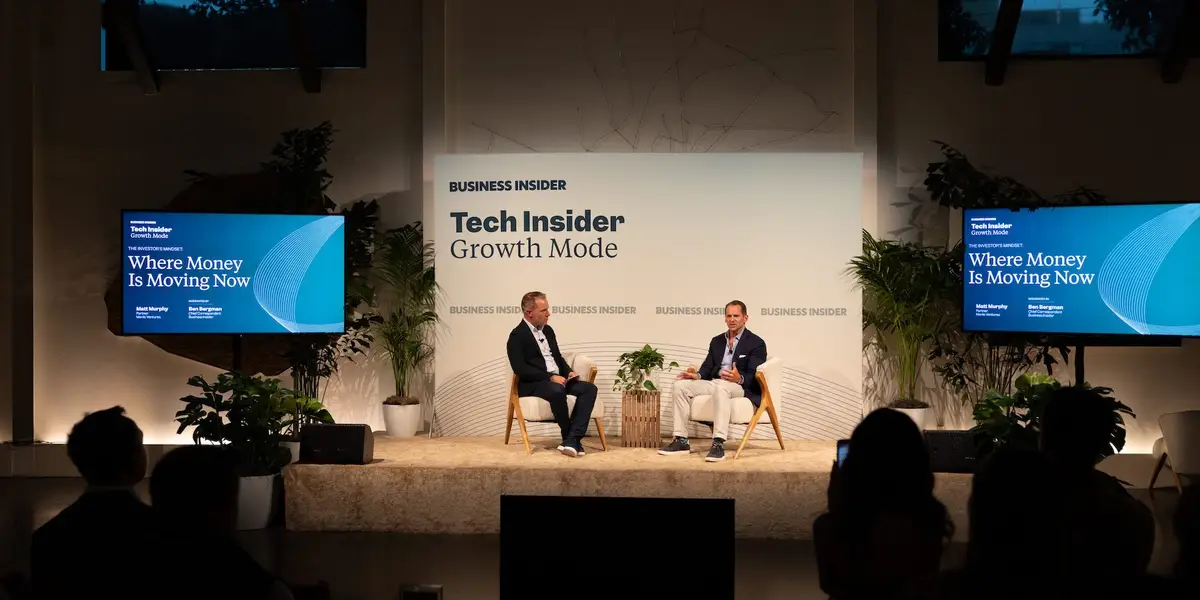
But a few blocks away, the mood was more cautious. On Wednesday night, a group gathered at Dogpatch for the “Tech Insider: Growth Model” event sponsored by Fidelity.
Minutes after interviewing Anthropic investor Matt Murphy onstage, Business Insider chief reporter Ben Bergman asked the crowd: When Anthropic goes public, will you buy shares valued at $3 trillion?
Three hands were raised.
How about $1.5 trillion? Several more hands were raised.
The response has been surprisingly muted for a company that has become one of the most visible symbols of the artificial intelligence gold rush. Its long-awaited public offering is expected to test how well that hype can withstand the scrutiny of public markets.
Menlo Ventures partner Matt Murphy invested in Anthropic when it was valued at $4.1 billion. The company is currently aiming to go public at a valuation of $2 trillion. business insider
The IPO market has had a strange year. The money raised, fueled by SpaceX’s debut, has become one of the largest fundraisers ever. The prospect of Anthropic following before the end of the year could push that number into the stratosphere. But the overall figures mask a much smaller market underneath.
There are relatively few products on offer, and some of the most high-profile candidates have suffered setbacks. Just last week, smart ring maker Oura canceled its IPO plans at the last minute, signaling unstable market conditions.
For Heidi Mayon, a partner at law firm Simpson Thacher who worked on Oura’s planned launch, the delay reflects the wait-and-see attitude she’s seen across the market. She told attendees that before Anthropic and OpenAI, companies had been reluctant to go public.
“There is a general consensus that there will not be enough public investor funding available before these deals can be completed,” Mayon said. She added that SpaceX shows that may not be true, but that few companies are willing to compete with model providers for investor attention.
The bigger challenge, she said, is that artificial intelligence has pushed private market valuations higher.
Instead of squeezing all the money they can out of an offering, some companies would be better off pricing their shares more conservatively, Mayon said. That could leave room for first-day “pop” and the momentum that comes with it.

Reporter Adam Rogers interviews Fidelity’s Lenka Haase (center) and Jill Hallquist on stage at the “Tech Insider: Growth Patterns” event in San Francisco. business insider
Jack Cassell, senior vice president and head of new listings at Nasdaq, gave attendees a different message: There is still plenty of capital to take companies public, but the threshold has changed.
Cassell told the room that after years of growth at all costs, investors are now looking for “cash efficiency and disciplined growth.” They asked tougher questions about the business model, the company’s product plans and what happens after the stock is issued.
Such scrutiny may keep consumers and software companies on the sidelines until one or two cutting-edge labs become available, he said.
Other corners of the market are still changing. He pointed out that biotech companies have completed 22 IPOs this year, and more are expected before the end of the year.
When Anthropic finally goes public, it will be the biggest test yet of whether the AI hype train has enough money to back it up.