U.S. Army soldiers in Europe are preparing for large-scale combat, as well as overwhelming missile and drone attacks like those faced by Ukraine, where the sheer volume of threats could make it difficult for humans to keep up, and are looking to software as a solution.
There are growing concerns that the speed and scale of future wars may be too great for humans to handle without help. However, Army officials say artificial intelligence can help soldiers process large amounts of data from sensors and networks for potential responses in combat.
At last month’s Association of the United States Army convention in Washington, D.C., service leaders and soldiers talked about using artificial intelligence to crunch battlefield data and help troops make decisions without removing humans from the process.
“I think it’s important to use superintelligence … to do things that humans are not necessarily good at, which is speed and scale,” the brigadier general said. Gen. Steven Carpenter, head of Multi-Domain Command Europe, told Business Insider, “But I also know that we shouldn’t completely exclude humans.”
Earlier this year, Carpenter told reporters that U.S. forces in Europe need to be prepared to deal with more than 1,500 potential targets every day while defending against up to 1,200 incoming missiles and drones.
Such a large number of targets and threats can overwhelm human analysts, but artificial intelligence can help them keep up.
In conflicts, soldiers can use artificial intelligence to analyze battlefield data and targets based on commanders’ goals and other parameters. The system can then assess available military capabilities and recommend responses ranging from conventional weapons strikes to electronic warfare or cyber operations.
The entire process is designed to move quickly, but officials say speed isn’t the only benefit. Artificial intelligence can also remember or recognize patterns that humans might forget or simply not notice. All this information provides the commander with options.
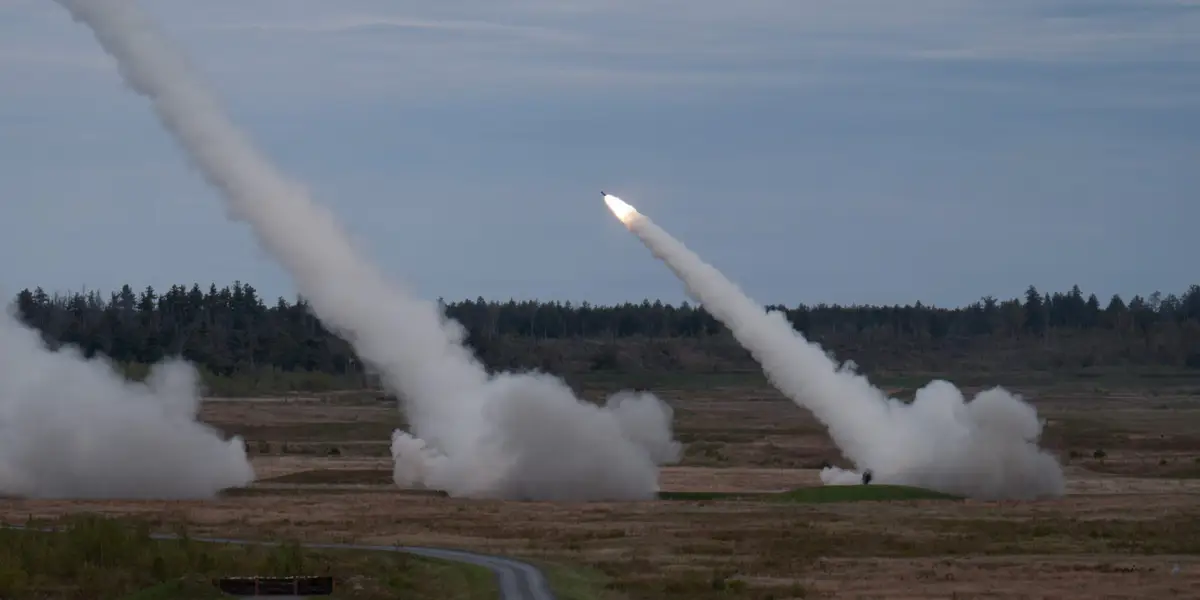
Artificial intelligence and autonomy are rapidly being integrated into unmanned systems, command and control processes, and other technologies. Photo by Colin McCall, U.S. Army Sgt.
“Again, humans are making decisions, final decisions, looking at everything you need to do to prosecute a valid target within the law of armed conflict,” Carpenter said.
The goal, he said, is “not to replace these analysts,” but to ultimately help “relieve the burden on them so they can focus on the really tough targets,” such as dual-use facilities or other potential targets that require more analysis.
Carpenter said the target and threat estimates reflected “what we believe to be Ukraine’s worst day,” underscoring the scale of attacks U.S. forces could face in a future conflict. Russia’s war in Ukraine involves frequent heavy drone and missile bombings. These strike packages are complex and include ballistic and cruise missiles, as well as unidirectional attack drones, an increasing number of which are equipped with jet engines, making them faster and harder to kill.
Earlier this year, troops used indigenous artificial intelligence systems to process and classify data during a joint U.S. Army and NATO exercise in Europe. The AI is in beta testing; Army officials said they aim to conduct larger-scale testing in future exercises.
The integration of artificial intelligence in the military is growing rapidly, from autonomous capabilities in drones, weapons, and targeting to agent processes for sorting data and referencing information. Away from the battlefield, U.S. personnel are using new tools to change agency processes and workflows.
The Army is also integrating artificial intelligence into its next-generation command and control system, the service’s new combat system. NGC2 uses artificial intelligence and machine learning to provide commanders and soldiers with immediate data on targets, capabilities, munitions levels, maintenance requirements, intelligence sources and simulated enemy attacks.