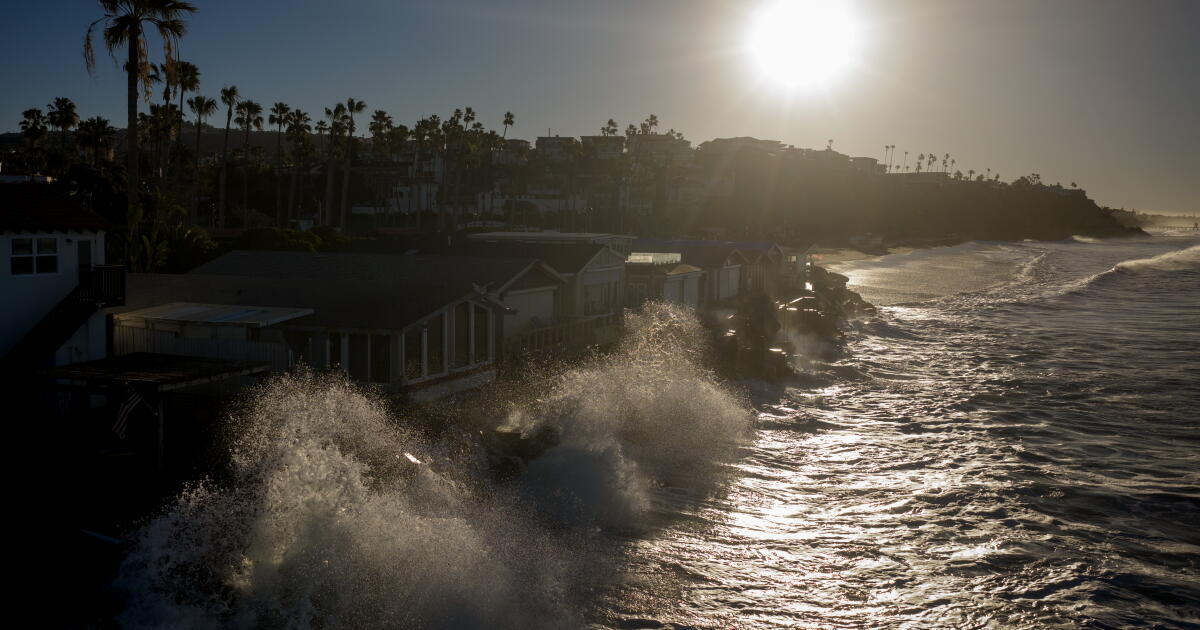
The streets of San Francisco were flooded.
A pier in Northern California was overwhelmed by waves 20 to 30 feet high.
Homes were flooded near Orange County.
Amtrak’s Pacific Surfliner train windows were splashed by waves, and train service between Orange and San Diego counties was suspended between Thanksgiving and Black Friday due to track “washout.”
Extreme weather has wreaked havoc on California over the past few weeks, linked to a variety of factors including unusually high tides and El Niño-induced storms. But weather experts say there’s another root cause: record ocean temperatures.
In November, the water is so warm that surfers can ride the waves without even wearing a wetsuit.
“Is the ocean still ridiculously warm? …The answer is still yes,” said Daniel Swain, a climate scientist at the University of California, Department of Agriculture and Natural Resources. “I still think this record-breaking behavior is heartwarming.”
The numbers up and down the California coast are staggering. Temperatures set records at each of eight monitoring stations taking measurements this week at the Scripps Institution of Oceanography at the University of California, San Diego.
For example, the sea surface temperature in La Jolla, near San Diego, was 73.2 degrees on Friday, 12 degrees above normal for Nov. 27.
The sea temperature in Newport Beach was 71.6 degrees on Friday, while the average sea temperature on November 27 was 60.5 degrees. The temperature at Zuma Beach in Malibu was 70.3 degrees on Wednesday; the calendar day average is 60.2 degrees. Even further north, the temperatures are staggeringly high. The sea surface temperature in San Francisco’s Farallon Islands was 64.6 degrees on Sunday, while the average temperature for the day was 55.2 degrees.
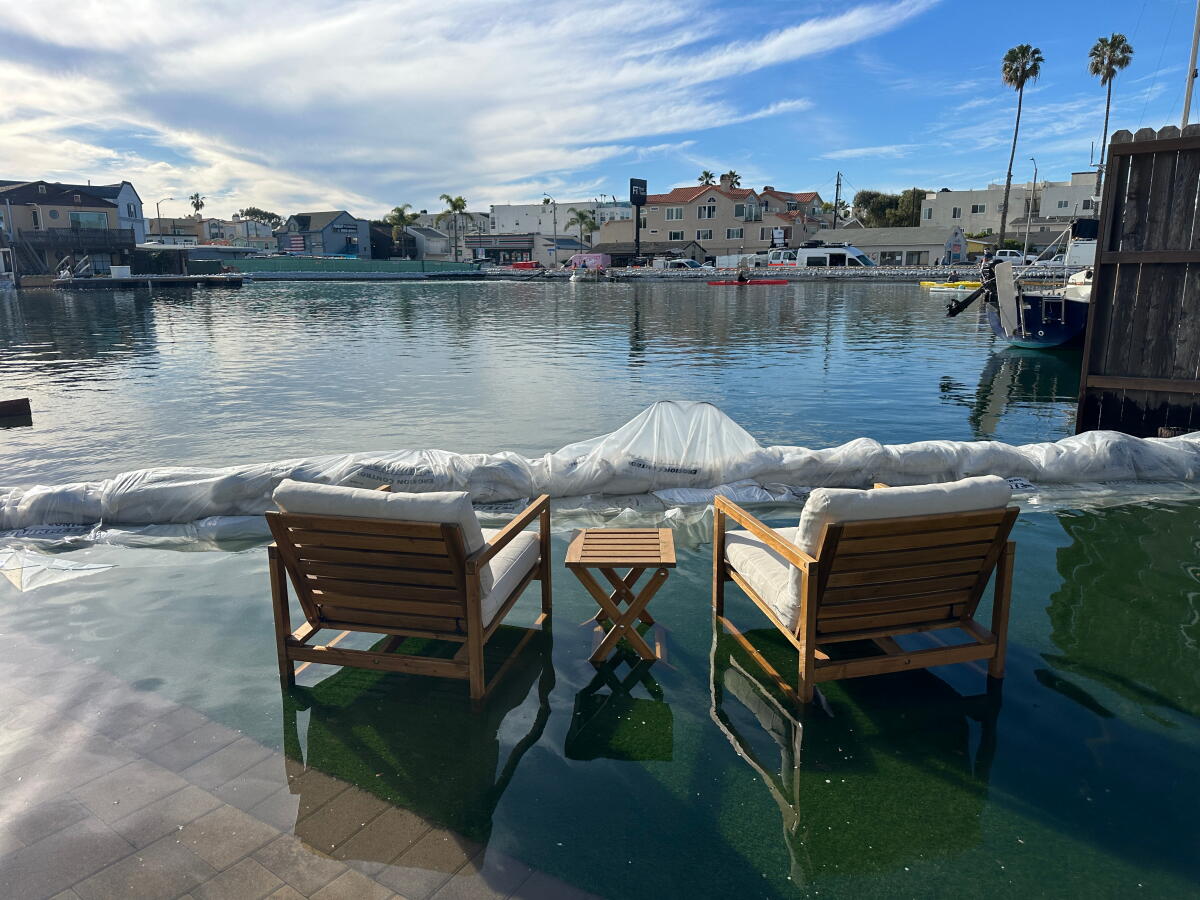
Water flooded a patio on Bayview Boulevard in the Sunset Beach section of Huntington Beach on Wednesday.
(Eugene Garcia/AP)
Scientists had expected ocean temperatures to be very warm, but the reality was sobering.
“Water molecules actually take up more volume and therefore more space,” Swain said.
Rising sea temperatures alone are pushing ocean temperatures more than a foot above normal, exacerbating flood risks.
Water becomes warm for a number of reasons. Swain said sea level rise caused by permanent human-caused global warming is not going away and will get worse in our lifetimes. There’s also ocean warming caused by El Niño, which temporarily raises sea levels by half a foot to nearly two feet. The El Niño climate pattern involves warming ocean temperatures west of Peru, transporting warm water to the coast of the Americas via Kelvin waves. These waves have already reached the California coast, and their effects are expected to last for months.
This week saw unusually high king tides, which will occur again around Christmas and Martin Luther King Jr. Day, caused by the position of the moon and sun. “Then, if we do get a severe storm, we can expect another half foot to a foot and a half of storm surge,” Swain said. This is caused by low air pressure, which causes water to expand in a low-pressure environment and is pushed toward shore by winds.
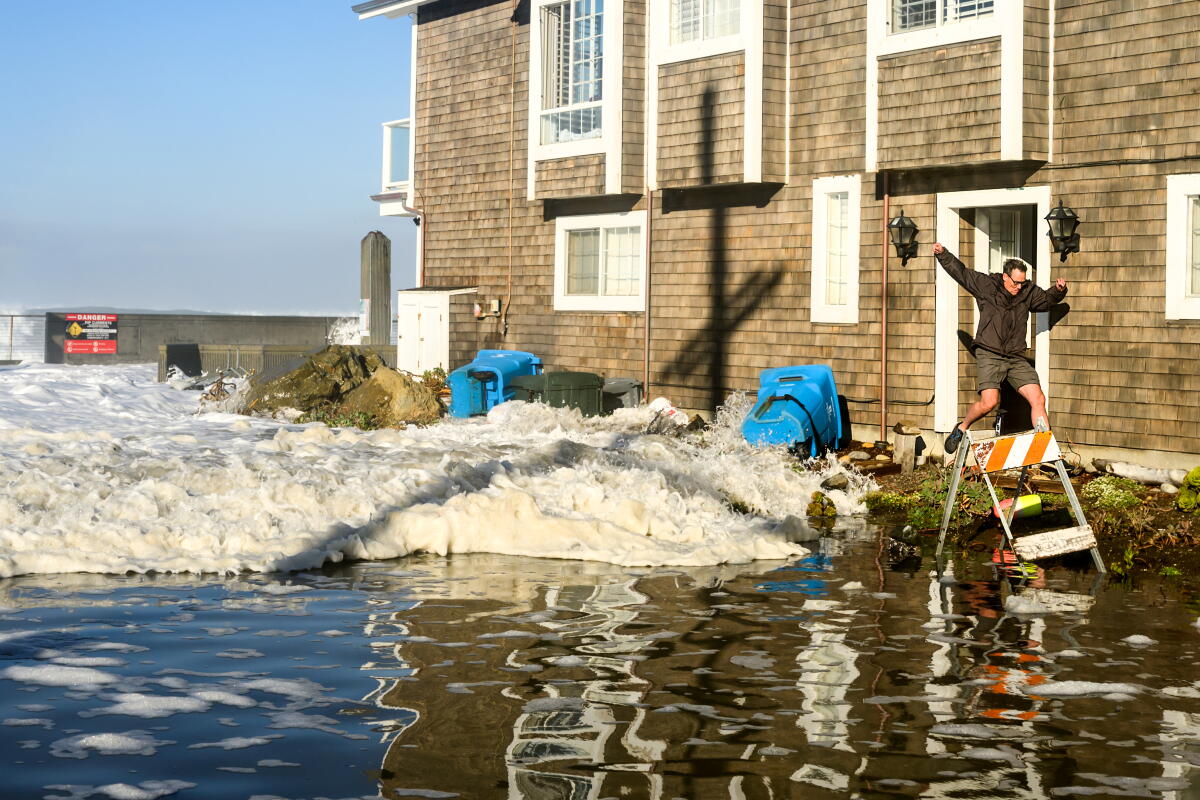
Tourist Mike Stephenson tries to escape the waves on Wednesday in Pacifica, Michigan’s San Mateo County.
(Noah Berger/AP)
Swain noted that sea surface temperatures off California are experiencing some of the worst in the state’s history for the first time in the state’s history.
The climate scientist recently observed that “there is an area that stretches from the port of Ensenada, Mexico, all the way north to about [the] The Sonoma County coast…continuously over 10 degrees Fahrenheit above average. We have never seen anything like this before in recorded California history. ”
Impact on ocean dwellers
Jennifer Smith, a marine ecologist and professor at Scripps Institution of Oceanography, said hot ocean temperatures have put extreme stress on California’s kelp. Kelp is important to marine ecosystems, forming the canopy that serves as a habitat for marine life. Nate Jaros, vice president of fish and invertebrate conservation at the Aquarium of the Pacific, said marine heat waves have caused a 90 percent decline in bull kelp habitat in Northern California since 2014, negatively impacting other species including the endangered white abalone.
Kelp can be threatened by heat, either directly causing it to essentially melt, or indirectly causing it to become flooded with harmful bacteria, Vibrio, Target starfish.
“During the last El Niño event, we had a starfish-wasting disease that was an indirect effect of El Niño and warming. Starfish eat sea urchins, so when the starfish die, the urchins multiply rapidly and subsequently eat all the kelp,” Smith said, leaving behind urchin barrens, or undersea forests where seaweed once grew over urchins.
During marine heat waves, kelp-dependent wildlife “exceed their thermal tolerance,” she said.
Historically, “some of the largest continuous patches of kelp in California” have flourished in La Jolla and Point Loma, Smith said, and the phenomenon has been observed by satellites. But after the last El Niño in 2015-16, “we lost almost all the species that formed the canopy.”
There was some limited recovery last year. But recent increases in ocean temperatures have caused recovery momentum to dissipate.
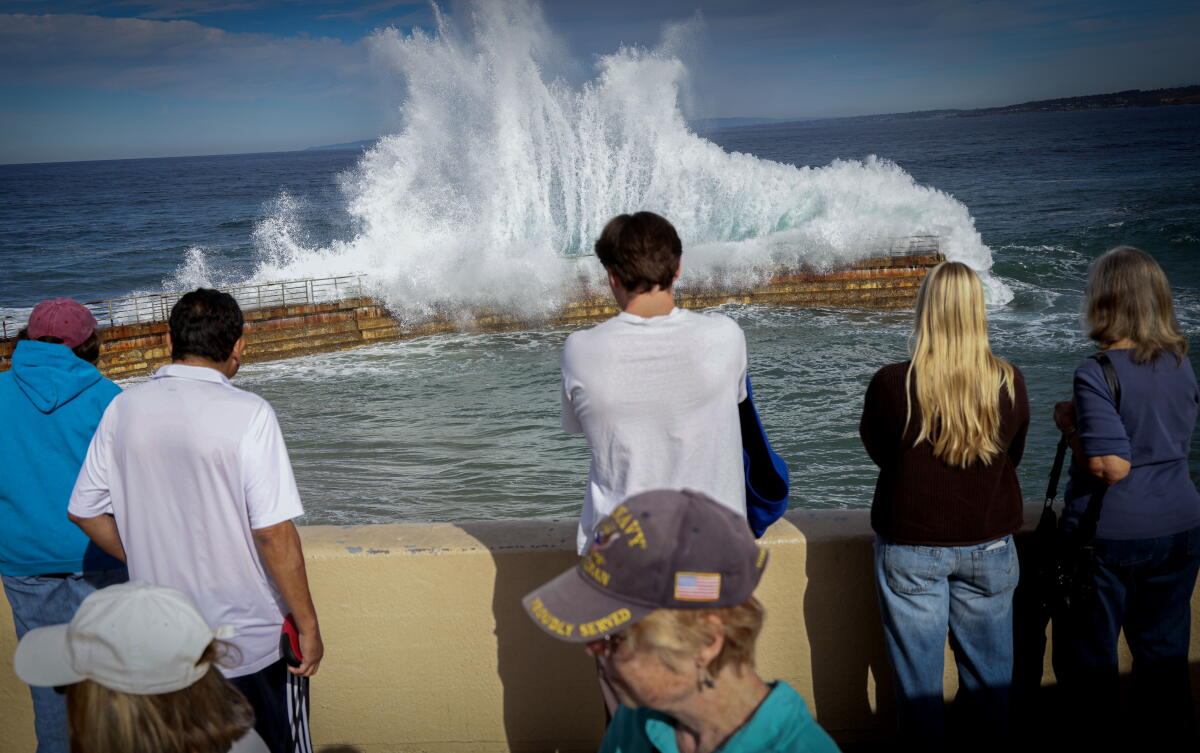
King tides hit La Jolla on Wednesday, sending waves crashing onto the shoreline.
(Sandy Huffaker/The Times)
“So if you’ve been in the water in La Jolla, you might have noticed that there’s actually no giant kelp left. Most of it ends up drifting onto our beaches,” Smith said. “It’s amazing that there are pockets of kelp left at Point Loma, and that’s something we’re desperately trying to figure out,” such as whether the surviving kelp has some ability to withstand higher temperatures.
Every El Niño event is different, but scientists have noticed a combination of several factors that combine to portend a more catastrophic scenario.
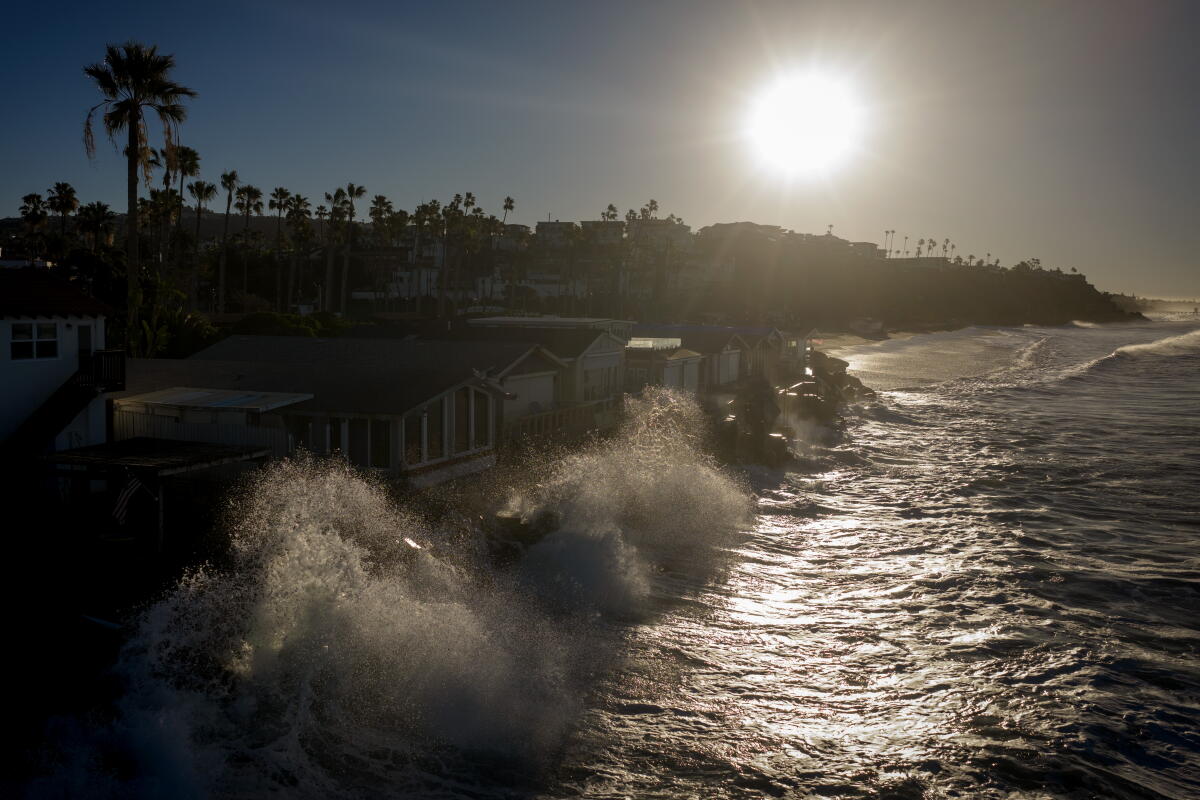
Waves crashed onto the San Clemente shoreline Thursday.
(Eric Thayer/Los Angeles Times)
Some of California’s worst El Niño disasters occur when high tides, warm water and powerful storms all come together.
Reinhard Frick, a researcher at Scripps Institution of Oceanography, said that during the 1982-83 El Niño, December storms brought huge waves, but they occurred at the lowest tide of the month. But in late January, a huge storm coincided with the highest tides of the year.
This rendezvous caused worst floods Over the decades, millions of dollars of damage has occurred in Southern California, wreaking havoc on piers in Santa Monica, Seal Beach and San Diego and flooding homes in places like Malibu, Venice, Playa del Rey and Redondo Beach. The Scripps Pier in La Jolla was so damaged that it had to be replaced and is now made of concrete.
“Storms and large waves occur at the same time,” Frick said, “and if they occur at the peak of high tide, then the damage, flooding and beach erosion will be greatest.”