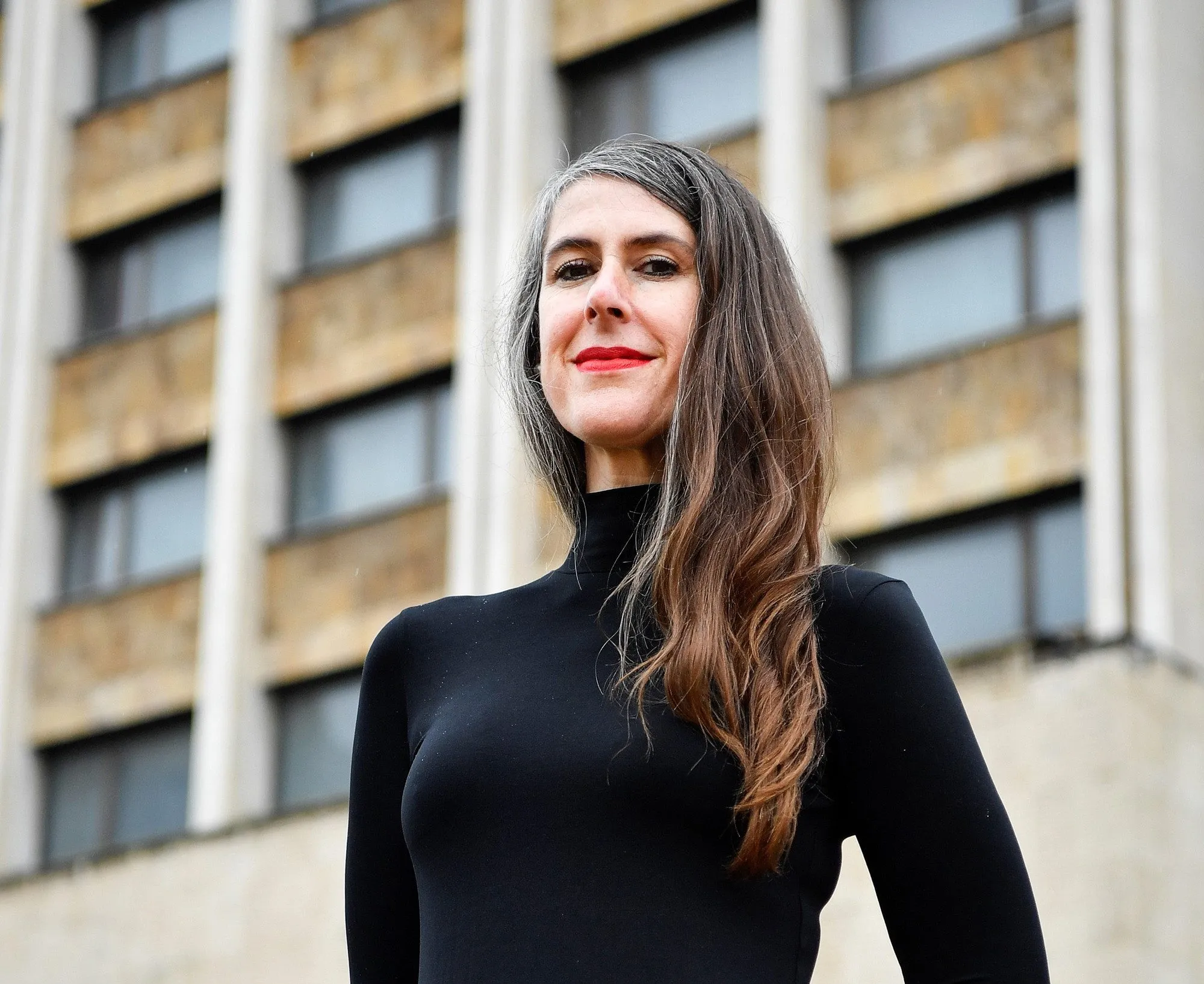
In her opening speech at the 2026 Lyon Biennale of Contemporary Art, artistic director Isabelle Bertolotti said she appointed Catherine Nichols as curator because of her “focus on légèrement décentré,” or “a slightly off-centre gaze.” It’s a compliment. The Australian-born Nicholls (who now lives in Berlin and is currently a curator at Hamburg Bahnhof) brought to Europe a knowledge of the art of Oceania, whose influence has not always transcended its Pacific origins.
Nicholls is showcasing the work of Australian artists at the Lyon Biennale, from Serwah Attafuah’s brightly colored films featuring Afrofuturist heads to Mai Nguyễn-Long’s ceramic sculptures, Vomiting girlsolving the problem of displacement through folklore. Māori artists such as Ngahina Hohaia draw on the legacy of collective memory in captivating video works surrounding welling springs, while Rangi Kipa’s beautiful objects carved from sperm whale bone and tiger shark teeth pay homage to ancestral practices. These, among others, are scattered across the three main venues of the Biennale: “There is no ‘zone’ for people from Oceania… everyone is intertwined with others around issues they reflect on in practice,” says Nicholls.
The 18th edition, which runs until December 13, is titled “From One Dream to Another,” borrowing a line from Walter Benjamin’s book. At the Biennale, Nichols grafted the concept of “economy” from French artist Robert Filio, redefining it here as “poetic economy” rather than hard finance. (In these transpositions of artistic terms, what “poetic economy” actually means is ambiguous, if not entirely unclear.) Lyon’s history as a trading city from antiquity informs Nicholls’ approach: she cites its iconic traboules to emphasize what she sees as “Lyon’s psychogeography.” The concept aims to broadly encompass the 119 artists participating in the exhibition, often focusing on themes of consumption, commodification and industry.
Nichols’ curation is located in very different sites and adapts to the architecture accordingly: “We worked in very different registers,” she says. Furthermore, “artists were not invited to ‘serve’ the theme: they were invited to exhibit existing works, create new ones, or even expand existing works in order to respond to the needs of the city of Lyon.” (65 new creations, 12 adaptations). There are more women than men on the list: 68% versus 32%. Rather than cheering, artistic director Bertolotti apologized for the lack of equality at the opening press conference. France! ! Other statistics shared (without apology) include that 29% of the artists are French and 23% are under the age of 35.
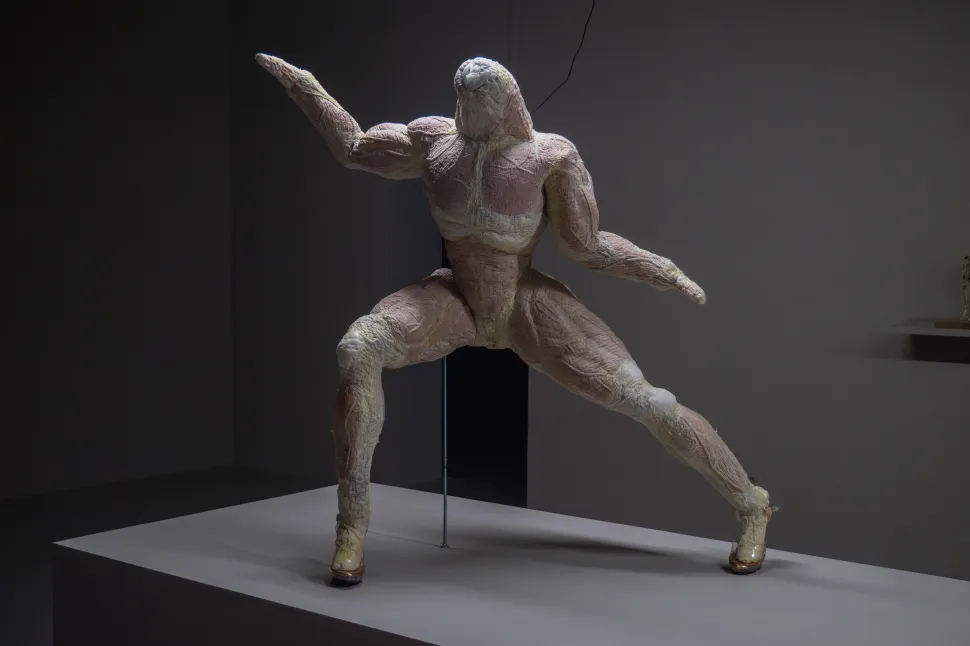
Les Grandes Locos is a huge 19th-century industrial building that was once occupied by the French National Railways, and the huge space has welcomed a lot of work. (For reference, imagine the dizzying heights of Milan’s Bicocca hangar.) The opening piece is a multimedia installation designed to mimic a whale’s belly, which is strewn with debris and expands and contracts with breath. This was courtesy of Laure Prouvost (“much better than what she did at the Grand Palais,” one visitor quipped). On the other side of the Prouvost entry point, Madagascar-born Joël Andrianomearisoa’s textile ropes dangle from the high ceiling like a downpour, unfurling a total of 44 kilometers of material. Ghanaian artist Akwasi Bediako Afrane repurposes accumulated electronic waste Cerberus T-26 Dialogue Dance (2026), make visible our ruthless digital consumption, as the rapid obsolescence of products prompts us to buy more, despite the increasingly severe consequences for the environment. It’s a brutal panorama of fragmentation: the things that powered us are now useless and empty, reduced to wire tentacles.
New Zealand-born Sriwhana Spong’s installation recalls Christo and Jeanne-Claude’s saffron nylon fabrics GatesExcept Spong’s giant ribbons are dyed with Fanta sparkling drinks (its ingredients, like modified food starch and high-fructose corn syrup, are listed as part of the piece). flanked by influential textile installations by Indonesian-born Candrani Yulis Betting beyond the line of belief: A hybrid comment on religion and female identity through the color-gradient lengths of hijab fabric hung from hangers, arranged in a spine structure as they spiral upward from the floor. adjacent, the raumlaborberlin collective used 120 tons of compressed paper strips, packaging them like hay bales and stacking them in a cavernous enclave for romantic contemplation.
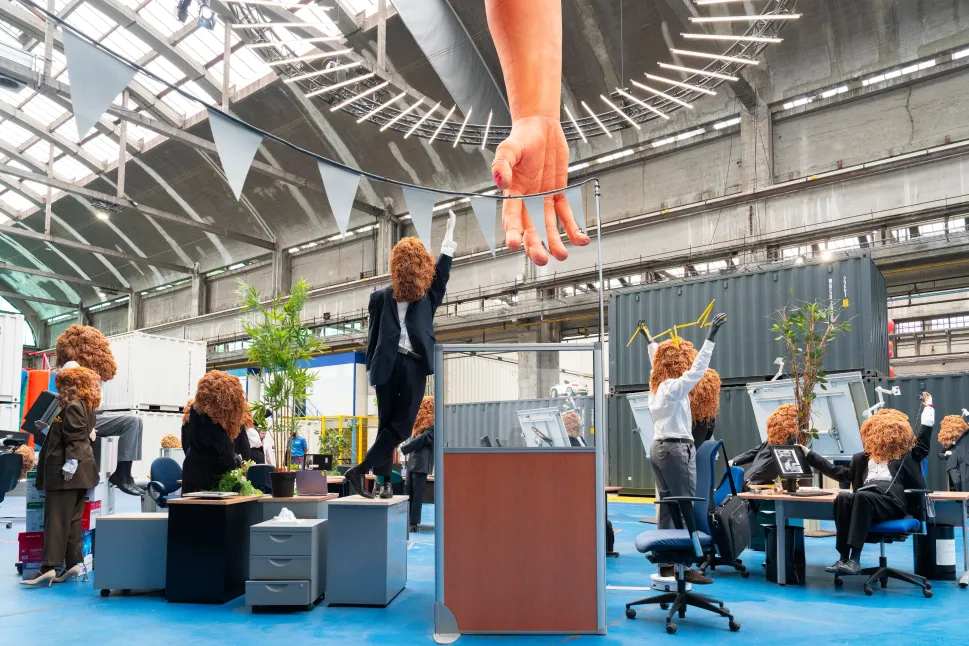
The exit route involves a detour into Dutch artist Mette Stray’s absurdist workplace fever dreams. Clumps of uncooked spaghetti sprouted from corpses dressed in office attire instead of human heads. Calculators, filing cabinets, briefcases, water fountains and Xerox machines feel like hallucinations from a Mike Judge-esque comedy office space.
Across town, the 19th-century Musée des Tissus et des Arts décoratifs provides a very different backdrop and a more modest sense of scale. The museum was originally closed for renovations but reopened specifically for the Biennale, leaving “original” traces of ghostly remains in its corridors and ballrooms. Parked in the yard is a Pepto-Bismol pink Peugeot Boxer, a vehicle and work of art by the Berlin duo EVA and ADELE (the pair have been together for more than 35 years, and the twins present themselves as “a conceptual artist”); the van’s door slides open to reveal Polaroids and fake flowers.
Within the maze-like grounds, a welcome dose of humor abounds in a series of narrative works drawn and written on sandpaper by the Australian-born Ida Lawrence: in these caricatures, family members blame each other for quarreling about being deprived of their respective wishes, or claim that the best skin care routine is to not have children. Elsewhere is a six-channel video inspired by the anniversary of the Portuguese Carnation Revolution. exist We are together because… (2025), Greek-British Mikhail Karikis filmed a choir of 52 teenagers singing on a stage in front of an orchestra, repeatedly chanting: “I still believe in people.”
In the ancillary space, Argentinian Mercedes Azpilicueta has created a whimsical installation in which she encourages visitors to touch, further promoting hands-on participation through accessories such as wings, paper masks and bells. Despite the exquisite workmanship, Azpilicueta feels that anything that breaks can be fixed. Even fragile hanging jacquard tapestries can be handled. The installation is playful and generous—the opposite of precious.
In the MacLYON – Musée d’art contemporain, designed by Renzo Piano, a series of artists include Ouassila Arras, who draws on Franco-Algerian history and Álvaro through stacked rugs that cover the entire gallery floor. Urban’s destroyed walls reveal branches and vegetation growing from a hole on the other side, a Narnia-esque peephole into a world beyond the boundaries of the museum’s structure. Interspersed among the contemporary art exhibits are samples from the Confluence Museum’s natural history collection, including an assemblage of pyrite, a stuffed owl, and a mummified cat.
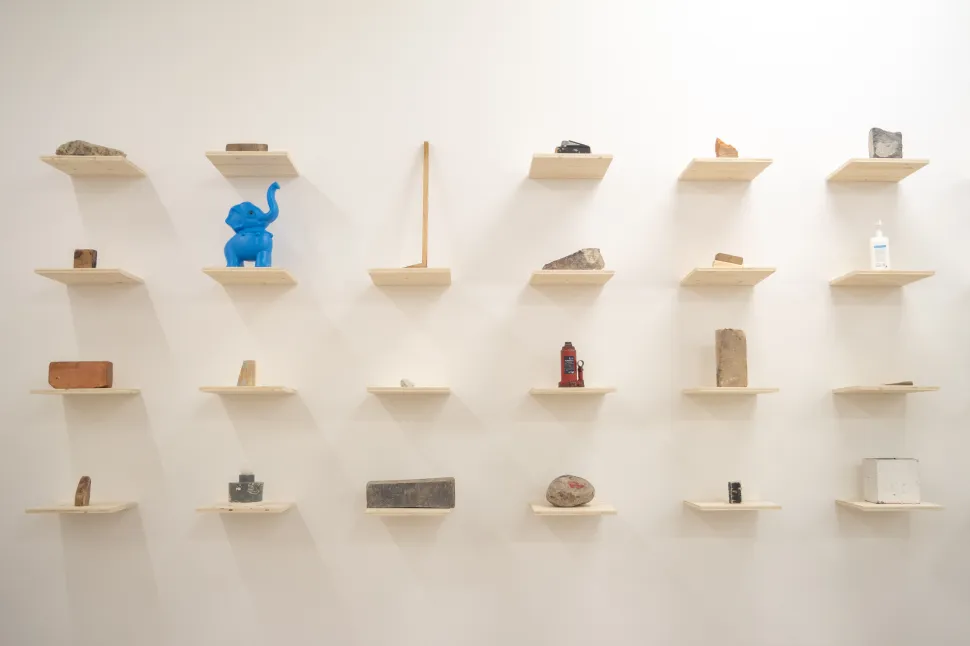
Media resource sites within the city, such as the LPA Saint-Antoine car park and the Part-Dieu metro station, each displaying one work, were underwhelming and entirely skippable. However, it is worth a detour to the emerging artists roundup held at the IAC (Institute of Contemporary Art), the work of Estonian Katariin Mudist Temporary solution (2026) indexes the aesthetics of door jams in an installation that subtly explores everyday improvised gestures and, more perversely, Swedish Maja Fredin’s unsettling aesthetics surrounding food and body image, taking shape in miniature human skeletons made from picked clean chicken bones and a group of faceless latex sculptures wearing high heels, with eerie twists driven by embedded posers.
Ultimately, repurposing Roberto Filieu into the Biennale’s discourse sounds ambitious but shoehorns the city’s legacy in an extended way to achieve a sense of coherence. Yet Nichols demonstrates her strengths through the space she provides for Aboriginal artists, her passionate focus on women’s art, and by supporting a large body of work that maximizes impact.