LAS VEGAS – Consumers interested in functional mushrooms are curious to find them in a new format, which creates opportunities for food and beverages, especially baked goods.
Andrea Bleikamp, brand strategist for MarketPlace, spoke about such an opportunity at the October 28 session at SupplySide Global in Las Vegas. He presented the results of a survey of more than 500 functional mushroom seekers conducted by Nextin, which found that more than 30% of the searchers said they would be interested in trying dry pasta noodles containing functional mushrooms, and more than 20% said it was for sweet baked goods and sweet spreads. About 20% said they would be interested in trying frozen foods containing functional mushrooms.
The preferred format already on the market is chocolate with almost 25% as well as powder for warm drinks and ready-to-drink shots, almost 20%.
The main needs stated that the purchase motivation of functional mushroom seekers are energy at 32%, immune support at 25%, men’s health at 21%, skin health at 20%, stress relief/calming at 20%, sexual health at 14% and hormonal balance at 13%, according to Nextin research.
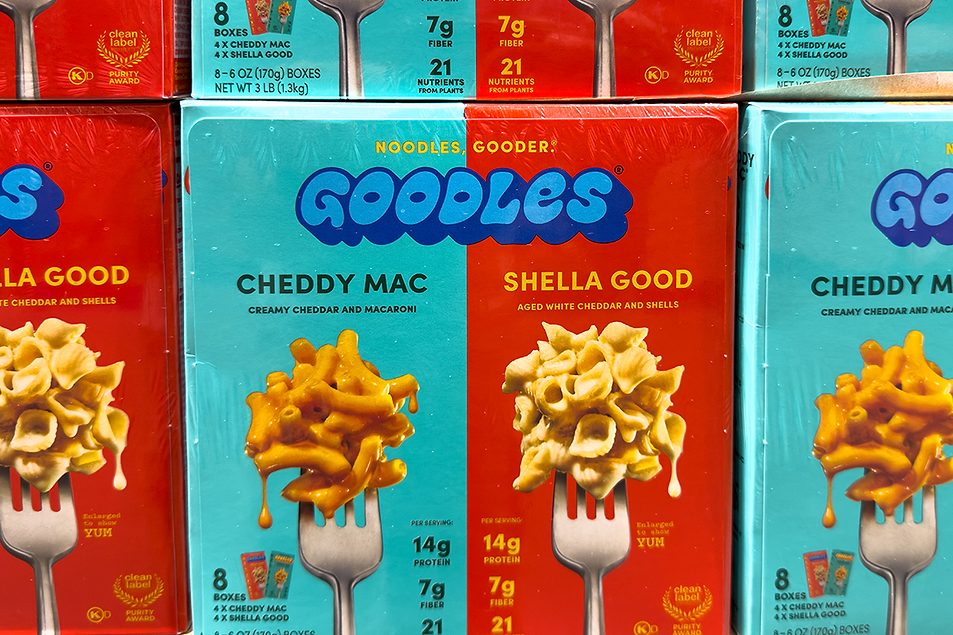
In beverages, shelf stability can be a challenge, Bleikamp says, and in food, formulators need to achieve levels that are beneficial while still providing the desired sensory experience. As an example of success, he pointed to Goodles Cheddy Mac containing maitake and shiitake mushrooms.
The beta-glucan in mushrooms is heat stable, making them perfect for baked goods, says Julie Daoust, PhD, chair and founder of the Functional Mushroom Council. The prebiotic fibers, including beta-glucan, in mushrooms are tolerated by the digestive system due to their long transit time, making mushrooms an option when creating products for GLP-1 drug users, he said.
From left: Julie Daoust, PhD, chair and founder of the Functional Mushroom Council; Andrea Bleikamp, brand strategist for MarketPlace; and Brian Chau, chief food scientist for Chau Time.
| Source: Sosland Publishing Co.Daoust said formulators need to know what benefits they want in a product.
“The dosage will depend a lot on what ingredients you use and the concept of the product,” he says.
When working with whole mushroom powder, formulators can take a gram-by-gram approach to dosing, he said, while extracts or other ingredients require a half-gram approach. When promoting mushrooms for their prebiotic fiber, “it is good to include a higher dose,” he said.
With chocolate, grinding technology must ensure that the mushroom powder is fine enough that consumers don’t see a gritty texture, said Brian Chau, chief food scientist at Chau Time. Whether the ingredient is extract, mushroom body or mushroom mycelium will also affect the product.
When working with beverages or ice cream, formulators must minimize the risk of mouthfeel while maintaining the product’s efficacy, he said.
In the packaging claims, Bleikamp said the company could display a specific variety of mushrooms and a specific dosage size. The benefits must be clearly stated, and the company must not assume any benefits.