Artificial intelligence is already a huge business for Wall Street. But how does it perform on the street?
As part of its philanthropic efforts, Goldman Sachs is spending heavily to try to help ensure small employers participate. The bank announced Thursday that it has launched the Small Business Artificial Intelligence Institute as part of its $500 million expansion plan to educate and support entrepreneurs by reaching 10,000 small businesses. The company said it will partner with Google, Anthropic, OpenAI and Meta to provide artificial intelligence training and tools to entrepreneurs.
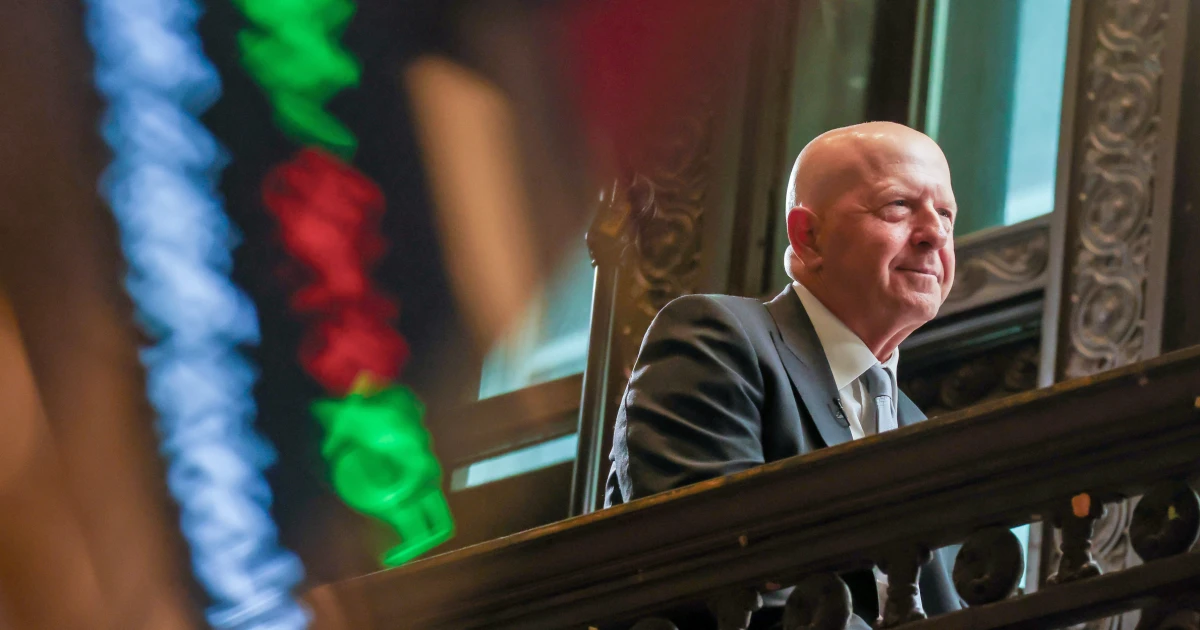
“You have to always embrace new technology because if you don’t embrace it and try to figure out how it can make your business better, you’re more likely to fall behind,” Goldman Sachs CEO David Solomon said in an exclusive interview on NBC News’ “American Business” series.
This is a critical moment for the artificial intelligence wave and its financial backers, including Goldman Sachs. The technology is widely available to consumers, and U.S. economic growth is increasingly dependent on the construction of data centers.
“We believe artificial intelligence will bring unprecedented prosperity to startups and small businesses,” OpenAI CEO and co-founder Sam Altman said in a statement from Goldman Sachs. “This is an incredible moment for anyone with a new idea, as the gap between imagination and implementation is getting smaller and smaller.”
Yet the growth that artificial intelligence has fueled has also pushed up prices for inflation-weary Americans. Outrage over the data centers is a rare moment of bipartisanship among voters, with midterm elections just days away.
In the financial world, critics say artificial intelligence is an investment bubble that could burst and potentially destroy companies and jobs. Cracks are showing in the market’s artificial intelligence trade after big tech companies drove most stocks to recent all-time highs.
Goldman Sachs, like much of Wall Street, is deeply involved.
The bank’s shares have roughly tripled in the past three years, while artificial intelligence-related companies have driven stocks to record highs. Goldman Sachs helped launch the much-hyped, record-breaking initial public offering of Elon Musk’s SpaceX, whose core businesses include xAI and Grok. Goldman Sachs is also reportedly working on the IPO of Anthropic, the startup behind the artificial intelligence chatbot Claude.
“There’s going to be a lot of financing to do, and we’re going to be in the middle of it,” Solomon said on an earnings call last week.
Goldman Sachs and other big companies are counting on the participation of small businesses, which account for more than 90% of U.S. companies and drive much of U.S. job growth. Getting everyone on board won’t be easy, though.
A recent NBC News poll found that 79% of respondents believe the government is not doing enough to regulate the use of artificial intelligence. 67% disapprove of the way President Donald Trump handles the technology. Trump said he favors loosening government regulation of artificial intelligence.
Meanwhile, some small businesses that have embraced AI have faced public backlash, including restaurants that use AI-generated images of food, which critics have decried as “sloppy.”
Still, according to Goldman Sachs, entrepreneurs are rapidly adopting the technology. A survey of more than 2,400 graduates of the company’s small business program this year found that 86% of respondents were using artificial intelligence in their businesses, up from just 56% in 2024.
Rechelle Balanzat, founder of laundry service app Juliette and an alumna of the Ten Thousand Small Business Program, told NBC News that she sees artificial intelligence as a tool that can help her do more business with limited resources.
“I really use my artificial intelligence as my advisor,” Baranzate said. “They don’t replace your accountants and lawyers. They don’t replace humans. However, it does help me ask more meaningful questions in meetings with my accountants and lawyers.”
Goldman Sachs said that although artificial intelligence is widely used among Goldman program alumni, only 15% said they have fully integrated artificial intelligence into their core operations.
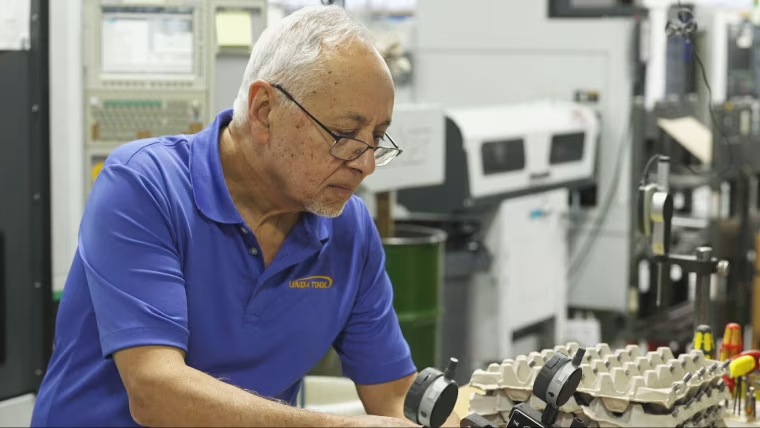
Mike DiMarino, principal of Linda Tool in Brooklyn, New York, was a member of Goldman Sachs’ inaugural program in 2010. The company makes precision machine parts for the military and aerospace industries, and DiMarino believes AI can help with planning, management and processes.
“I’m sure it can do more that I don’t know about yet,” he said.
But DiMarino is also wary of how Linda Tool will use the technology, especially given the amount of sensitive information the company handles in the defense, aerospace and manufacturing sectors.
His concerns reflect broader cybersecurity concerns about artificial intelligence. In July, a group of about 700 artificial intelligence agents created by OpenAI invaded the open source platform Hugging Face. Last month, Google said Chinese hackers were using artificial intelligence to automate attacks.
In addition to security risks, company leaders are increasingly worried about the cost of artificial intelligence, especially the specific impact on the bottom line. After a surge in spending on artificial intelligence tokens over the past year, companies from Uber to Microsoft to Meta have taken steps to limit or reassess how their employees use their AI computing power.
Americans are also concerned about the impact artificial intelligence will have on the job market. A recent Gallup poll found that more workers are worried that technology will make their jobs obsolete. Small businesses employ fewer people than larger businesses, making their workforces particularly vulnerable to potential losses.
Balanzat and DiMarino told NBC News they hope to use artificial intelligence to support workers at their businesses, not replace them.
“The machines are expensive,” DiMarino said. “People are priceless.”