The Reserve Bank of India on Wednesday raised interest rates for the first time since 2023, joining several major central banks in tightening monetary policy to curb accelerating inflation.
The central bank increased the benchmark repo rate by 25 basis points to a 1-year high of 5.50%, in line with the expectations of economists polled by Reuters.
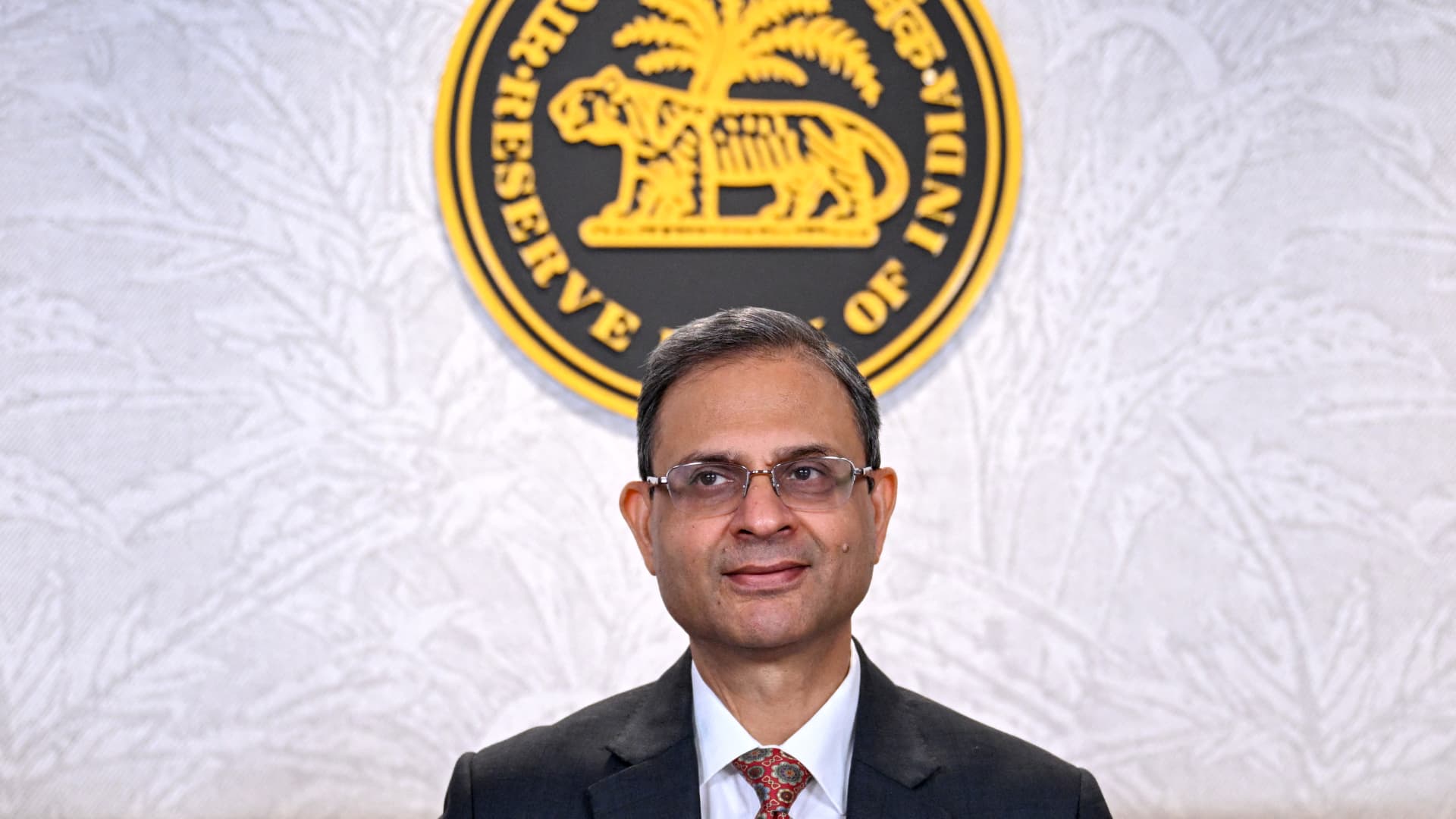
India’s economic growth has been strong despite global challenges, Sanjay Malhotra, RBI governor, said in a speech on Wednesday, while adding that “inflation and prospects are not light, like last year.”
The monetary policy committee decided to change its policy stance “to a calibrated tightening,” Malhotra said.
The increase comes as retail inflation in India has risen for 10 straight months, touching 4.8% in August, well above the RBI’s medium-term target of 4%. The central bank expects India’s core inflation to be at 4.4% for the financial year ending March 2027 and headline inflation at 5.2%.
“Given the current situation, a rate cut is not on the table in the near term, and policy action going forward can only be a rate hike or a pause,” Malhotra said. HSBC and Goldman Sachs expect the RBI to raise interest rates in December as well.
Markets should see a “credible” hike from India’s central bank that shows its ability to raise rates again to contain inflation, HSBC said in a report on Friday. If the RBI’s rate hike is “perceived as dovish at a time” when inflation is rising and likely to remain, it will damage India’s attractiveness among global investors, the report said.
The RBI raised India’s economic growth by about 40 basis points to 7.1% due to resilient economic activity even as it said ongoing geopolitical tensions, trade frictions, tightening financial conditions and rising international commodity prices would weigh on growth.
India, which remains the world’s fastest-growing major economy, is one of the countries most vulnerable to supply disruptions caused by the Iran war. The South Asian country met almost 85% of its fuel needs through imports, with the Strait of Hormuz being the main supply route before the war.
India also faces the risk of El Niño this year. According to the World Bank, India experienced its fourth driest June-August period since 1960, which could lead to higher food prices.
The World Bank expects India’s economic growth to slow to 7.1% in the financial year ending March 2027 compared to 7.8% in the previous year, it said in a report on Tuesday. The report said the country’s economic growth was “better than expected despite trade and geopolitical uncertainty,” but would moderate over the next few quarters.
During the June quarter, India reported a better-than-expected 7.8% economic expansion, although growth cooled for many major economies such as the US, China and Japan due to poor trade conditions, geopolitical uncertainty and high energy prices.
Last month, the US Fed raised interest rates for the first time in more than three years and signaled another hike was possible, while the Bank of Japan raised interest rates to a 31-year high as global energy prices pushed inflation higher. South Korean and European central banks have also raised interest rates in the past two months.
The yield on the benchmark 10-year government bond rose 5 basis points to 7.243%, while the top 50 stock index fell 0.7% after the decision.