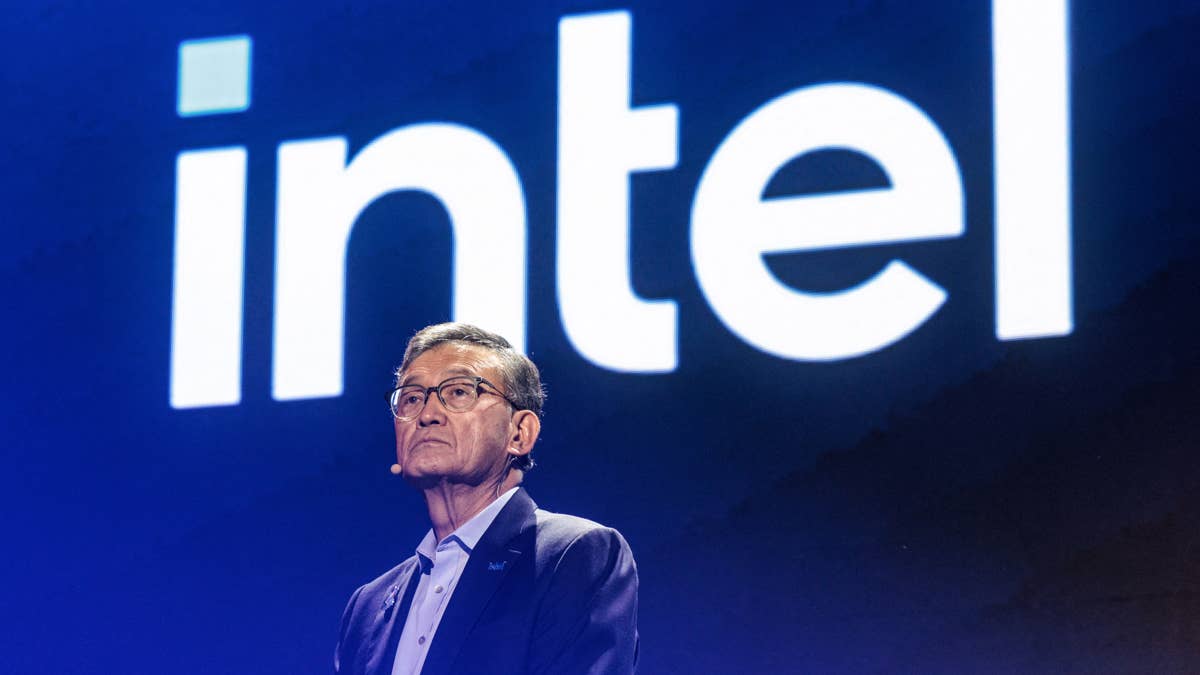
Shares of Intel (INTC) plunged more than 20% in after-hours trading on Thursday, October 29, after chipmaker Intel (INTC) issued a disappointing fourth-quarter forecast and warned that the PC market slowdown could continue into 2027.
The sell-off came despite better-than-expected third-quarter earnings as strong demand for data center processors helped offset weakness in Intel’s PC business.
Investors are also concerned about the company’s spending plans. Intel expects capital spending to rise sharply next year and warned it will not generate positive cash flow in 2027.
Intel has spent years trying to catch up with rivals after falling behind in advanced chip manufacturing.
The company remains the only leading U.S. logic chip maker, and its recovery is critical to Washington’s push to bring more semiconductor production back to the United States.
The Trump administration acquired a 10% stake in Intel last year. Nvidia (NVDA) and SoftBank have also poured billions into the struggling chip maker.
The investments bolster optimism about Intel’s recovery. The company’s shares had soared about 150% this year ahead of Thursday’s earnings report, although they fell about 20% last month amid widespread concerns about spending on artificial intelligence infrastructure.
Intel’s third-quarter results beat expectations, but PC weakness clouds outlook
According to LSEG data obtained by CNBC, Intel’s third-quarter adjusted earnings per share were 52 cents, higher than analysts’ expectations of 40 cents.
Revenue rose 21% year over year to $16.51 billion, slightly higher than Wall Street’s forecast of $16.5 billion.
But the company’s two main businesses tell a different story.
Revenue from its client computing and physical AI division fell 5% year-on-year to $8.1 billion, lower than expected, as rising memory prices weighed on PC demand.
Meanwhile, data center and artificial intelligence revenue grew 78% to $7.3 billion, reflecting growing demand for server processors.
RELATED: Analysts adjust SK Hynix stock price targets after huge profits
PC weakness is expected to continue.
Intel forecast fourth-quarter adjusted earnings of 25 cents per share on revenue of between $15 billion and $16 billion, well below analysts’ expectations of 43 cents per share on revenue of $17.1 billion.
The disappointing forecast reflects broader challenges facing the PC industry, with rising costs of memory and other components weighing on manufacturers.
Intel said the PC market correction has accelerated over the past two months, with manufacturers actively managing inventories.
“We expect the slowdown in the PC market to continue at least into the first half of next year,” Intel Chief Financial Officer David Zinsner said in the earnings report.
“We will continue to make disciplined investments in capacity and working capital to increase supply and support future growth.”
Management said the next few quarters will remain challenging and that it is “not optimistic” about the memory situation in 2027.
Adding to these pressures, Intel is dealing with the aftermath of an explosion at its Israeli manufacturing plant earlier this month that killed two workers and seriously injured another. The incident forced the company to shut down operations for a long time, disrupting the production and shipment of 10-nanometer wafers.
Intel expects the outage to reduce revenue by approximately $600 million in the two quarters, including approximately $300 million in the fourth quarter.
Cheng Yuchen/Getty Images
Intel sees 2027 as a year of growth as artificial intelligence drives server demand
While its PC business remains under pressure, Intel sees a brighter future for its data center business.
Management described 2027 as a “growth year” on the earnings call, but expects the first half to remain “somewhat constrained.”
Executives said they are “very optimistic” about the data center business as customer demand signals continue to strengthen, especially as the use of artificial intelligence among agents continues to increase.
Also Read: Meta Stock Falls Despite Wall Street Analysts Raising Price Targets
Unlike traditional AI workloads that rely heavily on Nvidia and Advanced Micro Devices (AMD) graphics processing units, agent AI also requires the CPU to coordinate tasks, manage data, and execute applications.
This trend could provide a long-term boost for Intel’s Xeon server processors.
“Despite the near-term headwinds affecting the broader PC industry, over the longer term we continue to see strong demand for CPUs and, more broadly, all computing platforms,” Tan said in a statement.
But strong demand doesn’t mean Intel has enough supply.
Tan said he was “disappointed that we were unable to meet strong customer demand this quarter.”
“Our third-quarter results demonstrate meaningful progress from improved execution, expanded supply, and continued advancements in process technology,” Tan said.
“Despite recent headwinds facing the entire PC industry, demand for our CPUs remains strong, reinforcing our confidence in the long-term growth opportunities for our business. Our top priority is to free up additional supply.”
Intel plans to increase manufacturing investments to address supply shortages.
The company reiterated its 2026 capital spending outlook at $20 billion but said spending would grow “strongly” in 2027.
Management described next year as an “investment year” and warned Intel would not generate positive cash flow.
Still, the company expects to pay down debt in 2027 and remains “confident” in its long-term profitability.
Zinsner said that despite the need for additional capacity, Intel will remain cautious about spending.
“We will remain disciplined in our investments and will not spend a dollar of capital unless we are confident in the health of our products and process technology and clear evidence of customer demand,” he said on the call.
RELATED: Cathie Wood buys $9.1M in plunging tech stocks