America’s credit card bills are coming due, and they’re getting bigger.
The federal deficit hit $2 trillion this year, the highest level since the worst days of the COVID-19 pandemic, when the government provided relief for infection control and workers and companies affected by the outbreak.
But that doesn’t necessarily reflect government spending – according to U.S. Treasury Department data for fiscal 2026, which ended on September 30, the annual deficit includes $1.052 trillion in interest payments on the U.S.’s $40 trillion debt.
A top economist has warned that the bond market is becoming increasingly wary of the borrowing cycle, creating a “vicious cycle” that is raising U.S. borrowing costs.
Debt payments currently exceed the defense budget and trail only Social Security ($1.67 trillion) and Medicare ($1.07 trillion) in total government spending.
Interest payments now consume more than 3% of all U.S. economic output (GDP), more than in the 1940s and almost on par with the 1990s, when deficits triggered a political crisis.
Without net interest payments on the Treasury debt, the federal deficit would be less than half that, about $940 billion.
Mark Zandi, chief economist at Moody’s Analytics, warned in a warning posted online on Sunday that “a vicious cycle could develop, with rising interest rates increasing interest payments and debt burdens, pushing interest rates higher.”
Zandi added that while many countries have also had to rein in borrowing, the size of the U.S. economy makes this situation “undoubtedly the most important.”
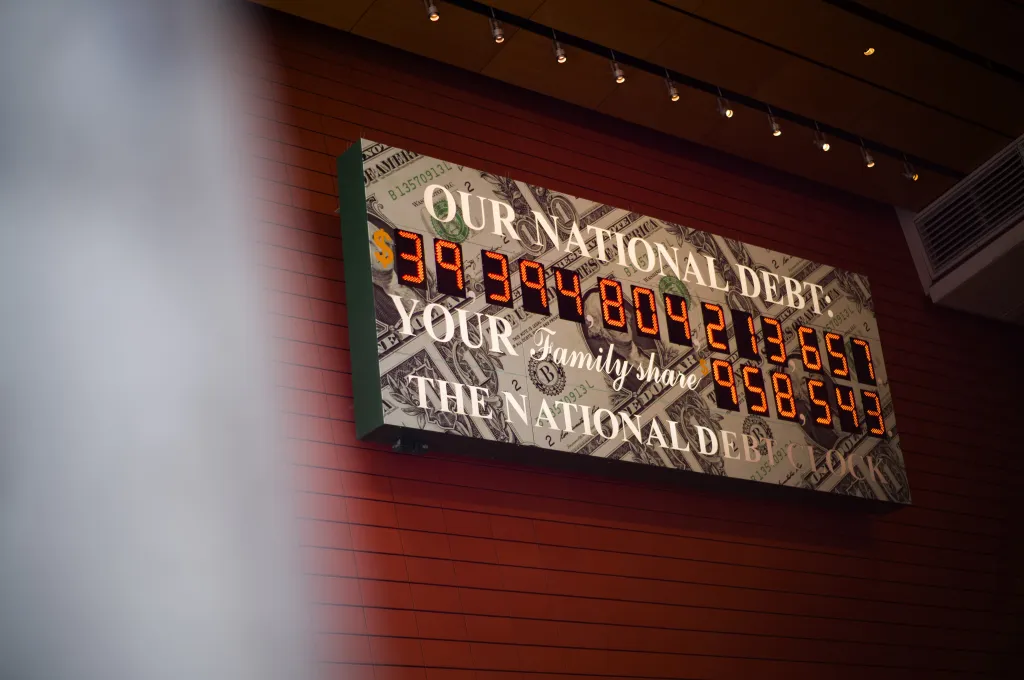
Zandi and other economists warn that the problem is not total public debt but the ratio of U.S. debt to gross domestic product.
“Arguably the most important thing is that global investors are seeing this and seem to be demanding higher interest rates to compensate for the increased risk,” Zandi said.
“The 10-year Treasury yield has risen by about a percentage point this year, one of the largest increases of any major economy, with countries with the heaviest interest burdens generally seeing the largest increases,” he added.
The last time interest costs reached such levels was during the administration of President George H.W. Bush, when he was forced to renege on a “read my lips and no new taxes” pledge included in the administration’s bipartisan deficit-reduction plan.
Bush’s loss to Bill Clinton in the 1992 presidential election was often blamed for broken promises.