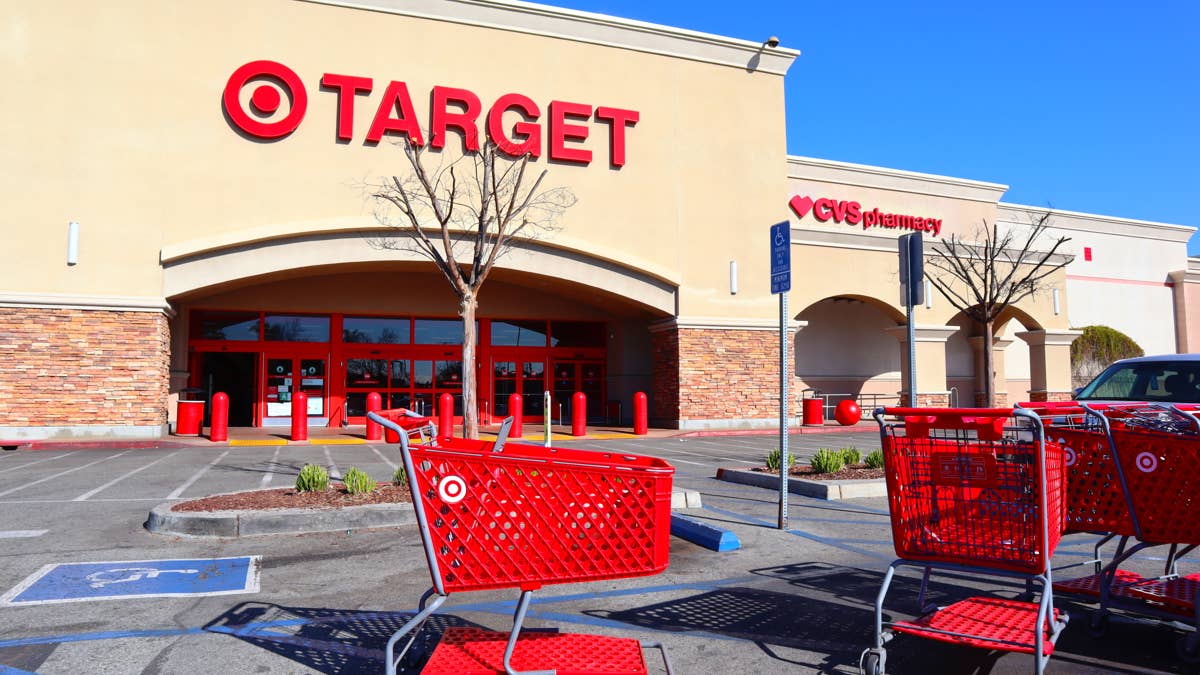
In early October, shoppers were locked in a fierce battle. Amazon is hosting Prime Big Deal Days on October 7th and 8th, and Target is hosting Circle Deal Days on the same day. Walmart and Best Buy are also getting in on the action, both looking to boost holiday budgets early.
The surprise comes from a chain store that most people ignore. Kohl’s has been scaling back its forecasts this year, but still expects full-year sales to fall 3.5% to 4%. However, when the sale week ended, the largest increase in store traffic was from Kohl’s, not the giants.
Kohl’s sees biggest increase in customer traffic this week
The numbers come from foot traffic tracker Placer.ai. On sale days, Kohl’s traffic was 9.6% higher than the recent average for the same weekday, the largest increase among chains tracked by Placer, while Target traffic was about 2%, Walmart about 1% and Best Buy traffic was slightly below normal.
Also Read: Kohl’s Cuts Prices on Key Items as Customer Interest Fades
Compared with last year’s data, Kohl’s maintained its original position. Visits increased 4.5%, with Target the only leading chain, up 6%. Walmart fell 0.9% and Best Buy fell 2.2%.
Target’s advantage looks different when you consider that it only ran for two days this time, compared to seven days last fall. Placer.ai’s data only measures foot traffic, not how much people spend inside.
One day it stood out. According to Placer.ai, Kohl’s saw a 22.3% increase in traffic on October 9 compared to normal as it was the first day that shoppers could redeem Kohl’s cash earned during the promotion. The rewards program does exactly what it was designed to do.
The promotion runs from October 5 to 8 and offers incentives in addition to price cuts. Shoppers can earn $10 in Kohl’s Cash for every $50 they spend and receive an additional 25% off at checkout.
Seasonal items are discounted by up to half, and online orders are free. After the sale, the cash balance gives the customer a concrete reason to return.
It’s a rare win for a chain still struggling to grow
This is not a one-stop success company. According to TheStreet, Kohl’s second-quarter comparable sales fell 0.9%. Chief Executive Michael Bender said customers are becoming “increasingly picky and actively seeking value with every purchase.” Its core of low- and middle-income shoppers have begun buying cheaper private label brands.
Still, traffic trends have been quietly improving through October. Placer.ai data shows that Kohl’s store traffic fell by 1.4% in the second quarter, which was much smaller than the 7.7% decline in the first quarter. The trading week suggests the recovery may be accelerating.
The chain is also entering the holiday season in a more relaxed position than it was a year ago. The company is closing 27 stores in 15 states in 2025, and Bender said it has no plans for further layoffs. Of the approximately 1,150 stores still open, more than nine in 10 are making a profit. Every location that survives the layoffs is experiencing more stress.
Still, the backdrop remains grim. Bender cited a “challenging macroeconomic environment,” with rising prices for everyday expenses like gas and food squeezing the living room of his shoppers. That’s part of why Kohl’s is relying so heavily on discounts this month.
Walter Scichetti/Getty Images
Why retail giants are underperforming
Target is the closest to the second winner here. Chief Executive Michael Fiddelke takes over in February 2026 after a difficult 2025, when net sales fell 1.7%, and Target expects sales to grow every quarter in 2026, according to Retail Dive.
Its foot traffic is up from last year, a sign that the store is starting to turn a corner.
Walmart is extending the event from October 5th to October 11th for a full week, which may cause daily traffic to be too spread out. Hurricane Isaias also made landfall on the Gulf Coast on October 9, and Placer.ai noted that the storm could keep shoppers away from Walmart and Best Buy that day.
More retail:
- Target solves a problem that frustrates shoppers
- America’s largest RV seller closes more stores
- Costco helps members solve critical problems, but it comes at a cost
Walmart’s customer structure is also changing. According to Retail Dive, CEO John Furner said that most of its recent market share gains have come from households earning more than $100,000, while households earning less than $50,000 continue to manage spending. These cash-strapped households are likely to spend less this month.
Best Buy faces tough comparisons.
A year ago, the company reported a 2.7% rise in comparable sales for the quarter, including a sales push into 2025, which analysts on an earnings call called its best growth in more than four years, although Chief Financial Officer Matt Bilunas said appliances were “probably the most difficult” category, according to Best Buy data. Placer.ai said that a strong “Techtober” activity made Best Buy face a high bar in October this year.
Strong week for Kohl’s heralds holiday season
The National Retail Federation (NRF) expects holiday sales to top $1 trillion for the first time, but much of that spending will come from wealthy households.
“We do think it’s a tale of two cities,” NRF chief economist Mark Mathews told the Boston Globe, noting that wealthy consumers are spending while low-income households are scaling back.
The typical Kohl’s shopper falls somewhere in the middle, with a median household income of more than $95,000, according to Placer.ai. That makes the chain the most likely group to spend if the deal is right. Sale weeks show that these shoppers will still show up with big enough discounts.
Footfall is not revenue, and in a tough year, a week of trading isn’t going to close the gap. Kohl’s still expects full-year sales to be down significantly, and those visitors will need to leave with full shopping carts in October for it to show up in profits.
The data does show that when shoppers keep a close eye on their spending, the discount and rewards formula still works.
RELATED: Walmart gets unexpected boost from stubborn inflation