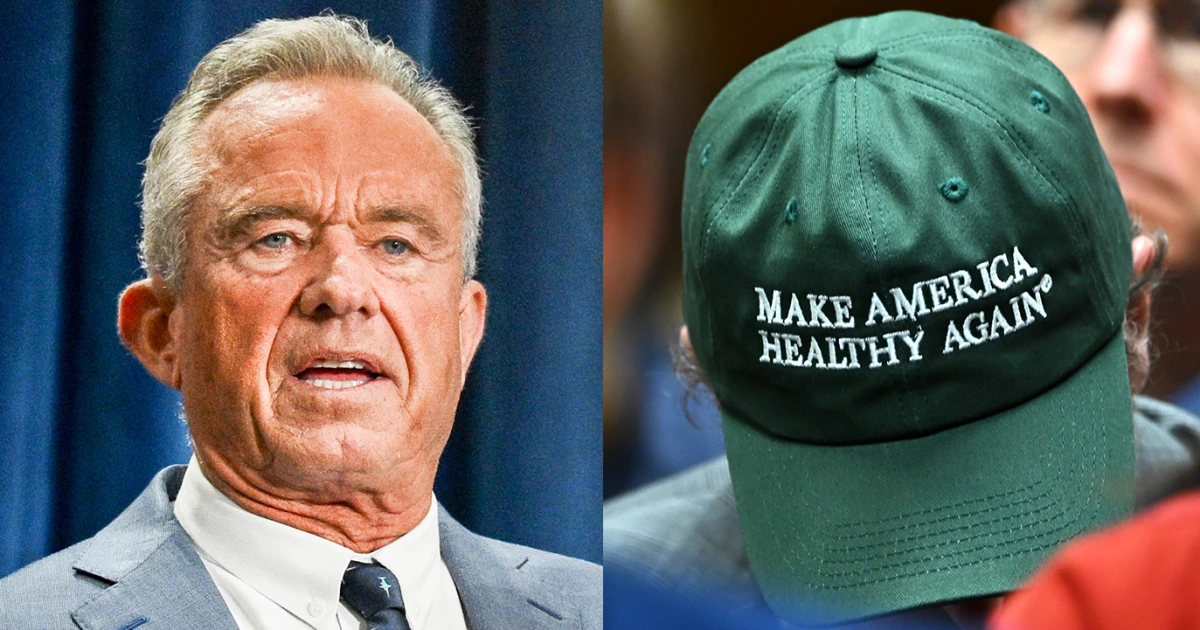
Some supporters of the Make America Healthy Again movement have begun to speak out against their leader, Health Secretary Robert F. Kennedy Jr., and the Trump administration as a whole as they call for a tougher crackdown on food dyes and pesticides.
A scorecard released Thursday by MAHA activists, including former members of Kennedy’s 2024 presidential campaign, said the Trump administration violated more than 85% of MAHA’s commitments on food, agriculture and environmental health. The scorecard’s creators include Dave Murphy, a former fundraiser for the Kennedy campaign, and Charles Eisenstein, Kennedy’s former chief speechwriter.
The scorecard, first reported by NBC News, provides a window into how MAHA views the administration and Kennedy himself ahead of the midterm elections. It accuses the Trump administration of tilting toward the chemical industry, pointing to its decisions to approve new pesticides and hire industry lobbyists and executives.
“We asked the Trump administration to deliver on the most basic promises they made to the MAHA movement, but time and time again we saw not only a lack of interest but a blatant slap in the face,” said scorecard author Tiffany Cianci, a MAHA advocate and former Kennedy campaign adviser.
About 41% of U.S. adults said they support MAHA’s ideals, according to an April poll by the nonprofit health think tank KFF. Polls show the majority are Republicans or Republican-leaning independents, although alignment with Kennedy or President Donald Trump is not the main reason for supporting the movement.
MAHA united during Kennedy’s 2024 presidential campaign, then switched to supporting Trump when Kennedy endorsed Trump. It brings together a variety of social movements, including food safety, environmentalism and vaccine skepticism, and attacks large companies whose products may cause chronic disease.
But many of these supporters have recently become Kennedy’s harshest critics, arguing that the Trump administration has neglected their priorities.
COVID-19 vaccine skeptics such as Dr. Mary Talley Bowden have criticized Kennedy and Trump for allowing the mRNA vaccine to remain on the market. Food safety advocates said Kennedy did not put enough pressure on companies to remove synthetic dyes and other additives from their products. Advocates for reducing pesticide exposure claim Trump undermines their mission with executive order to increase U.S. supply of herbicide glyphosate
This dissatisfaction led to infighting between Kennedy loyalists—including those appointed to key government positions—and activists loyal to his original cause.
“What started as a hairline crack in the alliance has now grown into a huge rift,” said Peter Lurie, president of the Center for Science in the Public Interest, a nonprofit advocacy group focused on nutrition and food safety.
White House spokesperson Alison Schuster said the Trump administration “has achieved broad victories for the MAHA agenda, including overhauling dietary guidelines for Americans, reducing artificial ingredients in the food supply, and investing in regenerative agriculture.”
“After years of being on the political sidelines, the MAHA coalition has found a champion in President Trump, who has made incredible progress in making America healthy again,” Schuster said in a statement.
Department of Health and Human Services spokesperson Emily Hilliard said Kennedy “remains committed to enacting lasting reforms based on science, transparency and accountability.”
“President Trump and Secretary Kennedy are achieving the fundamental changes Americans voted for. In just 20 months, this administration has moved MAHA forward across the federal government at a historic pace,” she said in a statement.
Cianci acknowledged that many of the government’s actions against environmental toxins and food additives were outside of Kennedy’s purview. But she said “clear damage” was done to his reputation during his time in the administration, noting that Kennedy’s career involved suing pharmaceutical and pesticide companies the government is currently working with.
“It’s very difficult for me to see him not speaking out on issues that clearly go against everything he’s committed to, because I think ethically it’s probably against his own will,” Cianci said.
Kelly Ryerson, a prominent MAHA advocate nicknamed “Glyphosate Girl” and who helped develop the scorecard, said she didn’t blame Kennedy like other members of Trump’s cabinet because she knew “where his heart is.”
“I know how deep corporate influence is on regulators, and he himself has been critical of that for years,” she said. “[But] The administration’s actions are truly contrary to everything we hoped for and everything Trump promised. “
Pamela Hurd, a professor of social policy at the University of Michigan, said the MAHA movement was always prone to conflict because it consists of unusual allies: liberal moms who feed their children organic produce, fringe doctors who falsely claim vaccines cause autism, and Trump supporters who want to eliminate the federal government’s influence on business.
But over time, MAHA’s main goals became clear. A March Politico poll showed that for those who consider themselves part of the movement, the top priority is removing ultra-processed foods from the American diet and limiting exposure to PFAS, microplastics and pesticides.
“The MAHA movement has always been particularly interested in chemicals,” Lurie said.
Much of Cianci’s scorecard focuses on actions taken by the Environmental Protection Agency and the Department of Agriculture—agencies that Kennedy does not oversee. For example, it argued that the EPA’s decisions to weaken mercury emission standards and reduce drinking water limits for certain PFAS violated its commitments.
Phase out of food coloring
According to the scorecard, some of the “partially delivered” promises came directly from agencies under Kennedy’s leadership, such as the Food and Drug Administration.
For example, the FDA requires food companies to voluntarily phase out certain dyes and bans two other dyes that are not widely used. It also requires food manufacturers to notify the FDA when they determine that an additive is “generally recognized as safe.” However, the rule will not remove additives already in foods, nor will it prevent manufacturers from adding more.
Lurie said Kennedy campaigned on addressing these issues but “never considered the practical questions: What do these regulations actually look like? What powers do these agencies actually have?”
The scorecard did not mention one action that Kennedy often touted: his January overhaul of federal dietary guidelines that encouraged Americans to eat more protein and cut back on ultra-processed foods.
It also did not address Kennedy’s vaccination policy. Both Kennedy and Trump have sought to reduce the number of commonly recommended childhood vaccines. Kennedy last year fired longtime members of the federal vaccine advisory committee and replaced them with vaccine skeptics. (A federal judge temporarily blocked the change, which is still being challenged in court.)
“If you were to single out one thing that RFK was successful at, it would be his influence on government vaccine policy,” said Hurd, the University of Michigan professor.
Kennedy assured anti-vaxxers last month that they “have a strong and steadfast friend in the White House.”
But as tensions mount, many MAHA supporters insist the movement does not need to take a political stance. Ryerson said MAHA voters may be absent from the upcoming midterm elections.
“The frustration with Obama and Biden is similar to the frustration with Trump,” she said. “What’s different about this administration is that we’ve committed to something very, very different in a very real way, so I think the burn is particularly strong.”