Safia Southey is an international lawyer and writer who focuses on how societies reckon with wartime abuses.
A Twilight Zone Between War and Peace
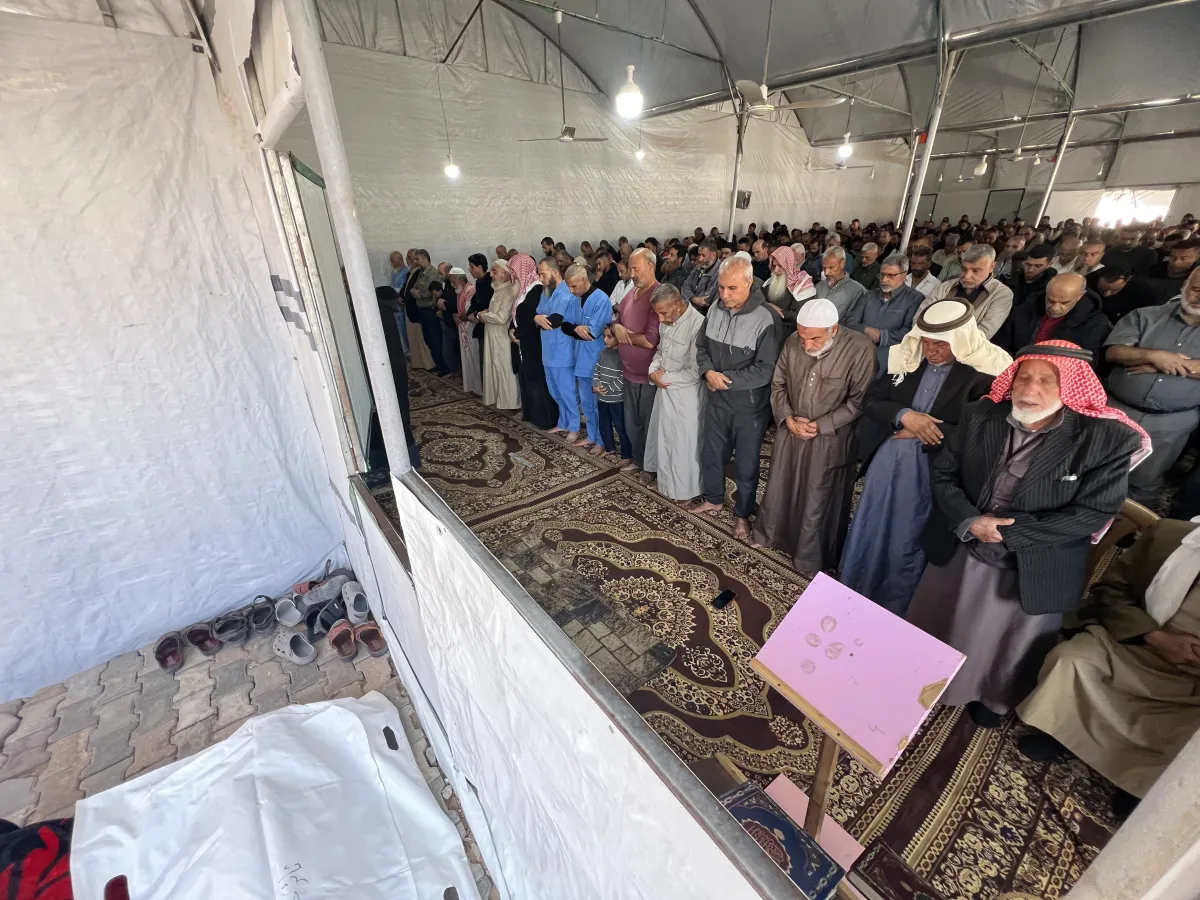
Abdullah Abu Zubaida’s family spent the first anniversary of the Gaza ceasefire last month in a shelter they built from the debris of their own home. Ne’man Abu Jarad and his five daughters spent it in tents, still displaced and with no clear way back. These families and millions of other Palestinians find themselves in a twilight state between war and peace: a zombie conflict in which a ceasefire has been announced while Israeli military control and attacks continue. The agreement risks making that condition permanent by leaving Palestinian governance and Israeli withdrawal dependent on decisions made largely by outside powers.
For these families, whose circumstances were reported by the Associated Press, and others in their position, the ceasefire that was supposed to end the war has brought little control over what happens next. Whether they can return home, rebuild, or resume anything resembling ordinary life remains subject to decisions made by outside authorities, whose hold on Gaza’s future may be further entrenched by the agreement itself.
While violations of the ceasefire warrant the attention they receive (and more), the agreement’s own terms demand scrutiny too, since arrangements negotiated to end wars also decide who holds power once the fighting stops. Christine Bell, a legal scholar specializing in peace accords, has shown how such agreements can perform constitutional functions. They determine who governs, over what territory, and subject to whose approval.
In Gaza, the conditions for Israeli withdrawal and Palestinian self-government give outside actors considerable power to determine when, and whether, the transition ends. The framework therefore threatens to turn the temporary administration of a devastated territory into a durable system of external control with no enforceable end, legitimized by the very agreement meant to bring peace.
A Long History of Outside Control
Gaza’s current predicament has a long history of displacement and outside control. In 1947, the United Nations General Assembly adopted a plan to partition Palestine (then under British rule) into Arab and Jewish states. While Jewish leadership accepted the plan, Arab leadership rejected it. During the war surrounding Israel’s establishment in 1948, approximately 750,000 Palestinians fled or were expelled from their homes. Many sought refuge in Gaza. The mass displacement and dispossession of the Nakba — Arabic for “catastrophe” — never ended.
Israel occupied Gaza and the West Bank, including East Jerusalem, in 1967. In 2005, it removed its settlements and withdrew its army from inside Gaza while retaining control over its airspace and maritime access and substantial authority over its borders and the movement of people and goods. In 2024, the International Court of Justice concluded that because Israel continued to exercise authority over Gaza’s borders and the movement of people and goods, the withdrawal had not entirely released it from its obligations under the law of occupation.
The current institution of Palestinian self-governance also began as a temporary arrangement intended to last no more than five years. The Oslo process of the 1990s provided for an interim Palestinian government in Gaza and the West Bank until a permanent settlement could be reached. That institution, the Palestinian Authority, remains central to proposals for Gaza’s future.
Hamas won the 2006 Palestinian legislative elections and took control of Gaza in 2007 after armed conflict with Fatah, the rival Palestinian faction. Israel, citing security concerns, tightened its border restrictions into a blockade by land, sea, and air, restricting the movement of people into and out of Gaza and the entry of food, construction materials, and other necessities. Egypt restricted passage through its own border crossing. Years before the current war, the U.N.’s humanitarian office documented the effects: restrictions on movement and trade had undermined Gaza’s economy, increased its dependence on aid, and obstructed access to healthcare and education.
On Oct. 7, 2023, Hamas-led groups attacked Israel, deliberately killing civilians and taking hostages; Human Rights Watch has documented these acts as crimes against humanity and war crimes. Israel’s subsequent military response devastated Gaza. By Oct. 21 of this year, Gaza’s Health Ministry reported 74,494 Palestinians killed and 175,604 injured. In an October 2026 report, the U.N. Independent International Commission of Inquiry concluded that Israeli authorities and forces continued committing genocidal acts against Palestinians in Gaza after the ceasefire, with the intent to destroy the group in whole or in part. By September of this year, Israeli military control had expanded beyond the approximately 53 percent of Gaza envisioned under the ceasefire agreement to at least 60 percent.
By the ceasefire’s first anniversary, nearly two-thirds of housing units had been destroyed, many of the remaining buildings were unsafe, and large-scale reconstruction had yet to begin. With winter approaching, displaced families need immediate decisions about shelter. The Israeli authorities who control access to their homes and to building materials can postpone those decisions. Such delays favor whoever controls access, and waiting itself becomes a source of political leverage.
From Resolution 2735 to Resolution 2803
In June 2024, the U.N. Security Council endorsed a three-phase framework in Resolution 2735. An initial ceasefire and exchanges of hostages and prisoners were to lead, upon agreement, to a permanent end to hostilities and full Israeli withdrawal, followed by major reconstruction. The initial ceasefire was to continue for as long as negotiations over the second phase went on.
In November 2025, the Security Council adopted Resolution 2803, endorsing U.S. President Donald Trump’s plan to end the Gaza conflict and authorizing international arrangements for its implementation. The framework retains the language of transition while placing Gaza’s administration and redevelopment under the oversight of a Board of Peace chaired by Trump. Palestinian Authority control would depend on completing a reform program and demonstrating the capacity to govern securely and effectively. The resolution refers to earlier proposals, including a Saudi and French initiative calling for reforms to governance, transparency, public finances, and service provision. Israeli withdrawal is tied to demilitarization milestones to be agreed among the Israeli military, an International Stabilization Force, the guarantor states, and the United States. The force’s mandate includes demilitarization and civilian protection. An Israeli military presence along Gaza’s perimeter could remain until the territory is judged secure against a renewed terrorist threat.
The plan endorsed by the resolution states that Israel will not occupy or annex Gaza, that no one will be forced to leave, and that full humanitarian aid will enter immediately. Continued attacks and restrictions on assistance must therefore be assessed against those obligations, but compliance with these provisions would still not resolve the deeper problem. The framework grants outside institutions concrete powers over Gaza while making the restoration of Palestinian political authority dependent on future conditions. It establishes who governs during the transition far more clearly than it establishes how the transition ends.
The resolution authorizes the international arrangements until Dec. 31, 2027, subject to further Security Council action, but it sets no deadline for full Israeli military withdrawal or the transfer of political authority to Palestinians.
Who Decides When Gaza Is Secure?
Israeli withdrawal depends on milestones agreed with Israel and other actors, but the criteria for determining when those milestones have been satisfied, and the consequences of disagreement, remain ill defined. Whoever can set the benchmarks, withhold agreement, or dispute compliance has considerable power over how long Gaza remains under outside supervision. This effectively means that the decision will be made in large part by Israel and institutions overseeing the transition, including Trump’s Board of Peace, which counts Israeli Prime Minister Benjamin Netanyahu as a member.
No security arrangement can eliminate every future threat; clear benchmarks and a truly independent arbiter are essential if the ceasefire is to ever become a lasting peace.
The demand for protection against another attack is understandable. Hamas’s weapons, and its coercive power over Palestinians, are serious problems. But if the security conditions for withdrawal can be revised indefinitely, Palestinians cannot know when the promised transfer of authority will occur. The obligations of one armed faction should not determine whether an entire population has a political future.
Israel Policy Forum, a U.S. policy organization supporting a two-state solution, analyzed and supported the basic approach of the July 2026 road map. The proposal linked phased Hamas disarmament to incremental Israeli withdrawal and the creation of a new Palestinian civilian administration. The organization’s analysis described Israel’s refusal to accept that bargain, conflicting explanations of when withdrawal could proceed, and unresolved definitions and verification arrangements.
No security arrangement can eliminate every future threat; clear benchmarks and a truly independent arbiter are essential if the ceasefire is to ever become a lasting peace. Otherwise, the conditions for withdrawal could be extended indefinitely. If Hamas disarms and the promised withdrawal never comes, the disarmament stands while Israel’s commitment remains open to renegotiation. A single attack by a faction opposed to the agreement could then be invoked to suspend the political future of an entire population, allowing armed spoilers to trigger further delays in Palestinian self-government and giving Israel and the United States grounds to prolong those delays.
Palestinians have seen an interim arrangement outlast its deadline before. The 1993 Oslo agreement between Israel and the Palestine Liberation Organization established a framework for interim Palestinian self-government and negotiations toward a permanent settlement. It envisioned a transitional period of no more than five years, with negotiations on permanent status to address the sovereignty and governance of Jerusalem, the fate of Palestinian refugees since 1948, Israeli settlements, and state borders. More than three decades later, there is still no comprehensive settlement. The new plan follows the same design: concrete authority now, political rights later.
The Cost of Delay
In an Oct. 2 report, the UN’s humanitarian office identified 217 displacement sites at medium to high risk of flooding, hosting approximately 235,000 people. Nearly 44,000 people were sheltering in unsafe buildings that required full or partial demolition, the report said. Restrictions on land access and on the entry of supplies continued to hamper preparations for winter.
No later breakthrough can give back a lost winter, a child’s interrupted schooling, or a patient’s postponed treatment. The longer a household has to survive elsewhere, the harder it may become to rebuild the life it was forced to leave, and an agreement can keep promising recovery while the conditions for recovery disappear.
Palestinians are also asked to prove they can govern before they are allowed to do so, and governing requires revenue. In the October report, the U.N. described how Israel’s withholding of approximately $6 billion in tax revenues it collected on the Palestinian Authority’s behalf was undermining that government body’s ability to provide services and pay salaries. The crisis extends beyond Gaza and exposes a circular test of readiness. An administration deprived of its own revenue struggles to deliver services, and those failures can then be invoked to justify continued outside supervision.
Blame works the same way: If a Palestinian administration is responsible for public services while other actors control access, security, and funding, residents may blame its officials for failures it could not prevent. The resulting loss of public trust would make representative government harder to build, and that weakness could in turn be cited as a reason for continued outside supervision.
Nathan J. Brown, a scholar of Palestinian politics, has argued that Gaza diplomacy is separating administrative functions from national political representation. A committee of technocrats can run clinics and restore water service, but deciding the political future of the people it serves requires authority grounded in their consent. An administration accountable primarily to a foreign board chaired by Trump lacks that democratic mandate.
The Role of Outside Powers
The United States helped broker the Gaza ceasefire, holds a central position in the system meant to implement it, and underwrites Israeli military power. According to the Congressional Research Service, the 2016 memorandum covering fiscal years 2019 through 2028 pledged $38 billion in military assistance, subject to congressional appropriation. Without credible American consequences for obstructing withdrawal, the material advantages of continued control may outweigh any incentive to implement the agreement.
Donors providing humanitarian aid may end up paying to keep civilians alive while decisive political control remains elsewhere. Each emergency would then produce another funding appeal, while the authority to lift the restrictions causing the emergency would remain in place. Humanitarian funding could consequently help sustain that arrangement. The proposed International Stabilization Force, tasked with demilitarization and civilian protection, would need the authority and backing to restrain abuses by all parties, including Israel.
Ceasefires Without Endings
Lebanon offers a warning. After the April truce in the Iran war, Pakistan’s prime minister said the ceasefire included Lebanon. U.S. Vice President JD Vance said Washington had agreed to no such thing. Israeli attacks in Lebanon continued while the parties disputed what the agreement covered. Lebanese civilians were exposed to violence while governments argued over whether their country was protected at all. Whoever defines a ceasefire’s scope decides whose security it guarantees.
Gaza already displays the features of a zombie conflict, with an announced ceasefire, recurring military operations, and unresolved struggles over territory and power. The danger is that this condition becomes entrenched. Diplomats go on describing a transition, while people live under a system of control that survives one round of negotiations after another.
These conditions, though, are sustained by identifiable governments and institutions, through decisions they could make differently.
In a July 2024 advisory opinion, the International Court of Justice stated that the Palestinian people’s right to self-determination could not be made conditional by the occupying power, and it concluded that Israel must end its unlawful presence in the occupied Palestinian territory as rapidly as possible. The Security Council’s Resolution 2803 places Palestinian statehood after reform and redevelopment, saying that the conditions for a credible pathway “may finally be in place” at that time. The political framework thus makes progress toward exercising an existing right dependent on conditions assessed by outside actors, while establishing their immediate authority much more clearly.
Every grant of outside authority under the ceasefire needs an expiration date: thresholds that can actually be met, independent assessors to judge them, and consequences for any party that blocks the next step. Without them, Israeli withdrawal and Palestinian self-government in Gaza will remain promises that outside actors renew indefinitely and never keep. For the families still displaced, another anniversary will mean another year in a tent or a ruined home, waiting for decisions they cannot make. Their ability to return, rebuild, and determine their own future remains subject to a political framework in which authority rests largely elsewhere. The Gaza ceasefire risks giving the structures of control that preceded the war a new institutional form, backed by the U.N. Security Council and administered indefinitely in the name of peace.