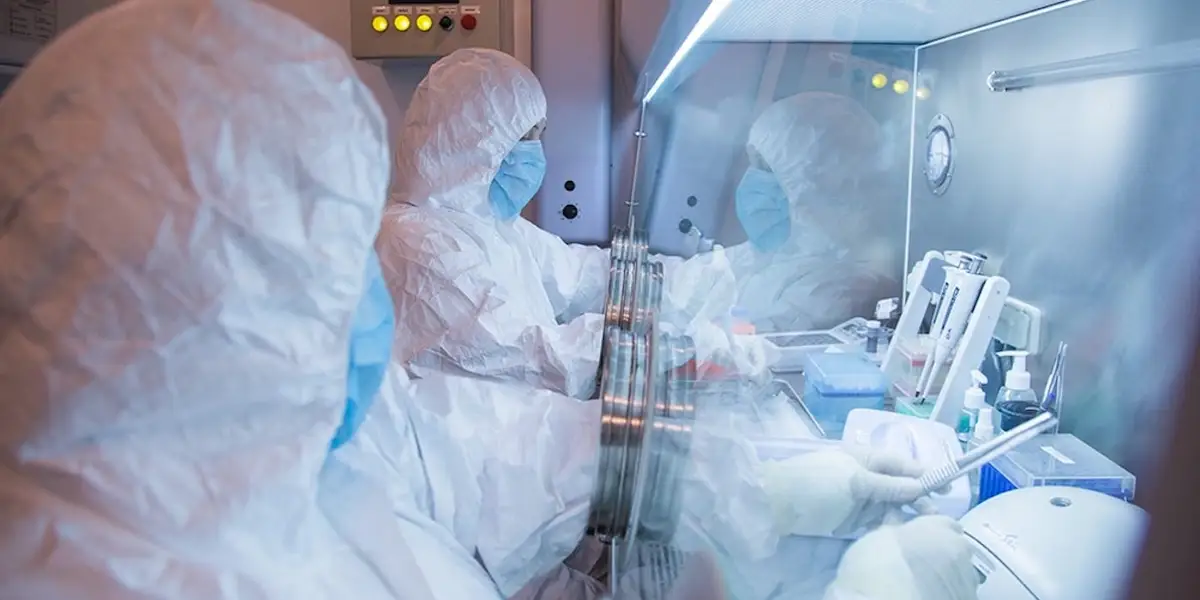
Russian officials are trying to calm global concerns after the death of a technician at a Siberian anti-plague laboratory.
Daria Shipilova, a 28-year-old employee of the Siberian Anti-Plague Research Institute, died on October 2 after being hospitalized with pneumonia a few days earlier in the nearby town of Serekhov.
The World Health Organization told The Associated Press on October 6 that the risk of plague to the wider European region was “very low.”
That doesn’t mean we know everything now—or indeed know much. While no plague outbreak has been confirmed so far, conflicting reports about how so-called “Patient Zero” became infected, whether she was infected at work and Russia’s current safety protocols have given some medical experts pause.
“This is a strange situation that needs more transparency and more information to clarify,” Dr. Nahid Bhadelia, founding director of Boston University’s Center for Emerging Infectious Diseases, told Business Insider.
Here’s everything we know so far.
What happened to Daria Shipilova?
As of now, little is known about Shipilova’s cause of death. However, independent regional news outlet Lyudi Baikala said she was hospitalized on September 29. Shipilova died on October 2, a friend told CNN.
Russia’s public health watchdog Rospotrebnadzor said that tests on Shipilova “did not detect microorganisms related to the patient’s occupational activities” and that she died of “pneumonia of unknown cause.”
The independent regional news outlet Baikal People reported that one of Shipilova’s colleagues at the institute said she was “very worried that if something happened she would infect anyone.”
Other colleagues called her “responsible” and called the anti-epidemic institute “a serious facility” in terms of safety measures.
Did she die of pneumonic plague?
Reports from Russian émigré publications (those forced to operate outside Russia or using decentralized reporting methods) speculated whether Shipilova died of pneumonic plague.
The Moscow Times, an independent publication based in Amsterdam, reported unconfirmed claims that Shipilova may have broken a test tube containing plague bacteria at the institute before falling ill.
It also cited reports from Russian Telegram channel Mash that she was hospitalized with symptoms of pneumonia and was put on a ventilator before her death.
Russian authorities have not publicly confirmed either claim.
Why does this case cause alarm?
Reports from Russian state media and independent publications often conflict, leaving more questions than answers. “To me, that doesn’t add up,” Badria said.
If reports of ruptured test tubes are true, anti-plague agencies should have implemented a number of safety measures, such as protective gear, ventilation and clear treatment protocols.
Badria added: “She needed to break the tube, destroy her PPE, failed to report the incident, did not receive antibiotic prophylaxis, simply went home unobserved, showed up at a local district hospital and exposed 200 people.”
However, this explanation is inconsistent with another report from the people of Lake Baikal.
Reports on the Russian security deal are also confusing.
Rospotrebnadzor said authorities identified and monitored 197 people who had come into contact with Shipilova. Two people reportedly tested positive for COVID-19 and two others tested positive for rhinovirus. Everyone else tested showed no signs of other sources of infection.
“It could be that we don’t have complete information, there could be some sensationalism in the regional media, or there could be something else going on that we don’t know about,” Badria said.
Still, the current risk is far from a COVID-19-level threat.
What is pneumonic plague—and how is it spread?
Yersinia pestis, or plague, is a bacterial infection that progresses very quickly, Badria said. People with pneumonic plague sometimes develop symptoms within 24 hours. It can be fatal if left untreated.
Fortunately, if caught early, treatment is simple: a course of antibiotics.
In July 2025, an Arizona man contracted pneumonic plague from two sick cats. He underwent medical evaluation two days after developing abdominal pain, chest pain and a dry cough. He died eight hours after admission. However, all 46 people who came into contact with him recovered after taking antibiotics.
Badlia said this points to one of the biggest mysteries of the Russian case so far: If Shipilova was reportedly experienced enough to know she was infected and reported it, why wasn’t she quarantined and quickly given medication?
“Early identification and post-exposure prophylaxis are one of the ways to avoid this,” she said.
Are the American people at risk?
The World Health Organization said the risk outside Russia was “very low” and there was no evidence of cases outside the United States or the Irkutsk region.
What Russia is missing
Badria, who is also the founding director of the Biological Threat Emergence, Analysis and Communications Network, said the organization is working to provide the latest information on pneumonic plague in Russia.
It’s not easy.
For one, Russia is notorious for suppressing press freedom, especially after the war in Ukraine broke out. Additionally, some early reports on the plague, including from pro-Kremlin sources like REN TV, appeared to be inaccessible when Business Insider checked on October 6.
Some official reports from Rospotrebnadzor are also vague. For example, the agency said tests conducted on Shipilova found no link to the plague at her job. However, Badlia said it was unclear exactly what tests she underwent.
“We should find out what her negative result is, even if they don’t know what her positive result is,” she said.
To onlookers, the situation bears some similarities to the COVID-19 pandemic. More than six years later, the WHO still has not confirmed the origin of COVID-19, which Badria said may have fueled panic.
“Transparency is important,” she said. “We’ve learned lessons from COVID and things could get bigger.”