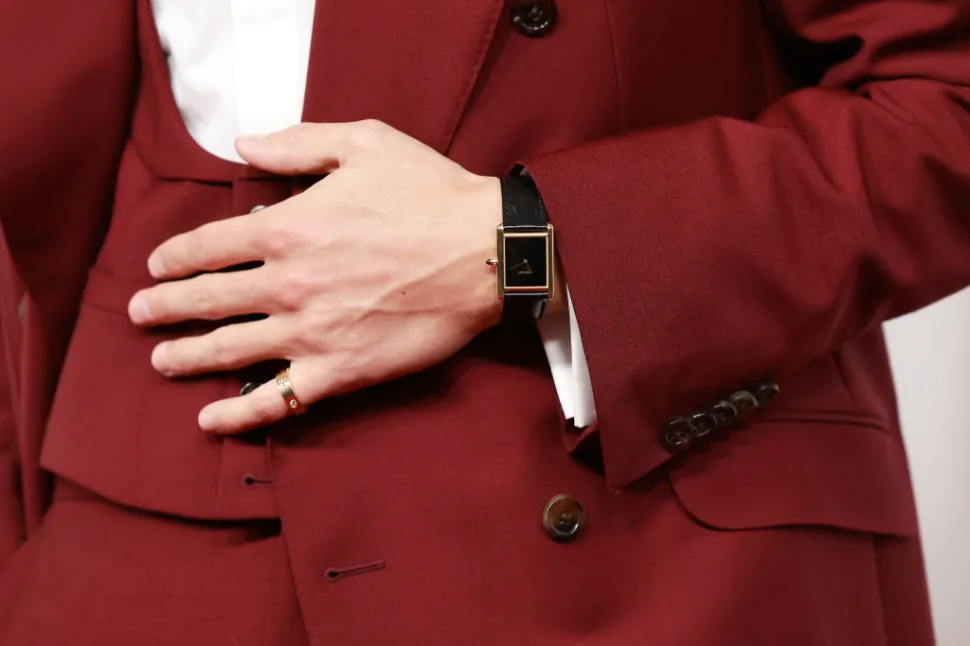
For much of the past two decades, luxury watches have seemed to be moving in only one direction: bigger. With case lengths exceeding 40mm, sports watches are becoming more and more eye-catching as brands build entire identities around their watches, aiming to present themselves from across the room. Now the pendulum has swung back. This reversal began in the second half of the 2010s, with a resurgence in favor of vintage watches and their smaller sizes, and accelerated in the early 2020s with the resurgence of Cartier and a growing interest in shaped, jewel-like designs. Nowadays, this trend seems to have reached its peak, with compact watches appearing at almost every level of the industry, from tiny jewel-like creations to scaled-down versions below 42 mm that would have been unimaginable not long ago. Vintage influence and comfort are part of the story, but watches are also increasingly worn as accessories somewhere between timepieces, jewelry and fashion.
Arguably, no brand embodied this moment better than Cartier, whose shaped cases and jewelry-first designs were largely indicative of trends that the wider market was now embracing. The brand has more than a century of history in compact watches, from the Santos in 1904 to the Baignoire in 1912 and the Tank in 1917, but it never quite joined the later oversized case race. Even the Santos de Cartier, one of the brand’s largest and sportiest core collections, is only 39.8 mm in diameter in its standard large size. Today, the Tank, Panthère and Baignoire seem particularly suited to contemporary tastes, with numerous small and mini models emphasizing not only the role of the watch as jewelry but also its ability to tell time.
This approach coincided with a period of significant growth for the brand. In the notoriously opaque Swiss watch industry, exact sales figures are difficult to determine, with most companies not disclosing brand-level revenue or production figures. Nonetheless, the ninth annual Swiss Watcher report released by Morgan Stanley and LuxeConsult in February 2026 estimates that Cartier’s watch sales in 2025 will be approximately 3.5 billion Swiss francs, an increase of approximately 10% from the previous year, maintaining its position as the second largest Swiss watchmaker in the world after the Rolex brand.
This momentum is also reflected in the resale market. According to sales data shared with the Observer by Richemont-owned pre-owned watch specialist Watchfinder & Co., the Cartier Tank Française has been the second best-selling watch under 30 mm on its platform for four consecutive years. Its share of the segment climbed from 5.5% in 2022/23 to about 8% in 2025/26, even as the long-time leader in the category, the Rolex Lady-Datejust, saw its share slip from about a third of sales to just over a quarter. Smaller watches alone don’t explain this growth, but Cartier’s success comes as the wider market increasingly embraces the shapely, jewelry-influenced designs that have long defined the brand.
Cartier isn’t the only company at the high end of the market. Piaget regained its taste for highly decorative jewelry watches, while Bulgari continued to position the Serpenti as almost equal parts watch and jewelry. Vacheron Constantin and other high-end watchmakers also place more emphasis on small, odd-shaped and gem-set pieces. The result is a small case that can be read as thoughtful and stylish rather than just feminine.

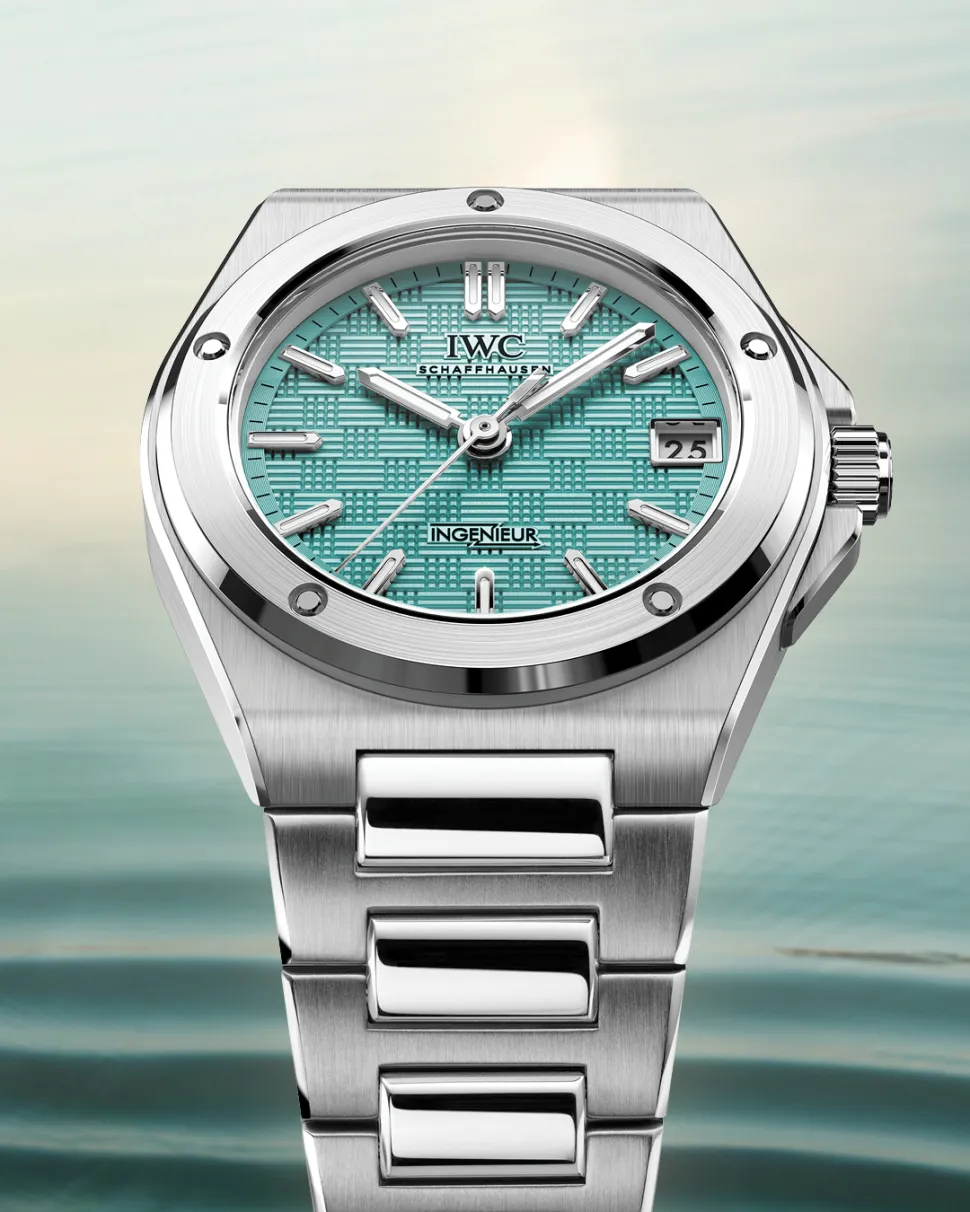
Perhaps more telling, though, is what’s happening with brands historically associated with the opposite extreme. IWC once marketed its watches under the slogan “Designed for Men”, part of a distinctly masculine image built around a number of pilot and sports watches. Today, its Ingenieur watch is relaunched in a modern form at 40 mm, as well as the Ingenieur Automatic in 35 mm, a size that in previous generations was often classified as a women’s watch. The brand is expanding its 35mm range again this year, showing that the smaller size isn’t a one-off experiment.
Breitling offers another notable reversal. The brand has long been associated with oversized aviation watches, and in 2025 it launched the Austin Butler-led 38mm Top Time B31 as one of the brand’s smallest men’s watches yet. Its catalog now also includes the Chronomat Automatic 36, a size once usually reserved for women that belongs to the same lineup as the brand’s largest sports model.
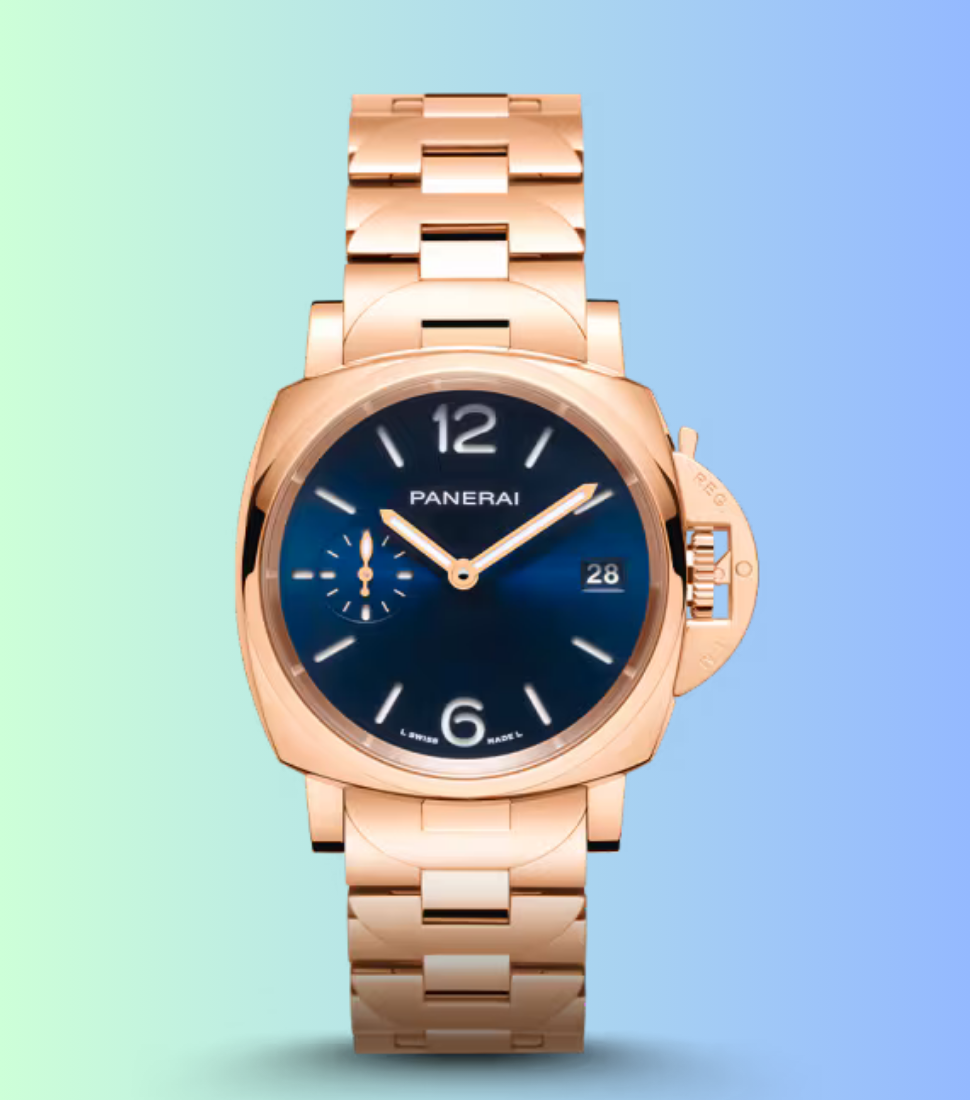
Then there’s Panerai, one of the brands most responsible for making oversized watches fashionable. Its iconic Luminor watches are famous for their case sizes 44 mm and above. Today, the Luminor Quaranta has reduced its design thickness to 40 mm, while the slimmer Luminor Due is only 38 mm thick. Even at Panerai, “smaller” has become a vocabulary.
This pattern also appears in Watchfinder’s case size profile. In the 12 months to July 2026, unit sales on its platform increased between 26% and 70% year-on-year in the reported 10 to 30mm size range, while watch sales in the 40-45mm range grew by just 5.5% and sales across the platform grew by 17%.
This shift is well below the top of the luxury market. Frederique Constant has adopted the same jewelery watch aesthetic with the Classics Manchette, a 25.7 x 20mm cuff style watch with a small square dial set within an integrated bracelet, alongside the more traditional 36 x 25mm Classics Carrée.
Meanwhile, Tissot has also seen great success with its PRX 35mm quartz and automatic models, with prices starting at $450 for the quartz model. Citizen has followed a similar route, launching a 37mm version of its popular Tsuyosa automatic watch, launching in 2025 as the first compact watch in the series. Hamilton has also launched a 36mm version of the rugged Khaki Field, underscoring the widespread popularity of smaller sizes in the market.
There is no reason why the watch size should be smaller. Vintage collecting makes the proportions of vintage watches feel familiar again. Smaller boxes are generally more comfortable. The old notion that men’s watches must be larger has been greatly eroded. At the same time, the connection between watches and fashion is getting closer and closer. Proportion and shape are as important as mechanical structure, or even more important. A small Cartier worn loosely like a bracelet, or a compact sports watch peeking out from under a sleeve, feels less like an outfit and more like part of an outfit.
Oversized watches are not going away, nor are they likely to go away. But over the years, it has become almost automatic to assume that bigger watches are better, and smaller watches are once again feeling like a choice rather than a compromise. It turns out that a watch doesn’t need to take up much wrist space to make a lasting impression.
More watch information