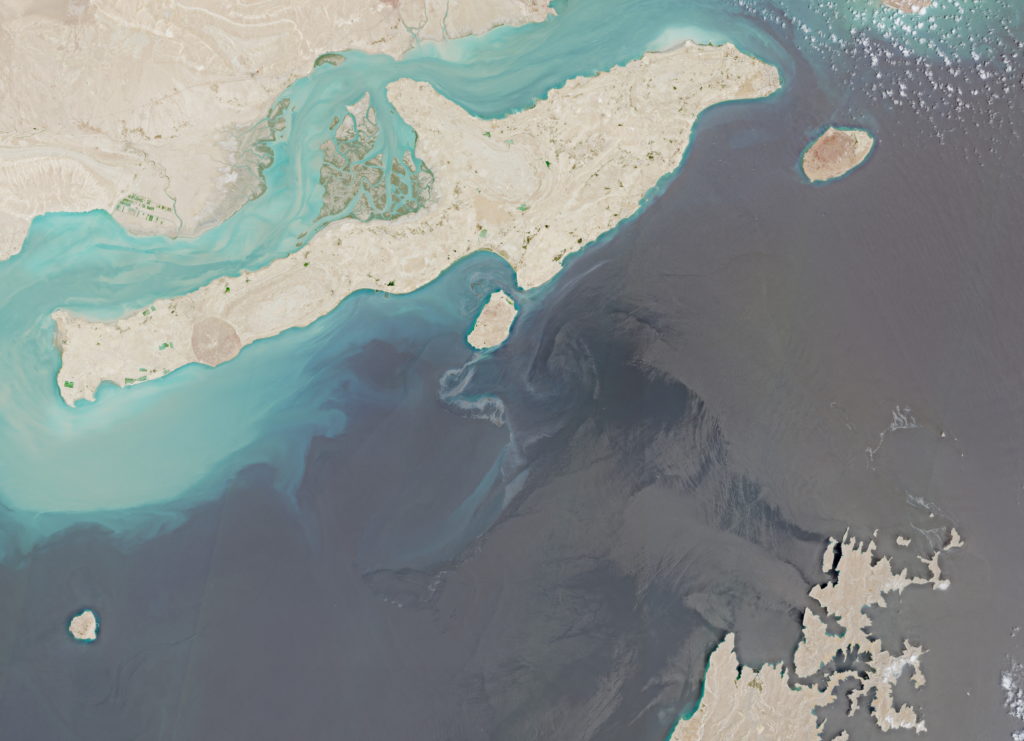
WASHINGTON (AP) — The United States has launched defensive strikes against some Iranian targets in the Strait of Hormuz, a U.S. official said Monday on the eve of crucial midterm elections.
Iranian state television reported that explosions were heard on Qeshm Island. The official, who spoke on condition of anonymity but was not authorized to comment publicly, said U.S. assets had been targeted “by Iran using surface-to-air missiles.”
The attacks appear to be limited rather than a resumption of full-scale hostilities, but President Donald Trump has previously said the United States would not launch new attacks on Iran ahead of Tuesday’s midterm elections. The unpopular war and its impact on U.S. gas prices and other areas of the economy have been a Achilles’ heel in Republicans’ attempts to retain control of Congress.
The region is nervous about the prospect of a resumption of full-scale U.S. action against Iran, and the new attacks, reported earlier by the Wall Street Journal, are sure to raise new concerns. The secret pipeline talks come as Israel and some Middle Eastern allies lobby Trump to move forward in a war that has lasted more than eight months and has roiled global markets and wreaked havoc on Iran.
It is understood that the Trump administration last launched an attack in early September, but thousands of U.S. troops remain in the waters near Iran to maintain a naval blockade aimed at preventing tankers carrying Iranian oil from entering the global market. Additionally, a third aircraft carrier and thousands of additional troops are heading to the Middle East.
Before the attack was confirmed, US Vice President J.D. Vance was cautiously optimistic that a deal was still possible. Vance sent a letter to Iran’s security chief Mohsen Rezai last week, but the White House did not provide many details. Trump told reporters the letter focused on providing “medical supplies and various items” to Iran.
“We’ve had many good conversations with the Iranians,” Vance told reporters Monday when asked about the letter. “In fact, I just spoke to the President of the United States about this about an hour ago. Look, the President and I both feel very good about the prospects of a negotiated resolution. We’re going to keep working on it.”
FILE PHOTO: Israeli Prime Minister Benjamin Netanyahu and President Donald Trump hold a news conference after meeting at Trump’s Mar-a-Lago club on December 29, 2025 in Palm Beach, Florida. Photograph: Jonathan Ernst/Reuters
Netanyahu urges Trump to launch strike in weekend call
Israeli Prime Minister Benjamin Netanyahu has pushed for another wave of strikes against Iran in the wake of the U.S. election, according to two regional officials and a third person familiar with the matter.
Netanyahu and his far-right allies lost their parliamentary majority in last week’s election, and a return to all-out war with Iran could help Netanyahu form an emergency government. Trump has alternately threatened large-scale strikes and pushed for a deal with Iran.
Diplomatic efforts have made progress, with Qatari mediators holding two rounds of talks with Iranian officials last week, two officials said. Mediators are trying to push for a framework that would see Iran halt its attacks in the Strait of Hormuz in exchange for lifting the U.S. blockade of Iranian ports, two officials said.
They said more talks were planned this week. The two officials spoke on condition of anonymity because they were discussing classified briefings they had received from U.S. officials, which also included Israeli officials.
One official said Netanyahu was working with senior U.S. administration officials to persuade Trump to launch a swift and widespread air campaign, but the president appeared undecided.
Netanyahu urged an attack during a weekend phone call with Trump, but Trump would not commit to military action, according to a person familiar with the matter.
A third regional official said other U.S. allies in the Middle East have warned against launching more attacks, saying they would destabilize the region and could lead Yemen’s Iran-aligned Houthi rebels to step up attacks on Saudi Arabia and Red Sea shipping. Iran-backed Iraqi militias may also be involved.
The Israeli government had no immediate comment. The White House did not directly respond to questions about a weekend phone call between Netanyahu and Trump discussing potential new attacks.
Saudi Defense Minister Prince Khalid bin Salman said he had a phone call with U.S. Defense Secretary Pete Hegers on Monday to discuss “the latest regional and international developments” and the Houthi rebels’ ongoing attacks on Saudi Arabia.
Trump downplays scale of Iran conflict
Oil prices fell sharply on Monday as new diplomatic efforts in the Iran war appeared to show signs of progress.
In a speech billed as his closing argument to Americans on Monday in Washington, Trump noted the decline and sought to minimize the scale of the conflict, which has cost U.S. taxpayers at least $47 billion.
“I don’t know if you call it a war because we haven’t had any fighting in months,” Trump said.
Iran says it’s ready for war as it pursues diplomacy
Iran hopes the United States can guarantee its compliance with any agreement. The United States and Israel have twice attacked Iran as it negotiates its controversial nuclear program.
Iranian officials have publicly stated that they are ready for war or diplomacy.
New supreme leader Ayatollah Mojtaba Khamenei met with Iran’s military chiefs and said there should be an immediate response to “threats of any kind and degree” from the United States or Israel without “geographical restrictions” and urged an expansion of the list of potential targets.
Read more: The Iranian delegation walked away from talks in Qatar after a tense weekend. The thing is like this
A recent Associated Press analysis found that Iranian attacks on more than two dozen U.S. bases since the war began have caused billions of dollars in equipment damage.
Iran’s security chief Rezai told state television that the United States’ “tone has completely changed” and called it a “very good sign.” He did not disclose the details of Vance’s letter and said he had not yet responded.
Arab allies caught in the middle
October saw the largest number of attacks on commercial ships since March in the Strait of Hormuz, as Iran sought to increase economic pressure on the United States and force it to lift the blockade.
The mood was grim at the Manama Dialogue, an annual security summit hosted by the International Institute for Strategic Studies in Bahrain.
United Arab Emirates presidential adviser Anwar Gargash told attendees that the positions of the United States and Iran were far apart and “if those positions are not bridged, then we have to fear the worst.”
Gulf states have spent billions of dollars to bolster their defense capabilities since the war began. Egyptian Foreign Minister Badr Abdulati told a rally in Bahrain that the next escalation “will be more dangerous, more destructive and will lead to nothing”.
Foreign Ministry spokesperson Mao Ning told reporters on Monday that China will send special envoys to Iran, Oman and Saudi Arabia in early to mid-November.
Magdi reported from New York and Anna from Jerusalem. Victoria Eastwood in Cairo, Kanis Leung in Hong Kong and Katie Marie Davis in London contributed to this report.
AP Standards: The Associated Press uses anonymous sources only when the information is essential to the story, rather than opinion or speculation. This information must not be available unless the source requests anonymity. Sources must be reliable, have access to accurate information and be approved by news managers.
A free press is the cornerstone of a healthy democracy.
Support trustworthy journalism and civil dialogue.