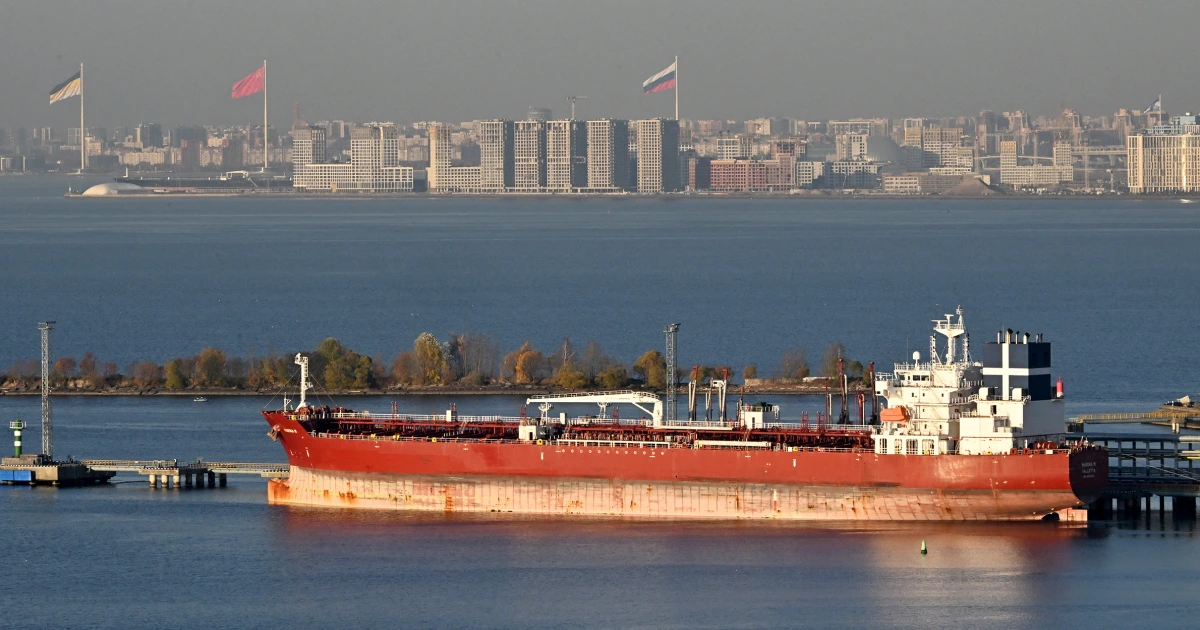
A tanker loaded with diesel sets sail on Friday The shipments are the first since President Donald Trump struck a deal with Russian President Vladimir Putin to release more fuel to global markets.
Trump eased some sanctions on the Kremlin two weeks ago and has since dropped more, reversing years of U.S. policy despite Moscow’s ongoing illegal incursions into Ukraine in an apparent effort to lower prices ahead of midterm elections.
The Kremlin confirmed the ship would depart for the United States. The tanker, the Agioi Fanendes, left a port in Primorsk, Russia today, according to MarineTraffic tracking data reviewed by NBC News. The ship listed New York as its destination.
Market intelligence firm Energy Aspects said it had confirmed to industry sources that the vessel had loaded 298,000 barrels of diesel in Primorsk.
The company said the ship is currently scheduled to unload in New York. Estimated arrival Tuesday, November 10th.
The ship is expected to arrive after the midterm elections. Trump’s Republican Party is on the verge of potentially significant losses in House and Senate seats defended by its candidates, That’s partly because consumers are facing a backlash from soaring energy prices.
Trump and his administration have scrambled to try to lower those prices, which have risen due to supply shocks caused by Iran and the Russia-Ukraine war.
Trump has taken a series of steps to ease relations with the Kremlin and pressure Kyiv to agree to end the war, drawing anger from Ukraine and its bipartisan backers in Congress.
Kremlin spokesman Dmitry Peskov said earlier on Friday: “I believe the Energy Ministry has received reports that the first tanker has set sail for its destination and will continue to deliver more cargo regularly.”
Crude oil is set for a third consecutive week of gains. Brent crude, the world’s most important oil benchmark, is trading at about $114 a barrel, less than $13 from this year’s high.
Since the beginning of this year, the average price of diesel has soared from US$3.55 to US$6.32 per gallon, an unprecedented 78% increase.
Analysts at Energy Aspect said the impact of cargo arrivals was likely to be “limited”.
The sky-high price of diesel troubles economists more than the rise in regular gasoline prices because, as KPMG chief economist Diane Swonk told NBC News in August, “the cost of diesel affects almost everything.”
“Everything from… running a farm… food costs, to transporting everything throughout the economy, there are additional costs,” she said.
Currently, U.S. daily diesel demand is about 3.8 million barrels per day, meaning Friday’s shipments won’t even cover a full day’s use.
“Global distillate markets have tightened sharply,” Francisco Blanch, global head of commodities at Bank of America, said in a recent report, adding that this indicated a “significant shortage of refined products.”
Diesel is a distillate fuel produced by refining crude oil.
“Geopolitical disruptions are exacerbating this shortage, as attacks on shipping around Hormuz make energy flows more difficult and costly, while attacks on Russia’s refining capabilities further limit product availability,” he wrote.
Russia has been one of the world’s largest exporters of diesel.
The Kremlin restricted diesel exports in September and part of October as Ukraine launched attacks on its energy infrastructure. It lifted those export restrictions after Putin struck a diesel deal with Trump.
Easing sanctions on Russia to open up some previously blocked diesel supplies is just the latest in a series of policy levers Trump has taken.
Just in the past few weeks, the president signed an order allowing wider use of off-road diesel. The U.S. government has also put pressure on European allies, especially Germany and France, to urgently release some diesel reserves.
The U.S. government is also reportedly pushing to release new crude oil and diesel reserves, but the International Energy Agency has rejected the request.
Experts say that even overall, Trump’s actions will do little to alleviate continuingly higher prices.
“Policy intervention can provide temporary relief, but there is no magic bullet for diesel,” Branch wrote.