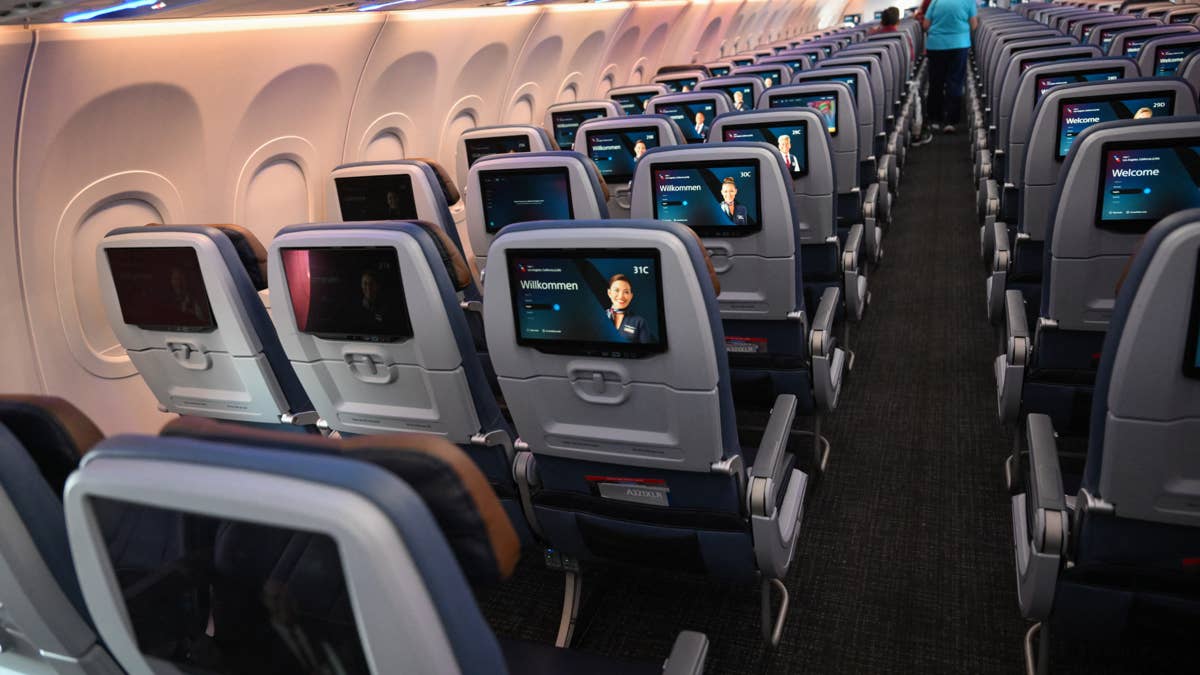
Traveling by air has become more than just the fastest and safest way to get from point A to point B without too much bumps.
Passengers want legroom, great views and delicious meals, while others want to be able to work smoothly on their laptops while flying.
These demands have intensified fierce competition in the industry, and airlines also need to make profits. Airlines are adjusting strategies to stay afloat amid rising fuel prices.
American Airlines announced its third-quarter profit results on October 22, with revenue increasing 19.3% year-on-year, exceeding the upper end of its previously announced guidance range.
As well as its revenue record, the airline also revealed an important shift in its strategy.
American Airlines says it prioritizes higher fares over fuller planes
During its third-quarter earnings call, American Airlines reported record quarterly revenue of $16.3 billion. Demand was strong across domestic and international markets, with premium travel and corporate bookings performing particularly well.
However, the increase in ticket revenue did not translate into profits due to high fuel costs.
“In the third quarter, higher fuel prices increased our costs by $1.9 billion. That’s nearly 70% higher than what we paid in the same period last year,” Chief Executive Robert Isom Jr. said on a conference call.
American Airlines also reported an adjusted loss of $0.28 per share, with management expecting fuel costs to remain high through the end of the year. It also provided full-year 2026 adjusted loss guidance of $1.00 to $1.60 per diluted share.
The airline also confirmed it had been focusing on higher fares rather than maximum seat occupancy. In airline terms, this means prioritizing “revenue” (revenue earned per passenger mile) over “load factor” (the proportion of seats that are full).
Its plan is to boost revenue through premium products, pricing and loyalty programs.
“We were thoughtful about how we managed revenue this quarter. We prioritized yield over load factor, proactively ensuring significantly higher yields in exchange for slightly lower loads,” Chief Commercial Officer Nathaniel Pieper said.
Patrick T. Fallon/Getty Images
American Airlines focuses on what higher fares mean for travelers
For travelers, this shift is already reflected in fares. Reuters quoted data from the Department of Labor showing that in the seven months to September, air ticket prices in the United States increased by an average of nearly 23% annually.
Southwest Airlines, for example, said its average passenger fare rose 26.9% in the third quarter to $231.69, excluding fees.
Holiday travel is also affected. Hopper’s 2026 holiday travel index shows that the average domestic round-trip ticket price for Thanksgiving is $402, up 31% from last year; the average domestic round-trip ticket price for Christmas is $452, up 23%. Economist Hayley Berg attributed the decade high in part to months of rising jet fuel costs due to the Iran conflict.
Travelers should not expect relief if fuel prices fall. Devon May, chief financial officer of American Airlines, told the Financial Times on October 22 that if fuel prices fall, fares may remain essentially unchanged.
Flexibility is still the best way to save. In September, Hopper wrote that departing on Monday, Nov. 23, was the cheapest option for Thanksgiving, costing about $370 round trip. It also recommends avoiding return journeys on Sunday, November 29, when the average ticket price is as high as $604.
here are some of mine other Latest travel news Coverage:
- Delta Air Lines CEO sends firm message to travelers worried about flying safety
- Low-cost carrier Wizz Air will exit 2 major markets by March 2027
- Marriott finally solves key traveler pain point
Fare strategy shows revenue results but has limitations and risks
American’s decision to prioritize yield over load factors reflects a broader shift in the U.S. airline industry, as airlines increasingly prefer to empty seats rather than discount fares to fill them.
According to a Reuters report on October 23, passenger revenue of the five major U.S. airlines increased by nearly US$8.8 billion in the third quarter, an increase of 18%, while passenger volume increased by less than 1%.
So while rising fares have largely boosted the industry’s revenue growth, it hasn’t been enough to protect profits from soaring fuel costs.
“If fuel prices stay high, we have to keep increasing production so we can make some money,” May told Reuters.
This approach also has its limitations. Higher prices could ultimately dampen demand, while lower capacity could increase operating costs per seat.
Can airlines maintain higher fares?
Today’s pricing strategies may also become harder to sustain by 2027.
Reuters quoted Cirium data as saying that the six major U.S. airlines plan to increase domestic capacity by 3.8% in the first quarter of 2027 and by 0.2% in the third quarter of 2026.
If more seats come onto the market, competition could increase and put pressure on ticket prices. At the same time, consumers are already facing significant price increases, increasing the likelihood that some will travel less.
If capacity grows faster than demand, airlines may have to choose between accepting lower load factors and lowering prices to attract passengers.
Still, American Airlines’ chief financial officer believes the airline’s “earnings growth is very sustainable.”
RELATED: United CEO defends charging passengers extra to get better seats