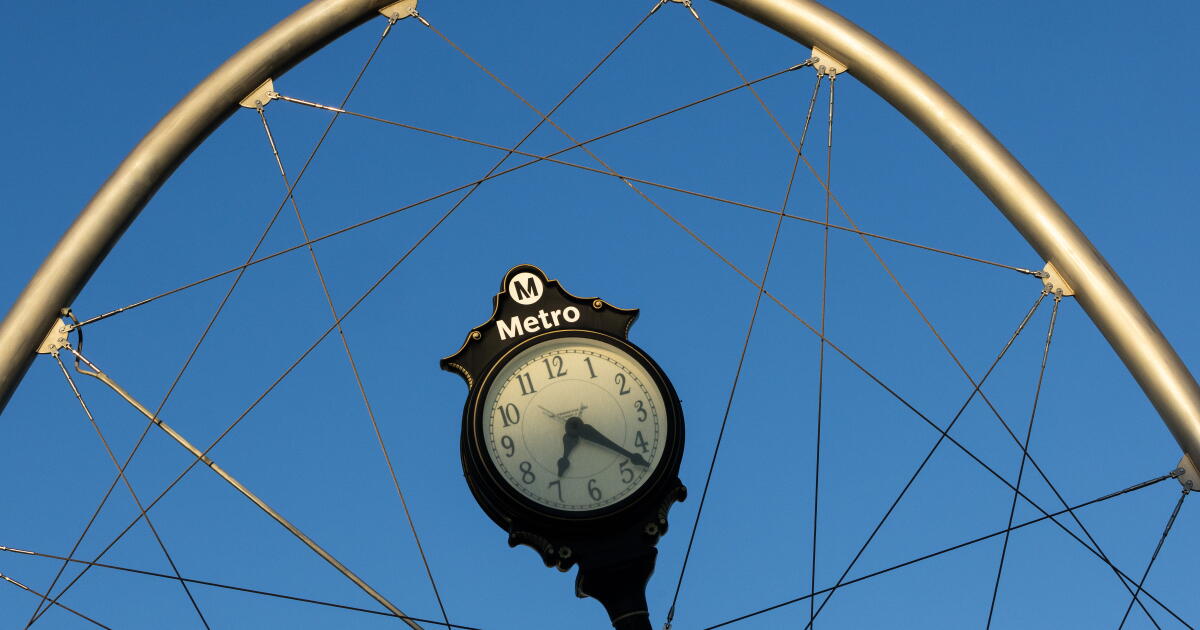
Daylight Saving Time officially ends before dawn on Sunday. At 2 a.m. on November 1, the clocks go forward one hour, which means people can get an extra hour of sleep.
This also means there will now be more light in the morning and it will get darker earlier in the evening.
Most phones will make the change automatically. People using analog clocks should manually set their clocks ahead one hour.
While many will welcome the extra sleep, others may wish we were done with this twice-yearly clock-changing practice by now. The United States first adopted daylight saving time through the Standard Time Act of 1918. There have been efforts to end daylight saving time for years.
Congress is considering a bill called the Sunshine Protection Act that revives efforts to make daylight saving time permanent, although it is unlikely to pass this year. Under the proposal, clocks would be moved forward one hour as usual in March but would then remain unchanged indefinitely, meaning sunrise would be later in the winter and daylight hours would be longer in the evening.
Supporters say it would help maximize daytime activity time after get off work and school. President Trump has been pushing for the change, urging people in Arkansas earlier this month to call what he said was the personal cell phone of Sen. Tom Cotton (R-Ark.), who opposed the bill on the grounds that it meant children would have to go to school in the dark.
Others, including sleep scientists and doctors, recommend making standard time permanent instead of daylight saving time, saying the move would better promote sleep cycles and reduce health risks. Other research suggests permanent daylight saving time could lead to more vehicle-pedestrian collisions due to darker morning commutes.
States have long had the option to opt out of daylight saving time with congressional approval, although most people in the United States adhere to the rule. Hawaii, most of Arizona, and U.S. territories do not change their clocks.
Californians voted in 2018 to allow lawmakers to end daylight saving time, but several efforts to enact the change have failed since then.
Daylight saving time starts again on March 14, 2027.