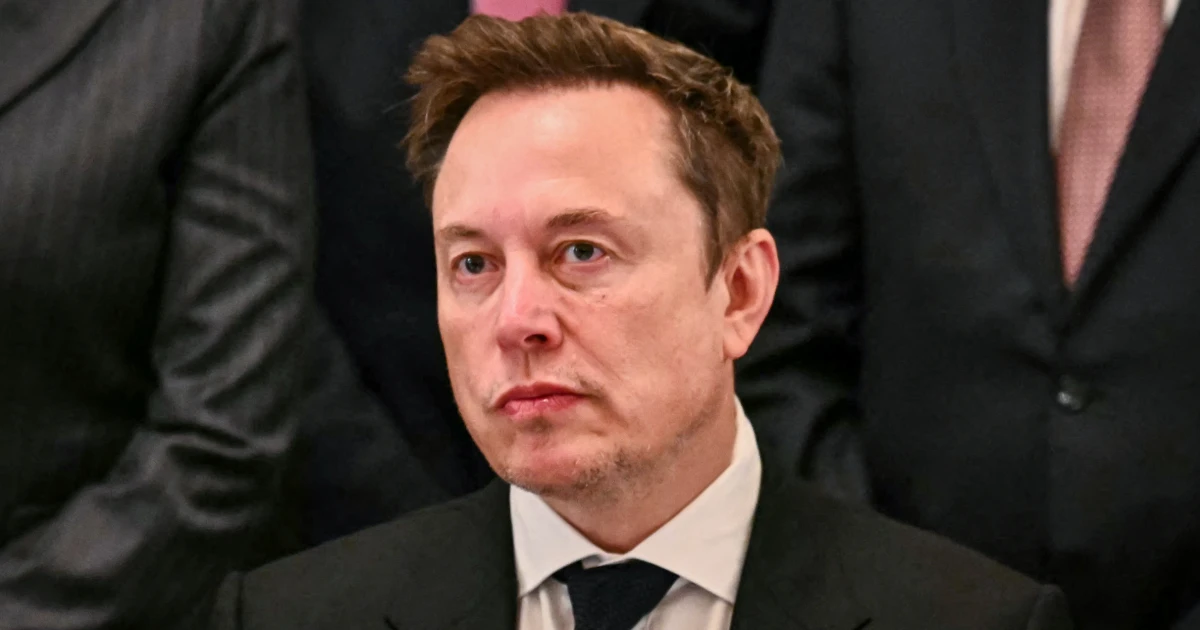
SAN RAFAEL, Calif. — It’s easy to find people who have bad things to say about tech titan Elon Musk, and many of them are featured in “Musk,” a new documentary about his rise to political and corporate power. Even more surprising in the film are the unflattering comments made by some of his own employees, including those who still work for him.
Some of the most brutal scenes in the film, which opens Friday in Los Angeles and New York, feature video or audio of Musk’s deputies exercising authority on his behalf or discussing what they’ve done for him.
Warning: This article contains spoilers from the documentary Musk.
Senior Tesla engineer Ashok Elluswamy admitted in a video deposition that an infamous hype video he helped create in 2016 about the company’s self-driving capabilities did not accurately represent Tesla’s technology at the time.
There are also audio clips of Jared Birchall, who handles Musk’s personal affairs. He can be heard in a recording of a phone call with internet celebrity Ashley St. Clair, shortly after she and Musk gave birth to a child and he took a hard line on child custody arrangements.
Both incidents were documented by the media: Reuters reported on a transcript of Elleswamy’s testimony in 2023, and the Wall Street Journal reported on Birchall’s phone call with St. Clair last year.
But the footage and audio appear to be newly released, giving the documentary a voice that transcends its usual critics and creating surprise moments even for viewers familiar with the ins and outs of Musk’s complex story.
Filmmaker Alex Gibney says in the documentary that he and his team spent more than three years researching Tesla and SpaceX CEO Musk, compiling not only archival interviews and hard-to-find footage, but also a database of Musk quotes used throughout the film.
Musk, 55, who was not involved in the documentary, was harshly critical of the documentary, saying on X that it was a “hit” and that Gibney had “zero integrity.” Musk, Tesla, SpaceX, Elluswamy and Birchall did not respond to requests for comment.
The nearly four-hour film is a comprehensive look at Musk’s life story, delving into the growth of SpaceX and Tesla, his fathering of 14 children and his on-again, off-again alliance with President Donald Trump, including his emergence as the top donor to Trump’s 2024 campaign.
The film reminds us that Musk regularly places himself at the center of public discourse and pop culture, and that it moves quickly through highlights and lows: from his hosting of Saturday Night Live in 2021 and his chaotic acquisition of Twitter the following year, to his Grok chatbot adopting the identity of “MechaHitler” and wielding a chainsaw in the early days of Trump’s second term.
“What I like to call a ‘lite’ four-hour movie,” producer Jesse Dieter said Wednesday at a screening at the Mill Valley Film Festival in Marin County, California. (The film has a 10-minute intermission, but is still roughly the same length as the 1962 epic “Lawrence of Arabia.”)
In a moment of anti-Musk defiance, the loudest applause broke out at the screening, which was about 90% attended, as a former career federal employee explained why they quit the Trump administration last year rather than work with Musk’s Government Effectiveness Department.
The film comes at another potentially pivotal moment for Musk, amid speculation that Democrats could investigate him if they take control of Congress after the midterm elections. Polls show Musk remains deeply divided, with a majority of Americans viewing him unfavorably despite Trump’s tribute to him at the White House on Thursday.
The documentary shows that Musk’s involvement in politics is nothing new: Archival footage shows that years before he endorsed Trump in 2024, Musk hobnobbed with politicians including former California Governor Arnold Schwarzenegger, a Republican, and the late Sen. Dianne Feinstein, D-Calif., and received rewards such as low-emissions credits for Tesla.
Part of what drives this documentary forward is the way it crosses genres: Some of it feels like a political thriller or a legal whodunnit, while others feel like a video game simulation, a science fiction fantasy, or a celebrity tabloid drama.
Other moments are closer to a horror movie, especially when Gibney recounts some of the graphic details of a crash involving Tesla’s driver-assist software. For example, he included dashcam video from a 2019 incident in which a Tesla used Autopilot to run a stop sign in Florida, killing a pedestrian. The jury found Tesla 33% at fault in the accident and ordered it to pay $243 million in damages.
One of the people interviewed in the film, science fiction writer and tech activist Cory Doctorow, adds to the grim feel by wearing a guillotine pin on his lapel.
Later, the documentary again takes on the theme of death, as Gibney attempts to tally the toll from Musk’s disbandment of the U.S. Agency for International Development last year. Amid footage of malnourished children in Africa and elsewhere, Samantha Power, who served as USAID administrator during the Biden administration, said the cuts had frozen some food programs for the world’s poor and blamed the cuts for 14 million potential deaths. (This number is based on projections released last year that estimated the likely number of deaths over the next five years.)
In the film’s rendering, the horror of these statistics and images is contrasted with Musk’s ongoing obsession: traveling deeper into space, including Mars, for the potential benefit of future, unborn generations.
There are parts of the film that have no evidence or explanation. Gibney promoted a conspiracy theory that Musk was using his Starlink internet satellite constellation to interfere in the 2024 election — a baseless idea that independent fact-checkers have long criticized. He also expressed concerns about the data that Starlink satellites and Tesla cars might collect, but didn’t go beyond vague theories.
A more pressing question that the film addresses is whether, or how much, Musk has changed in his years in the public spotlight. The film repeatedly shows a young Musk who was not only physically different, with thinner hair and a slimmer frame, but also talked about different issues than he does now – including “oil addiction,” an ancient motivation behind Tesla’s development.
Another Musk colleague, former SpaceX engineer Jim Cantrell, said in the film that Musk has changed less than some people think.
“Success allowed him to reveal his true thoughts,” he said.