With the announcement of the Nobel Prize, the awards have once again drawn attention to achievements that take years to achieve and only require a moment of recognition. There are no real Nobel Prizes in the world of horology, but the Grand Prix d’Horlogerie de Genève (better known as the GPHG) is often called the Oscars of the industry. The 26th edition of the event will bring the watch world to the Bâtiment des Forces Motrices in Geneva on November 7, where this year’s winners will be announced.
Established in 2001 and overseen by a public interest foundation since 2011, GPHG brings established luxury brands and small independent watchmakers into the same competition, allowing workshops that produce only a few dozen watches a year to compete with some of the biggest names in the industry. For collectors, nominations provide a survey of contemporary watchmaking; for brands, they provide access to experts, retailers and enthusiasts whose attention is hard to win.
What does the Grand Prix d’Horlogerie of Geneva honor?
The GPHG’s highest honor is the Aiguille d’Or, awarded to the best overall timepiece in all categories, making it the equivalent of the night’s Best Picture award. Recent winners have demonstrated the range within which top prizes can be achieved: IWC’s ambitious mechanical Portugieser Series Perpetual Calendar won the 2024 title, while Breguet’s much simpler single-hand Classique Souscription 2025 won the following year.
In addition to this top honor, 14 competition categories recognize different approaches to watchmaking. The “Time Only” award is reserved for watches that display the time with two or three hands and no other indications, while the “Essential” award allows for functions such as date, power reserve or traditional moon phase, as well as other ways of displaying time. The Complications Award recognizes higher mechanical complexity, while the Mechanical Exception Award covers unusual mechanical devices, including striking watches and automatics. Other categories focus on chronographs, tourbillons, calendars and astronomy, sports watches, jewelry, gem-setting, arts and crafts, and mechanical timepieces.
This year’s structure also eliminates the previous men’s and women’s divisions, grouping watches based on their function rather than the gender of their intended wearer. The change reflects the growing blurring of lines between watches marketed to different audiences, as well as a broader industry shift toward gender-neutral watches. At the same time, two categories give more accessible watches their place: the Challenge Award covers watches with a retail price of no more than CHF 4,500, while the Petite Pin Award honors watches priced between CHF 4,500 and CHF 10,000, making it the most specialized award in the industry for watches that are more accessible.
How the winners of the Grand Prix de la Horlogerie de Genève are selected
The selection process begins with the GPHG Academy, an international body with more than 1,000 members, including watchmakers, designers, craftsmen, retailers, journalists and collectors. Academy members propose timepieces for consideration, but the brands involved must agree to participate and pay an entry fee; brands can also submit their own models without an Academy proposal. The Academy’s preliminary voting selects six nominees for each category from the field. This year’s 84 finalists were selected from 320 entries submitted by 194 brands.
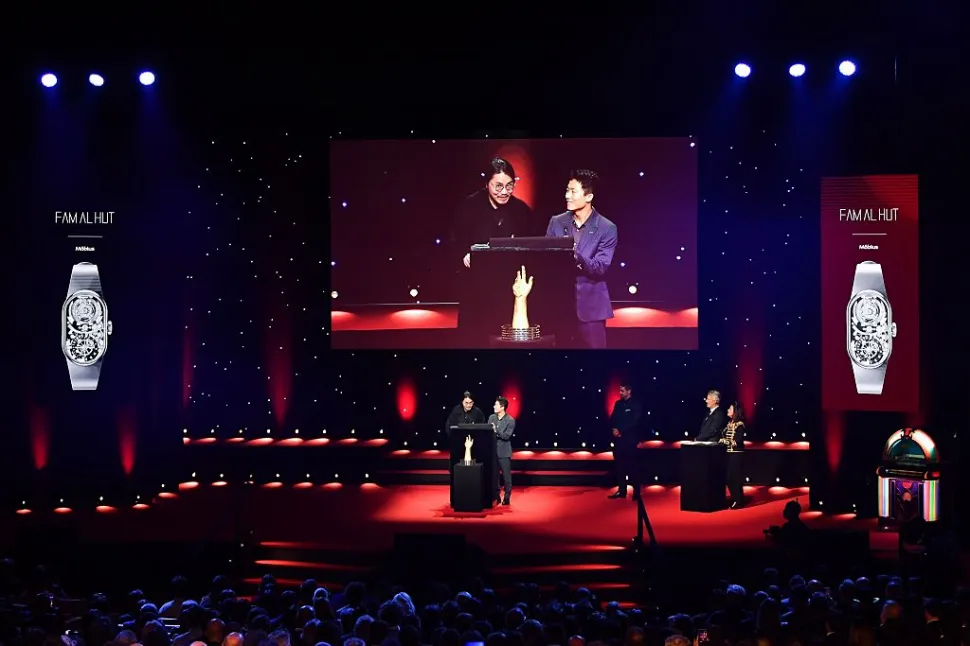
The finalists will then be reviewed in person in Geneva by a smaller jury led by Wei Koh, founder of watch publication Revolution. The 24-member jury is composed of Academy members drawn by lot, jurors selected by Koh, and Breguet CEO Gregory Kissling, who reserved his seat for the previous year’s Golden Needle winner. According to the rules, brands that win the Golden Needle will be completely excluded from the next year’s competition. Voting takes place under the supervision of a notary, with the jury accounting for two-thirds of the final result and the Academy’s second ballot accounting for the remaining one-third.
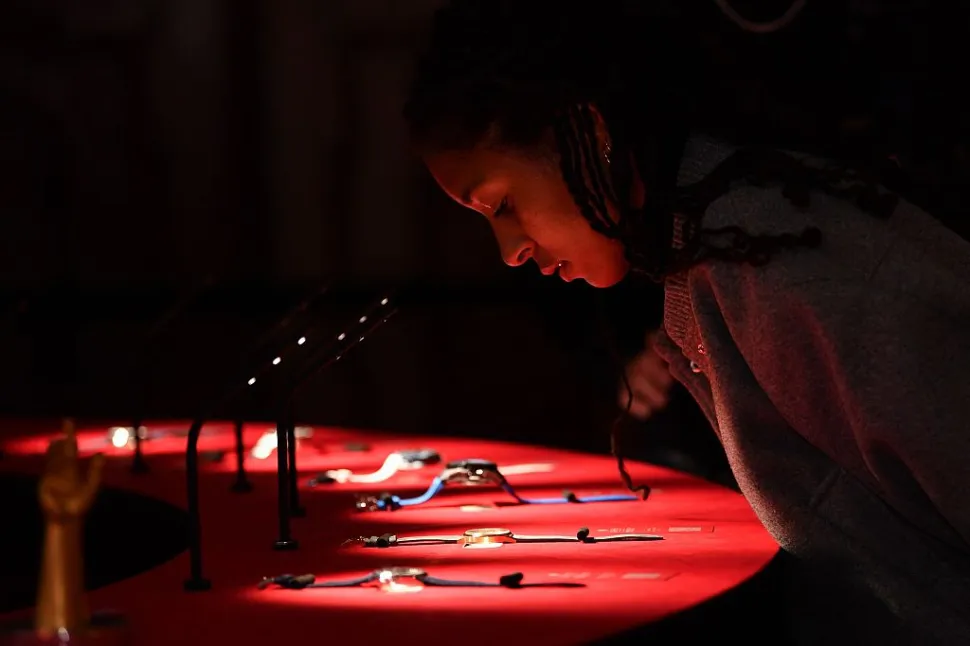
The results will be announced at the awards ceremony in November, but the nominated watches will be displayed to the public before the trophies are awarded. This year’s touring exhibition takes the nominated watches to Mumbai and Bangkok, before all 84 shortlisted works will be displayed at the Museum of Art and History in Geneva from October 29 to November 15. After the award ceremony, the winning works will be exhibited in London from November 18th to 23rd.
What the award does not cover
Despite its reputation, GPHG does not represent the watch industry as a whole. Geneva is an important center for watchmaking, but production spans across Switzerland and well beyond, with no single governing body representing all manufacturers. Participation is voluntary, and some of the industry’s best-known brands, including Rolex, Cartier and Patek Philippe, are absent from this year’s competition as in previous years. Therefore, the winners are selected from among the entrants and not from each important watch released.
Participation also comes at a price: the brand pays CHF 800 for each entry and an additional CHF 7,000 for each nominated watch. According to GPHG, the latter fees are used to finance the competition, exhibition and promotional services of the finalists, while the winners themselves are determined solely through the voting process described above.
However, there are exceptions to this entry-based system. This year’s Iconic Watch Awards celebrates contemporary reinterpretations of designs that have been influential for more than 20 years, even if they are not entered through the regular process. The Special Jury Prize also allows the jury to recognize individuals, institutions or brands, including non-participants, for their contribution to the watchmaking industry or their exemplary approach to ethics and sustainability.
While the GPHG is widely regarded as the watchmaking industry’s most prestigious awards competition, other awards serve different purposes within the industry. The Louis Vuitton Independent Creative Watch Prize provides the winner with a €150,000 prize and a year of mentorship, providing practical support and recognition. The Red Dot Awards evaluate watches alongside products from other sectors, while the WatchPro Awards recognize individual watches as well as brands, retailers and other industry players.
What winning the Grand Prix de Genève could change
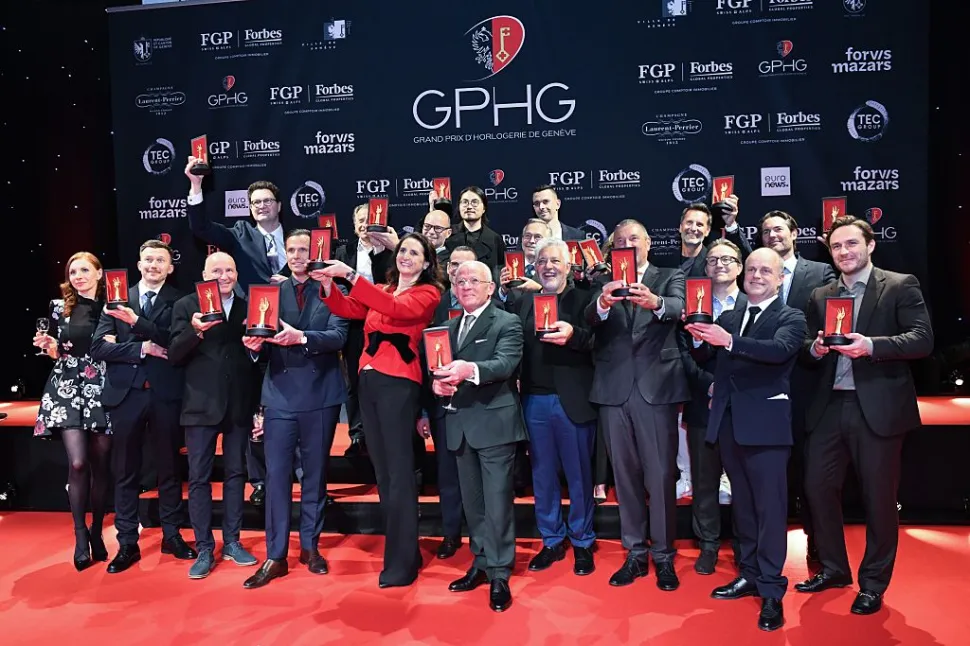
The most immediate benefit of winning a GPHG is prestige and attention, which can help watchmakers reach new customers, even if the commercial effects are harder to measure. For smaller businesses, this recognition means a lot. German independent company Kudoke won the Little Pointer Award in 2019 and again in 2024. Looking back on the years since its first win, the company describes reaching out to more collectors, expanding its team and moving into new premises.
Christopher Ward’s chiming C1 Bel Canto won the Small Hand Award in 2023, adding industry recognition to this already successful watch. Co-founder Mike France later told trade publication WatchPro that the model had helped the company almost double annual revenue to £30.5m in the year to March 2024, although the figures did not show how much of the growth came from the award itself.
Just like an Oscar nomination gives a movie another reason to watch, GPHG recognition gives a brand something to promote and collectors a reason to pay attention. A trophy does not guarantee sales or future resale value, but it can lend credibility to an unfamiliar name and bring an overlooked watch to a wider audience.
More watch information