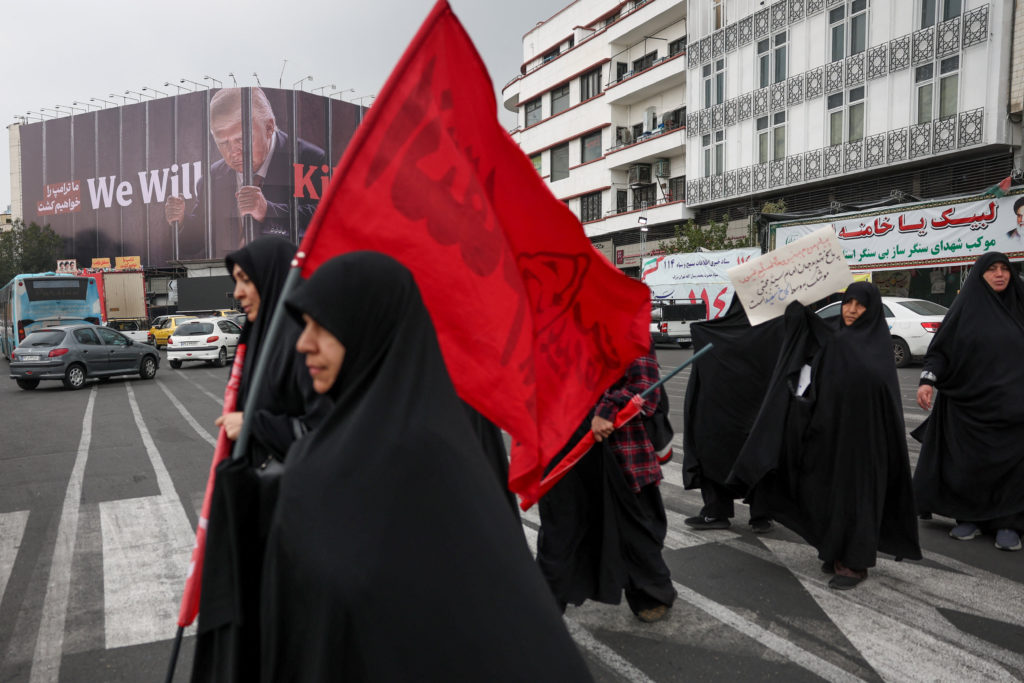
Iranians struck a defiant tone on Wednesday as they celebrated U.S. voters’ rebuke of President Donald Trump in the midterm elections, while many in the Middle East waited to see how the results would impact Iran’s war.
Concerns about war, especially frustration over rising prices for U.S. fuel and other goods, helped Democrats win control of both chambers of Congress in votes on Tuesday, a major setback for Trump and his Republican Party.
Read more: Vance blames Iran war for Republican midterm election losses
But Iran’s Supreme Leader Ayatollah Mojtaba Khamenei does not foresee any major change in U.S. attitudes toward the Islamic Republic. His father and predecessor Ayatollah Ali Khamenei was killed in the opening attack of the war in February.
Stand with free and independent journalism. Join PBS News Press Pass
“If there are still people who have even the slightest hope for a change of behavior or a shift in parties and factions within the ruling system, or who think that American hostility to the Iranian nation can be stopped by making concessions to the United States, they are sadly mistaken,” he said on his social media account.
There are fears all-out fighting could resume
The wider region has been on edge for weeks over the prospect of a resumption of full-scale U.S. military action against Iran. Negotiations aimed at preventing a resumption of fighting continue, while other U.S. allies in the region urge Washington not to resume a war that began more than eight months ago and has roiled the global economy and devastated Iran.
Israeli Prime Minister Benjamin Netanyahu has reportedly pushed for more attacks, while Trump has alternately threatened major military action and pushed for a deal.
Read more: AP voter poll shows how Trump and Republicans could lose 2026 midterm elections
Mohammad Bagher Qalibaf, Iran’s chief negotiator and parliament speaker, wrote on
Despite a ceasefire agreement and repeated diplomatic efforts, military confrontations continue in southern Iran and around the Strait of Hormuz.
An Iranian Foreign Ministry spokesman said in a social media post that the Americans sent a clear message and warned Washington not to ignore it. If the United States continues to ignore reality, the consequences of this serious misjudgment will go far beyond what you have already witnessed.
Iran marks anniversary of 1979 US embassy seizure
Thousands of people turned out for government-organized demonstrations in Tehran on Wednesday to mark the first anniversary of the 1979 takeover of the U.S. embassy, underscoring the mutual animosity at the heart of the conflict.
Pro-government demonstrators burned American and Israeli flags and shouted “Death to America” and “Death to Israel.” They displayed portraits of Trump and Netanyahu as well as caricatures of the two leaders.
Read more: U.S. launches new attacks on Iranian targets days after Netanyahu urged Trump to launch more attacks
“Trump goes too far on everything, and that’s one of the reasons he lost the election,” said demonstrator Hanane Jahed.
Zahra Nadiminejad praised Iran’s resistance, saying American voters “finally realize this is Iran and they can’t just come in here and do whatever they want.”
“They saw the consequences of the war at home, from skyrocketing gas and food prices to all the devastating effects it had on their own country. Whether Democrats or Republicans win, our hostility to America will never end.”
Nearly 50 years ago, on November 4, 1979, Iranian students attacked the U.S. Embassy and took American diplomats and other citizens hostage. 52 Americans were held for 444 days before being released.
The crisis has exacerbated a rupture between the two countries, which have not had formal diplomatic ties for years.
The United States and Israel launched war against Iran on February 28, killing the country’s longtime supreme leader Ayatollah Ali Khamenei and sparking a conflict that disrupted global energy markets and shipping in the Strait of Hormuz.
Addressing demonstrators on Wednesday, Tehran Mayor Alireza Zakani claimed that the United States and Israel had suffered a huge defeat, which he said was also reflected in last week’s Israeli elections.
“The decisive defeat of the United States and the Zionist regime in recent developments and elections is the result of the steadfastness and strength of the Iranian nation,” Zakani said.
Iran hits target ahead of midterm elections
A day before the U.S. election, Iran appeared to have received limited strikes against its targets in the crucial Strait of Hormuz, raising again questions about what might happen next.
Iranian state media reported on Monday that explosions occurred near the islands of Qeshm, Gangam and the southern port city of Bandar Abbas. Iranian authorities have not publicly identified the exact location of the attack or revealed the extent of the damage.
About one-fifth of the world’s oil and gas trade passed through the Strait of Hormuz before the war, and Iran has repeatedly launched attacks on commercial shipping. Iran is trying to restrict shipping and force the United States to lift its blockade of Iranian ports.
Iranian state television said on Wednesday that four oil tankers caught fire after mines were mined along what it called an unauthorized route.
Secret pipeline talks continue.
U.S. Vice President Vance said on Monday that he and Trump “are very pleased with the prospects of reaching a negotiated solution.”
Before the latest attack, the Trump administration’s last known attack on Iran was in early September. Thousands of U.S. troops remain in waters near Iran, maintaining a naval blockade aimed at preventing tankers carrying Iranian oil from entering global markets. Another aircraft carrier and thousands of reinforcements are heading to the Middle East.
Associated Press writers Samy Magdy, Toqa Ezzidin and Aamer Madhani contributed to this report.
A free press is the cornerstone of a healthy democracy.
Support trustworthy journalism and civil dialogue.