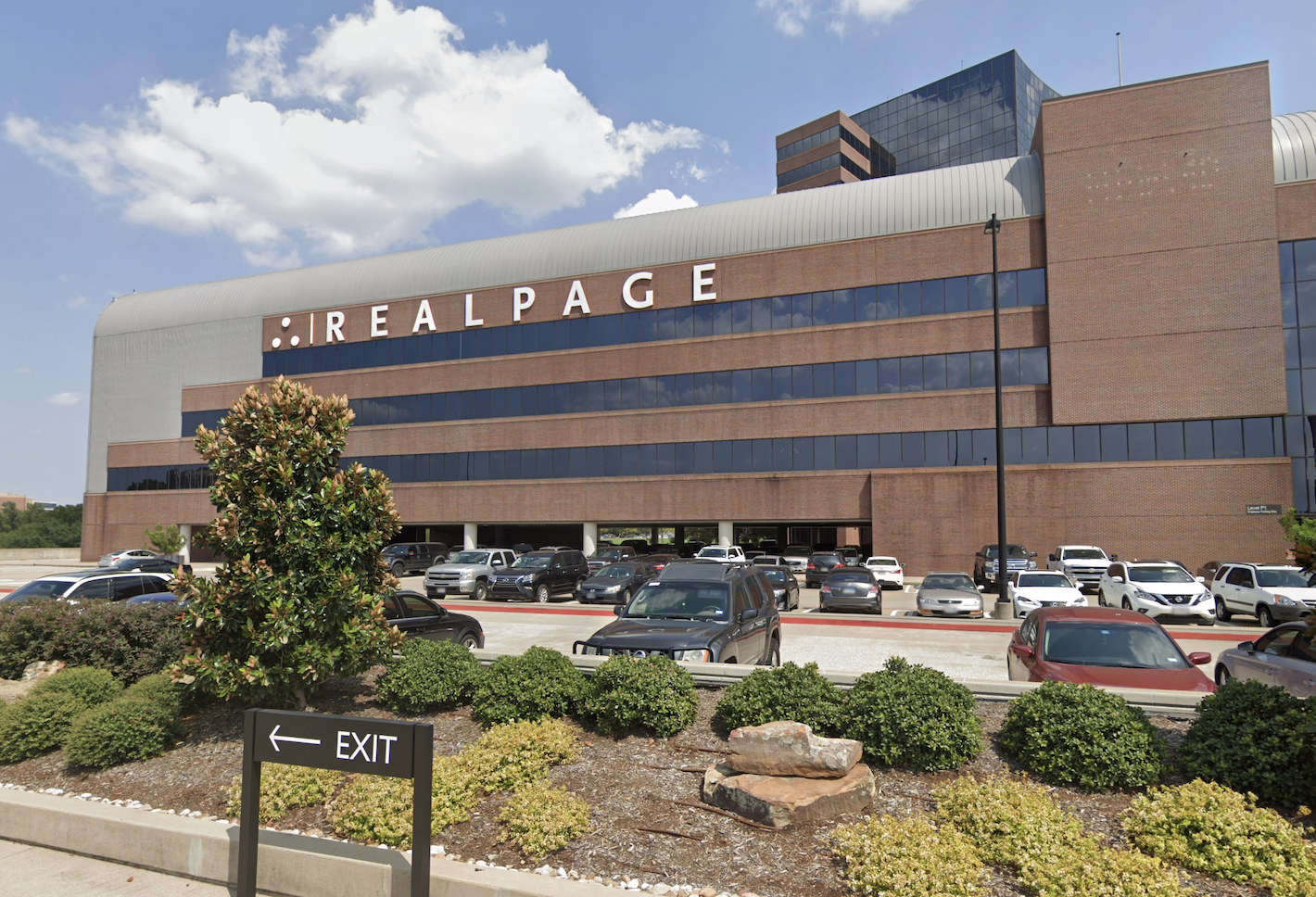
A federal court has closed the books on a massive antitrust case against revenue management company RealPage, with nearly $360M in rent-seeking settlements.
RealPage is headquartered in Richardson, Texas
The U.S. District Court for the Middle District of Tennessee deemed the case’s settlement plan fair and adequate, Multifamily Dive reported. The court dismissed the lawsuit, which alleged that a major real estate company conspired with RealPage to drive up rents, with prejudice.
Eleven real estate companies involved in the case agreed to pay a combined $218M in May and remove nonpublic rental data from the database used by RealPage’s rent-setting software. This follows a separate $141.8M settlement with 27 court-approved companies by the end of 2025.
Texas-based RealPage also reached a settlement agreement with federal prosecutors in November 2025. The court did not impose a monetary penalty on the company, but ordered it to change the way its software recommends hiring.
The case stems from a class action filed in late 2022 and early 2023 following a ProPublica investigation that documented how landlords shared internal rent figures with RealPage’s rent-setting software, which uses algorithms to show landlords who can raise rents more than before.
The cases were later consolidated into one in April 2023.
Peter Carstensen, an antitrust authority and law professor emeritus at the University of Wisconsin-Madison, told Multifamily Dive he’s not sure the settlement agreement will limit the companies from continuing to coordinate.
Neither company admitted liability or wrongdoing as part of the settlement.
In recent years, cities like San Francisco, Philadelphia, Minneapolis and San Diego have banned the use of algorithmic rent setting software. However, RealPage has pushed back against these efforts.
RealPage says the cities are overstepping their legal authority and are to blame for the state’s housing shortage. A provision that would have preempted the local ban on rent-setting calculus was initially included in last year’s One Big Beautiful Bill Act, but was eventually withdrawn from the final version of the law.