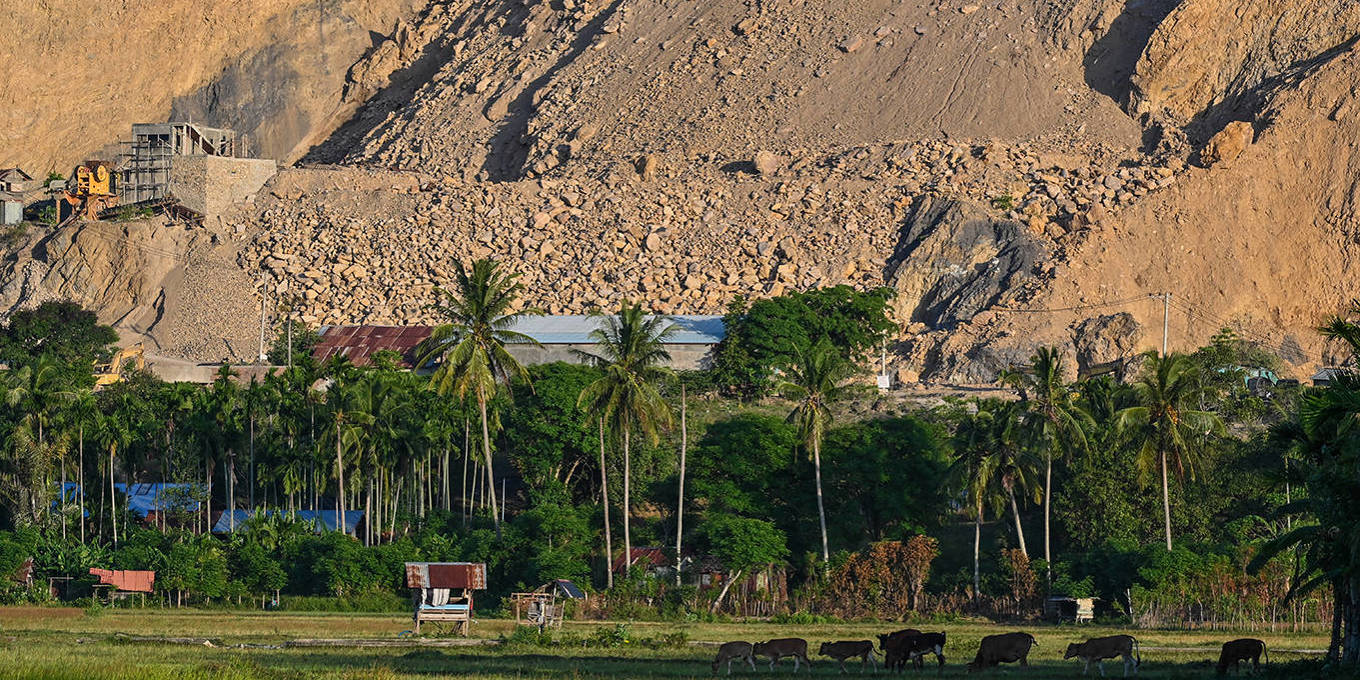
In a region where economic activity has long revolved around the extraction of fossil fuels, ensuring a just transition requires developing alternative livelihoods suited to the specific needs of each community. Regional endowment funds can be a useful means of financing such local initiatives.
JAKARTA—When the energy transition faces a difficult economic situation in a country, addressing the unequal impact of the transition becomes more challenging and more important. In Indonesia, with an economy recently described as a “ticking time bomb,” coal mining has long been a major driver of GDP in certain districts and provinces. Seeking an energy transition in place raises difficult political questions about how to support economic diversification, and promote economic growth, in the region while also combating climate change.
The answer may seem obvious: reducing vulnerability to economic shocks caused by the shift away from fossil fuels requires more sources of income. But it’s easier said than done. A just energy transition requires a broader transformation that includes creating meaningful employment opportunities, closing the human capital gap, and reducing poverty. Most importantly, these efforts must be highly localized to address the unique strengths of each region and the specific needs of each community.
Pulo Panggung, a village in Muara Enim, one of Indonesia’s coal-dependent districts, South Sumatra province, illustrates this vulnerability. According to research by WALHI Selatan Sumatera (Friends of the Earth Sumatera South) and the Indonesian Environmental Law Center, 56.7% of the villagers are mine workers, including freelancers. When coal mining arrived in the early 1990s, the community largely abandoned farming, the main economic engine of the time. Now, as mining companies face expiring contracts and begin implementing efficiency measures, the villagers’ livelihoods are under threat, but this time there are no ready replacements.
The rural post-coal economy can return to agriculture and embrace nature tourism. But the change to the sector requires a healthy ecosystem, so it is important to force companies to fulfill their obligations to restore mined land. In addition, as villagers have lost their lives over the past decade, they need training in sustainable agricultural techniques and opportunities to develop skills for other alternative livelihoods, such as digital-based marketing.
Some of the obstacles to creating new livelihoods on Pulau Panggung are structural, such as the ambiguous legal status of land, a long-standing problem in Indonesia. But the bigger challenge, here and elsewhere, is the lack of formal channels for developing effective local initiatives. The strength of each village should be the foundation of community-based economic transformation. Unfortunately, Indonesia’s top-down policy formation and regulatory regime, particularly in the energy sector, hinders efforts to expand local power.
The Indonesian government directs transition planning by providing general guidance, provincial and district plans should be explained theoretically, identifying what is unique in each place. But the medium-term regional development plan of South Sumatra 2025-2029 does not provide a clear direction on how the economic transformation will be carried out, only efforts to get rid of the coal-based economy remain suboptimal. The plan recognizes that natural resources must play a role but does not explain how to use them in a way that suits the needs of each village and avoid damaging the ecosystem.
This problem is not only in Indonesia. Many other governments have similar gaps in their energy transition policies. The key is that policymakers can enable a bottom-up approach by focusing on two goals.
First, policy makers must directly engage the affected communities. Entrusting transition planning to local governments and giving communities a real role in the decision-making process will help officials and companies design appropriate interventions that expand employment opportunities for workers at risk of displacement.
Adding community-driven initiatives to these policies should start with local assessments. Before the plan is approved, the government must conduct a participatory mapping of livelihoods, land status, labor skills, and local strengths. In Pulau Panggung, this kind of mapping will highlight the potential of agriculture and tourism.
Second, policymakers should explore the possibility of regional funds that could direct government revenues derived from mining and fossil fuel production to support community-based transitions. One model to follow is the Alaska Permanent Fund, where the state government invests a portion of oil and mining revenues for the long-term benefit of all current and future Alaskans.
Managed by state-owned companies, these sovereign wealth funds help finance public services like education, health care, and basic infrastructure. Policy makers, in both developed and developing countries, can use these vehicles to ensure a sustainable economic transition by operating transparently and allowing local communities to direct results to their chosen priorities.
Time is running out to establish regional waqf funds. Policy makers in Indonesia and other countries must act before the results of mining and fossil fuels stop. As a first step, they could run a pilot in an affected area—like Muara Enim—to show what they can do. Waiting too long risks leaving these communities with plans but no capital to implement them.