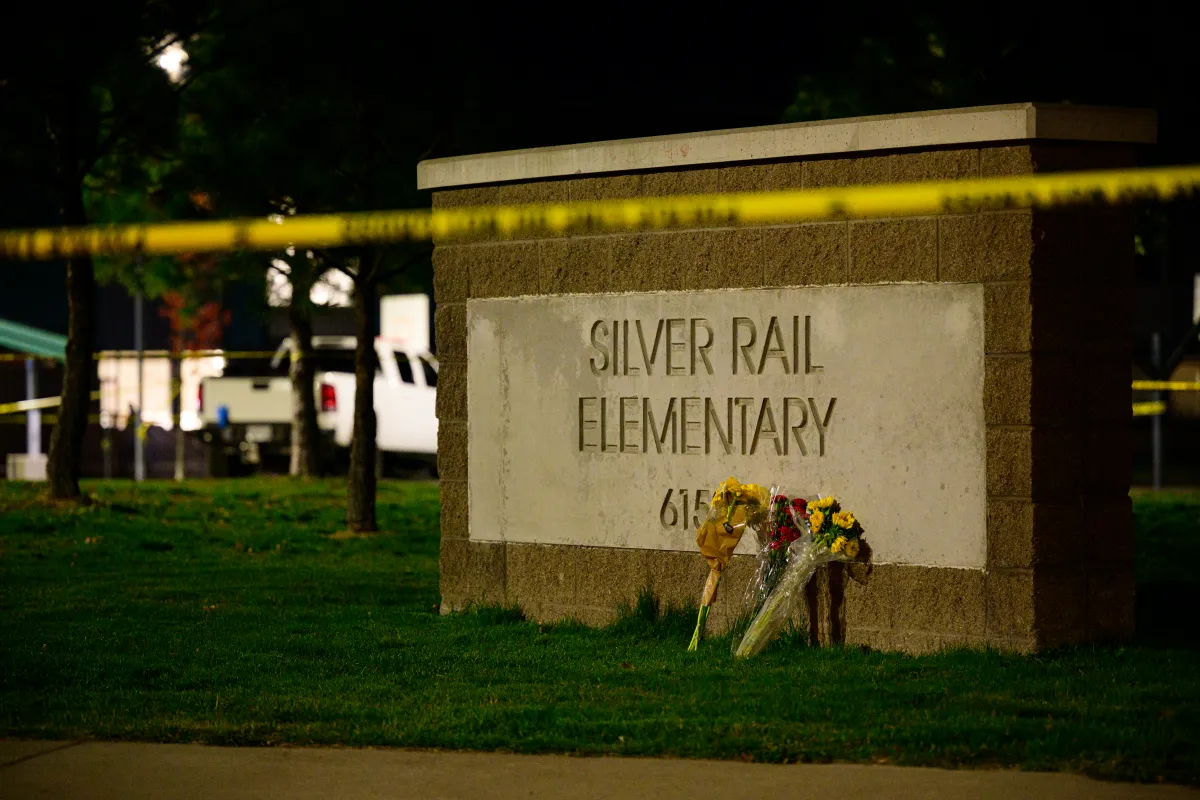
A 16-year-old boy opened fire on an Oregon elementary school on Thursday, killing three children and a teacher, giving America another reason to debate the issue of guns. He also gave it a reason to raise a question that has received little attention in decades of debate over school shootings: Why are the killers so often teenage boys?
Hidden in one of the most familiar slogans of the American gun lobby is an uncomfortable truth: Guns don’t kill people, people do. This sentence is an inadequate explanation of gun violence and an even worse argument against gun control, but it points to a fact worth examining: According to research, the vast majority of perpetrators of targeted school violence are boys and young adults.
Currently, the Second Amendment remains firmly embedded in the U.S. Constitution. Regardless of one’s views on gun ownership, a nation with widespread gun ownership must consider who is most likely to turn them against their classmates. Perhaps, beyond the endless debates about guns and the Second Amendment, America should place equal emphasis on understanding why boys and young men so disproportionately commit these attacks.
Statistics Hidden in Plain Sight
The 16-year-old accused of carrying out a shooting at Silver Rail Elementary School in Oregon on Thursday fits a disturbing pattern that has received far less attention than the weapon used in the school attack.
A 2019 U.S. Secret Service study of 41 perpetrators of targeted school violence between 2008 and 2017 found that 83% were male and the average age was just 15 years old.
The study included attacks involving weapons other than firearms, so its findings can’t be applied to every school shooting, but the patterns are hard to ignore.
One corollary: Millions of American teenagers are growing up in a country awash in guns, but the perpetrators of targeted school attacks are overwhelmingly boys. Why?
One possible explanation lies in how some adolescent boys experience rejection and feel threats to their status, and the ways in which they learn to express anger. Researchers studying targeted school violence have repeatedly identified grievances, interpersonal conflicts, and bullying experiences among attackers. But these experiences are common among adolescents of both sexes, and only a minority become violent. The more difficult question is why some boys come to view violence as a way of responding to these grievances.
This suggests that beyond the debate over gun access, the United States should pay more attention to learning about boys who use guns. Restricting access to guns may prevent shootings, but understanding why some boys become violent may help deter their desire to commit violence in the first place. Why can’t we have two battles at the same time?
A problem older than smartphones
Another fact worth considering: School shootings predate the technology often blamed for causing teenage suffering. That is social media.
Long before TikTok and modern smartphones, the Secret Service began investigating patterns of targeted violence in schools. Of course, these technologies may exacerbate stigma and isolation, but they cannot explain the prior phenomena.
Nor does the broader crisis in youth mental health explain why violence is so disproportionately male. By 2025, 43% of high school girls will report persistent feelings of sadness or hopelessness, compared with 24% of boys, according to CDC data released Thursday.
In the Secret Service study, girls reported significantly more emotional distress, but boys made up the vast majority of perpetrators. Statistics measure different things, and sadness is hardly a reliable predictor of violence, but the comparison raises a question: If girls report greater emotional distress, why are boys more likely to commit targeted school attacks?
Perhaps the missing piece is how few boys learn to cope with rejection and anger. If so, then understanding these reactions deserves as much serious investigation as the weapons that caused such deadly consequences.
an attack that never happened
Why is so much time spent investigating who carried out the school attack when the guns themselves are so easy to obtain? Because understanding the people behind violence may help prevent it—and there’s evidence that intervention works.
In a 2021 study of 67 disrupted school attack plots, the Secret Service found that in 94% of cases, someone knew about the plans before the violence occurred.
The meaning is practical. If researchers can identify patterns in those who plot school attacks, schools may be better able to identify warning signs before violence occurs. A boy who has difficulty socializing or who is alienated from his classmates may need support. If he starts making threats, talking about revenge, or revealing plans to harm others, then these concerns need to be taken seriously. Encouraging students to report such behavior and providing schools with tools to respond can help prevent attacks from occurring.
Gun control advocates have a compelling argument: Access to guns can turn an individual’s violent intentions into a mass casualty incident. Reducing such exposure, especially to those who pose a credible threat, remains an important preventive measure.
But there’s another opportunity for prevention: understanding how a small percentage of boys move from ordinary adolescent dissatisfaction to homicidal thoughts.
As investigators in Oregon try to understand why a 16-year-old attacked an elementary school, the question shouldn’t be limited to how he obtained a gun. What happened before he picked it up? Is there a warning sign? Does anyone know what he was thinking?
The answers may tell us how to prevent the next shooting. By the time a gun enters a classroom, the opportunity to intervene may have passed.
newsweek’s Reporters and editors used our artificial intelligence assistant Martyn to produce this story. Learn more about Martin here.