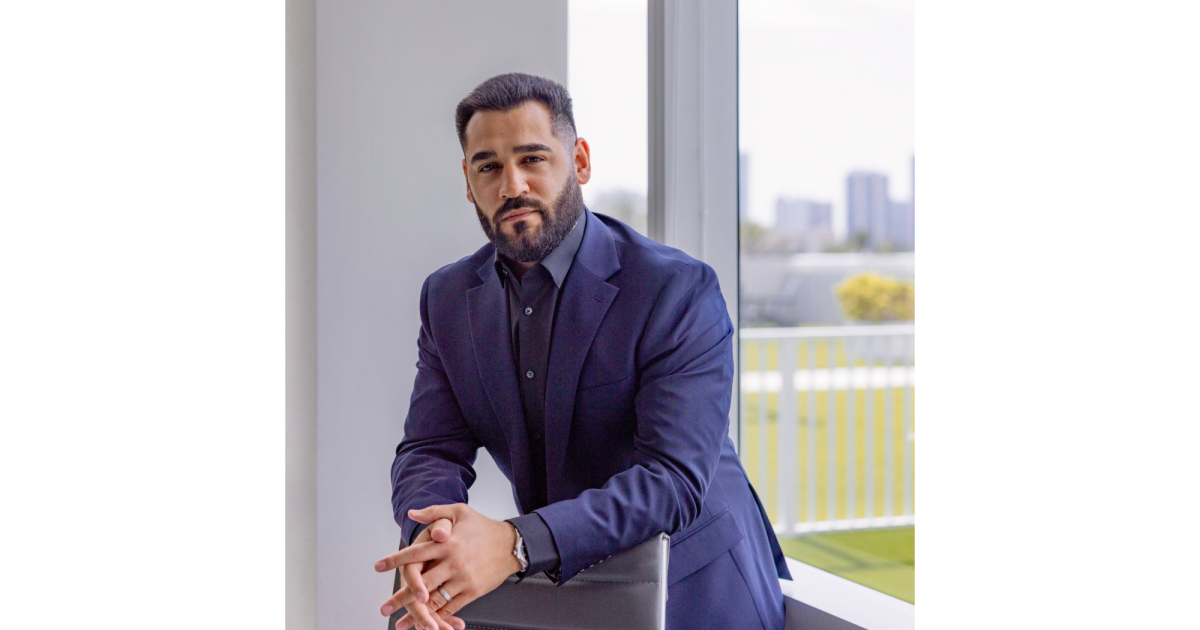
Gevorg Shahbazyan, founder & CEO of Starlife Group, joins Commercial Observer’s South Florida Capital & Development Forum to discuss vertical integration, housing innovation, future-proof portfolios, and delivering community value in South Florida real estate.
Commercial Observer: Starlife Group is a vertically integrated development company. How does your company’s involvement in the full life cycle of development, from concept to completion, allow you to expand and deliver new standards of excellence in development?
Gevorg Shahbazyan: Real estate development involves hundreds of interrelated decisions, and the quality of the finished product depends on how well those decisions stay aligned from the earliest concept through construction and operation. We built Starlife Group as an integrated vertical development company because we want every discipline to understand the same vision and work to the same standards.
Having development, construction, lending, capital, brokerage, insurance and management under one umbrella provides greater visibility and accountability throughout the entire project lifecycle. Our team communicates directly, identifying challenges early and making decisions faster than waiting for problems to reach the field. That allows us to protect the original intent of the project while maintaining greater control over quality, time and long-term value.
We saw the strength of that model at 21 Hollywood, where our in-house construction arm, Starlife Builders, brought the 14-story building to structural height, completing the shell just seven months after vertical construction began. The speed comes from extensive planning and close coordination between the teams responsible for the vision and those who execute it.
As we scale, vertical integration gives us the infrastructure to grow without precision. The goal is not just to complete more buildings, but to build organizations that can create, finance, deliver and operate meaningful projects at scale.
The residential and multifamily sector is becoming increasingly innovative when looking at property design, marketing and overall resident offerings. What are the most important points to differentiate your property and portfolio in today’s market?
Residents have become more sophisticated in what they want from their homes. In a competitive market like South Florida, residents are looking for the complete package: best-in-class amenities, quality fixtures and finishes, functional spaces designed to live, work and spend time, and a location that complements their lifestyle. Differentiation comes from combining all these elements rather than relying on one or two to define properties.
That’s how we approach 21 Hollywood and all our other projects. The home includes condo-quality elements, including Bosch appliances, Italian cabinetry, quartz countertops and curated tiles, while the building’s amenity program supports well-being, productivity and connection through work areas, a fitness center, yoga and Pilates studios, a movie theater, a rooftop pickleball court, a pool deck, and spaces for children and pets. Importantly, the location along Federal Highway connects residents to the growing mixed-use corridor in central Hollywood.
The important difference is that the sacrifice is inseparable. We think about how residents move through the building, how the facilities relate to each other and how the property connects to the surrounding environment. Hospitality is also increasingly important because it teaches us to anticipate needs rather than simply respond. That philosophy informs Amara Hospitality, our new hospitality and property management, and will continue to shape the way we think about services and the overall experience across our portfolio.
In the end, the property that sets it apart is its design, functionality, service and location to make everyday life better. Initial impressions are important, but lasting quality is about whether a property continues to enhance the resident’s experience long after moving in. This is the level of consideration aimed at every Starlife project, regardless of asset type or location.
With trends constantly changing, and the market always pushing the boundaries of what’s possible, how do you stay ahead of the market to “future proof” your portfolio?
Future proofing is less about chasing every new trend and more about understanding the changes that reflect how people will want to live in the long term. We take into account changes in lifestyle, mobility, health, technology and the way people use their homes, but we evaluate these changes against market fundamentals and community needs.
That starts before we get or plan a project. We are looking for locations with strong connectivity, infrastructure and room to grow. Hollywood is a good example. We see cities established in close proximity to major employment centers, beaches and regional transportation, but also corridors like the Federal Highway that can accommodate additional housing and mixed activities. Long-term confidence in Hollywood extends to 21 Hollywood, with several additional projects in the pipeline that will continue to expand Starlife’s presence in the city.
In our development, we focus on creating an adaptive experience. Residents can use spaces differently as lifestyles evolve, so facilities and public areas must support work, health, social relationships and daily convenience in ways that can remain relevant.
A vertically integrated structure also offers advantages as lessons can move quickly in development, construction and operations. Staying ahead of the market requires listening, learning from what we build and being disciplined enough to distinguish lasting changes in the way people live from trends that can disappear quickly.
Miami and the cities of South Florida are rooted in art, culture and lifestyle. How do you weave these basic characteristics into your development? How do you use real estate to deliver value to the cities and communities you develop?
Development should respond to these locations rather than applying the same formula everywhere. In South Florida, real estate is related to the way people live. Climate, outdoor living, hospitality, well-being, connectivity and the cultural character of each neighborhood all influence how we approach projects. At 21 Hollywood, that extends to art and interiors, with pop art and comic-inspired artwork woven throughout the property to bring bold creative energy to the resident experience.
But contributing to the community also means thinking beyond the building itself. At 21 Hollywood, we see an opportunity to add 200 homes and approximately 10,000 square feet of ground-floor retail while contributing to a more active and pedestrian-oriented Federal Highway corridor. Bringing residents and businesses to the area helps activate the street level and supports the evolution of the wider neighbourhood.
As developers, we have a responsibility to understand the communities we build for. Growth should strengthen existing character, support local businesses and institutions, improve public areas and create a more connected everyday experience. With more than 25,000 residential units currently in the Hollywood development pipeline, we see the level of investment being made across the city as validation of the potential we recognized when we first began planning 21 Hollywood last year. It reinforces our belief in Hollywood’s long-term trajectory and the opportunity for thoughtful development to help shape its next chapter. The best measure of development is not just what happens inside property lines, but what makes a lasting contribution to the city around it.