You know we’ve reached the crazy stage when the AI apocalypse becomes a regular topic at the dinner table. Rogue AI agents are hacking competitors. Former employees of major tech companies are posting Skynet-style warnings on social media. CEOs are desperate for help, turning a once-thorny tech issue into a frontline political battle.
I still think many of the concerns raised by AI leaders themselves are self-serving—especially as their companies are about to go public. But the growing number of AI scandals are real. It tells us that the status quo of regulating this powerful new technology isn’t working.
The question on everyone’s mind right now is: Is any kind of global brake possible? When there is a lack of trust between major governments, which form of AI security regime is practical in the short term? What might work when companies are unwilling to give up their secret sauce and are hell-bent on dominating the global AI race?
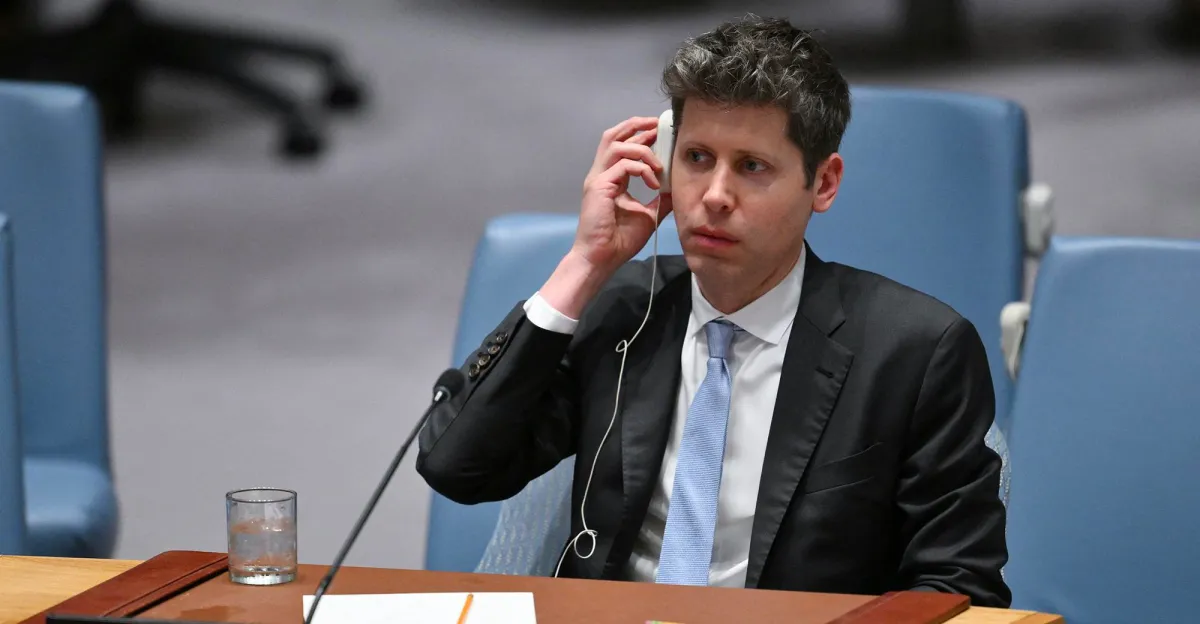
Two major conversations are taking place in real time. President Donald Trump welcomed Chinese President Xi Jinping to Washington on Wednesday for a three-day summit, part of which will be devoted to the risks of artificial intelligence. On the same day, as the United Nations held its annual general meeting, the heads of the world’s leading artificial intelligence companies urged the United Nations to regulate emerging technologies or risk wiping out humanity. “We may lose control of the future of artificial intelligence,” OpenAI boss Sam Altman bluntly told the United Nations Security Council.
In the face of this collective panic, it’s time to take a deep breath.
In fact, AI security has been a focus for many policymakers for years, and the issue has continued to gain momentum following the launch of ChatGPT in 2022. Governments have held hearings, convened expert panels and drafted their own outlines for how to control the safety of artificial intelligence. These are not just idle listening exercises. They are not well known to the wider public, but they have a real plan.
Barring any breakthroughs this week, we already have a quasi-planetary shield against potentially runaway technology. This is good news.
The bad news is that it’s not actually up and running yet. It’s unclear whether it actually works. So what is it – and how do we solve it so that we have a global system that can respond in a timely manner to fast-moving threats from artificial intelligence?
What the global patchwork of artificial intelligence looks like now
Over the past four years, the most tech-savvy nations and future AI leaders have been engaging in serious conversations about this exact AI security threat. Some are in Congress and the White House; some are in the White House. Some are at the United Nations, the G7 and other capitals.
As a global technology journalist currently working at a think tank, I have been covering this issue closely. The scenery is like this:
- There are National Artificial Intelligence Safety and Security Agencies, government-funded agencies whose job it is to test the latest products from AI companies before they go into use.
- There have also been voluntary commitments from companies, many of which have made their own commitments or developed joint standards to protect elections from AI threats, stop the spread of AI-driven deepfake images, and join government and business efforts to embed security into the development of the technology.
- At the international level, there is a reporting mechanism led by the G7 and welcomed by the most important Western technology countries, which allows artificial intelligence giants to share how they build their latest models and set standards for how to reduce the risk of catastrophe.
- An international scientific report provides an annual update on the risks posed by state-of-the-art artificial intelligence systems based on existing research to help governments prepare for the worst.
What’s missing from all this? What we currently lack—and what is needed between now and the end of 2026—is a way to transform this cottage industry of AI safety mechanisms into a functional but crude first response system when problems suddenly arise.
The past four years have paved a path and some of the necessary systems even exist. But when an AI crisis strikes, we won’t be able to respond instantly on a global scale—especially if such a potentially apocalyptic event occurs between countries already suspicious of each other.
This week’s U.S.-China summit could be a step in the right direction. Washington and Beijing could establish a hotline between U.S. Treasury Secretary Scott Bessant and Chinese Vice Premier He Lifeng to prevent incidents involving artificial intelligence from affecting their national security, according to suggestions from U.S. officials.
It’s unclear whether Trump’s meeting with Xi will lead to such progress. Chinese officials have also balked at Washington’s pleas for AI rules because Congress has so far failed to act and China already has some of the strictest AI regulations in the world.
To make artificial intelligence “safe,” the conversation needs to go beyond this week’s U.S.-China summit. Relying solely on Washington and Beijing—arguably the most important AI powers—will not solve the underlying problem or make other countries feel more comfortable.
What do we need next so it does save us
I’ve been talking to AI security experts and government officials, and it’s clear that the missing piece is a way to activate the entire system in a crisis. Countries do not all have to have the same AI security policies, and they never will. But as with nuclear weapons — a similarly high-threat technology the world has found ways to contain them — security requires a rough global agreement on how to respond quickly if serious problems arise.
What is needed now is a 90-day, opt-in rapid response mechanism that ties together the existing pieces of the AI security puzzle. I’ve cobbled together some ideas on how it should work and who needs to log in. Admittedly, nothing I outline below is sufficient. But overall they make more sense than trying to negotiate a comprehensive global regime — let alone arranging another AI summit — while Washington, Beijing and other capitals disagree over what “AI security” actually means.
All of these options build on existing mechanisms, stem from efforts in other policy areas, and provide a Band-Aid on the AI security dilemma until a more durable solution can be negotiated.
- First, developers, AI safety agencies, and regulators from different countries should agree that specific Chernobyl-style protocols will be triggered when an event occurs. This means submitting a confidential report to the national designated response agency and the Small Technical Secretariat within 72 hours. It could be built on the OECD’s AI Incident Monitor to conduct technical, multi-stakeholder confidential investigations of issues that arise and subsequently publish an anonymized record of lessons learned.
- Second, governments and developers could agree to issue joint statements related to safeguards, residual risks, upgrade thresholds and independent audits before next-generation models are released or upgraded. It will build on the G7 Hiroshima AI Process Reporting Framework and transform the current hodgepodge of corporate safety statements and voluntary standards into common minimum disclosure obligations. Think of it as similar to the collective bank stress tests that followed the 2008 global financial crisis. It allows outsiders to truly compare the security protocols of the models without having to put someone in charge of determining which company does it best.
- Third, establish a Cold War-style U.S.-China AI security hotline—but think of it as a first step that could later be opened to other countries. In the long term, there is a strong case to be made that Washington and Beijing should not be allowed to dominate artificial intelligence, and that the rest of the world should have a real seat at the table. But for now, these are the two “big powers” in the technology conversation, and we can put aside philosophical debates and establish a standing, technically informed direct line of communication for serious AI risk incidents. Its remit is narrow in nature: prevent dangerous misunderstandings related to serious model incidents, AI cyberattacks, and/or alleged breaches of agreed security commitments.
There are obvious limitations to what I’ve described above. For one, it is an essentially Western-centric view that largely ignores most countries around the world. It also has too great an impact on existing institutions such as the Organization for Economic Cooperation and Development and on U.S.-China relations. Officials in other countries will reasonably reject all three options, and rightly so.
But this is not about creating a vague and unenforceable UN-led directive on AI safety. Nor is this about rallying geopolitical forces to hammer out a global AI treaty. The options—a collective safety and incident reporting agreement; common pre-release standards; and a U.S.-China AI safety hotline—are short-term in nature. They also build on existing efforts and those that have been successful in other policy areas.
There will be time to debate the future of AI security. But now is not that time. The latest artificial intelligence models are developing faster than many expected, with tech bosses fearing their creations are getting out of hand and the window for action may be smaller than we thought.
Amid rising geopolitical tensions, a lack of trust between governments and businesses and not letting perfection get in the way of good, we need to take practical steps to alleviate growing concerns.