This article is based on a conversation with Alex Shi, a 37-year-old freelancer who moved back to Beijing. She has worked as a freelance director and stand-up comedian. It has been edited for length and clarity.
When I graduated from Peking University, I wanted to start working immediately. My mother had other plans.
Her perspective changed dramatically. When I was in high school, my English teacher told me to leave China and study in the United States, she said I would thrive there. My mother said that only children with bad grades would go overseas. A few years later, studying abroad became very popular, and suddenly my mom thought I needed to go, too. We fought for 2 months.
Eventually, I went to Boston University and got a master’s degree in broadcast journalism. When I was 25, I moved to Charlotte, NC to find a boyfriend. We broke up and I wasted most of a year on OPT in a city where I knew no one. But I wasn’t ready to go home, so I pursued a second master’s degree in media studies at the New School in New York.
I left the United States in 2018, the same day my best friend got married. I helped him pick out the cake and menu but missed the wedding.
Worked at a large tech company for several years
After returning to Beijing, I worked as a freelancer for several years, taking on corporate projects and producing content for international news outlets. I also started dancing salsa.
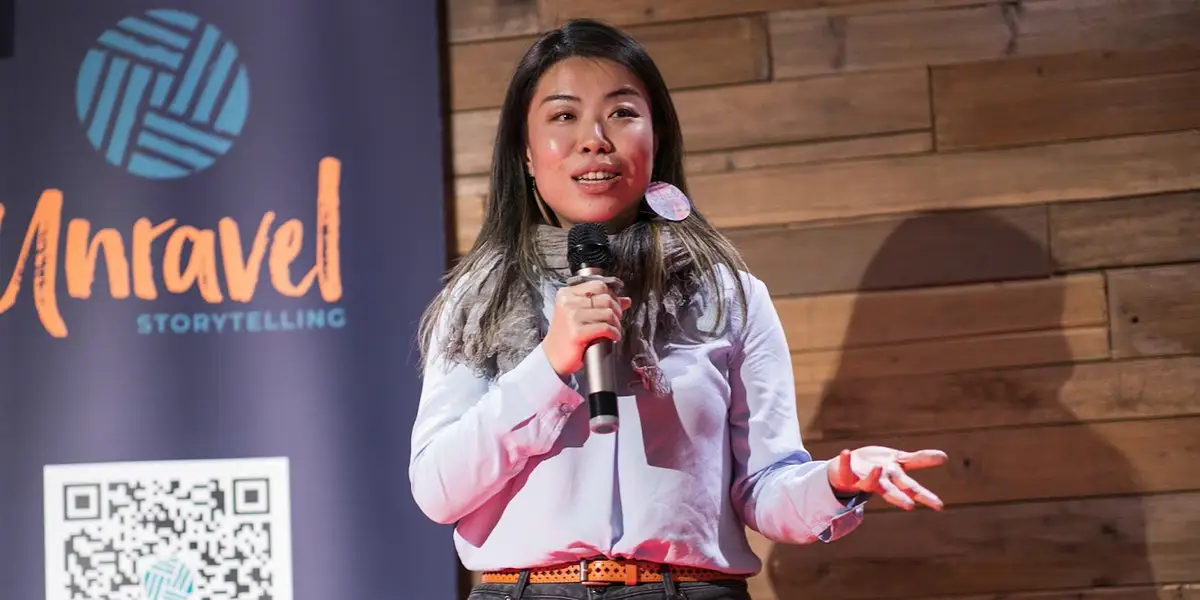
When the pandemic started, the only entertainment left was comedy open mics. I watched it for two months before trying it. The first time I stepped on stage, I was laughed at. The comics I know are inspiring.
But freelancing is dead. I wanted more stability and my family encouraged me to find a more stable job. In 2021, I was hired by ByteDance as a cross-cultural communication expert. Two months later, my entire department disappeared, so I went into product design.
We work with teams in other time zones so the day never really ends. Those were the most stressful two years of my life. I stopped doing comedy and dance. I was the heaviest I had ever been.
I started working as a freelancer again, focusing on cross-cultural communication. I work with corporate clients, including Chinese companies looking to expand overseas. This time, I set boundaries on the projects I would take on, rather than accepting everything that was offered to me. I knew I didn’t want to be an average creative. I have more control now.
Looking for my creative outlet
I never set out to do comedy. In New York, I developed a love for live storytelling, inspired by the podcast “The Moth.” After returning to China, I went to Shanghai twice to tell stories.
What I love most about doing comedy is that when I fail, I have to tell myself to get over myself.
For most of my life, I only chose things that I was 90% sure I was good at. I don’t play sports that I’m not good at because I don’t want to look stupid. Comedy is the one thing I tell myself I won’t give up. I can’t blame the audience every time, and I can’t blame myself every time.
Provided by Alex Shi
My life in Beijing is very flexible
Unless I have a morning meeting, I get out of bed around 10:30 am, spend about two hours making coffee and not cleaning my room, and then start work in the afternoon. Last night, I edited a podcast until 3 am and had an in-person meeting the next day.
Many people think I am more creative abroad. Indeed, in New York, I was surrounded by artists. I shoot photography and independent films. I would see a woman in a restaurant and ask her if she wanted to take a picture. It’s freeing and fun.
But in Beijing, I am a creative professional. I take things more seriously; I don’t just do whatever comes to mind.
In New York City, I lived with four other roommates. I’m at a different stage in my life now. I live alone. The city is expensive and more focused on money and status than anywhere I’ve ever lived. I’m Chinese, living in the capital of my country, and I feel like I have something to prove.
I don’t want to be a struggling artist here. My parents also live in Beijing, and I hate to admit how much this adds to the stress. When an idea comes to me, I ask where it can go and how to move it to the next step. As a creative person in Beijing, I am happier because I finish what I started.