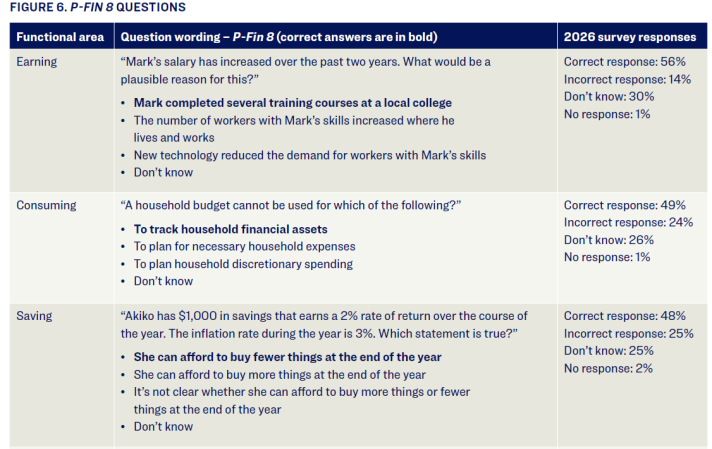
Financial literacy is a basic thing. For an example of how basic it is, there are eight questions from what is called the GFLEC Personal Finance Index. More on the index and results in a moment, but take a moment to read the eight questions and look at the correct answer.
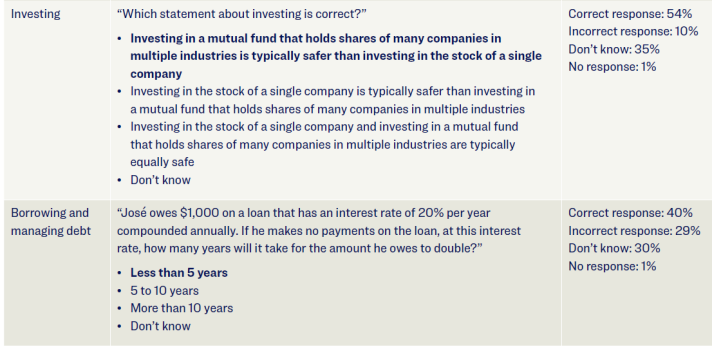
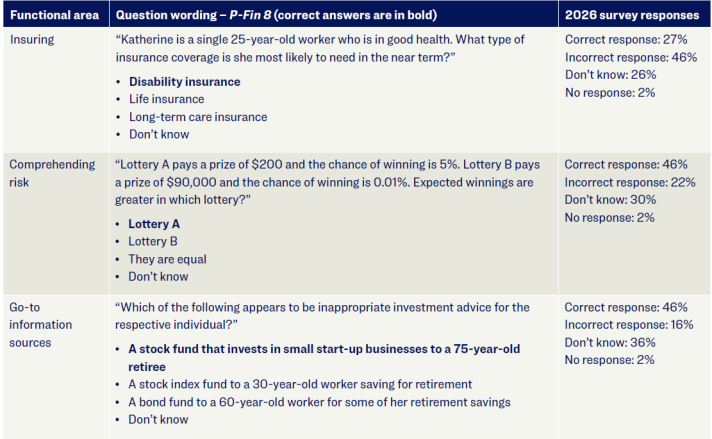
These eight questions are the general face of a longer 28-question survey, which has now been given to large groups for a decade. Paul J. Yakoboski, Annamaria Lusardi, Andrea Sticha, and Fran Mastry provide an overview and background in “A decade of tracking
financial literacy in America: Findings from the 2026 TIAA Institute–GFLEC Personal Finance Index” (June 2026).
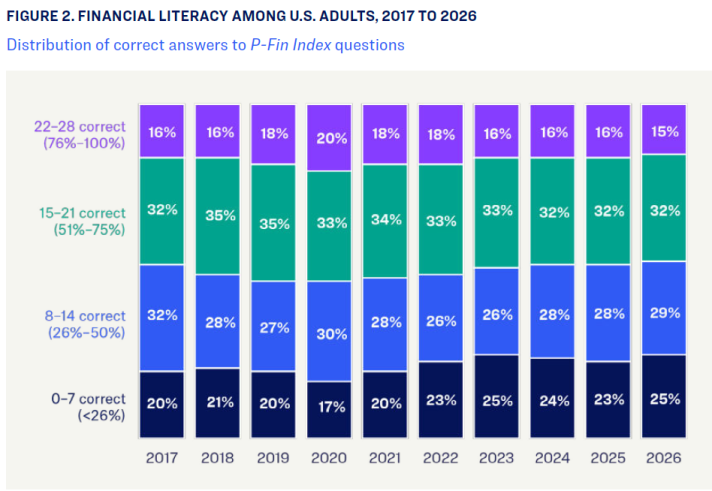
For these eight questions, about half or less answered correctly—a rate that hasn’t changed much in ten years. Here is a breakdown of scores on the 28-question version of the test over the last decade. In a more detailed breakdown, some groups do better than others—for example, older people tend to do better—but no particular subgroup is covered in glory.
In the modern US economy, people have access to a wide range of financial decisions. Here is a short list. Do you systematically review your household budget and set some priorities, or is the money just lost? How much credit card debt do you owe each month? Under what circumstances is college tuition a good long-term investment? When buying a car, new vs old, and borrowing, paying cash, or leasing? How to find a bank that pays higher interest? What is your credit score and how does it affect your choices? Is gambling a fun way to spend some money on entertainment, or a plan to build wealth? How big of a home mortgage should you take out? Should you buy life insurance, or long-term care insurance? How much should you put in your retirement account—and in what account? How do savings intended for short-term use or emergency funds compare to savings for medium-term use, or savings for long-term retirement? At what age should you start receiving Social Security benefits? Are you opting out of traditional Medicare in favor of a Medicare Advantage plan? After retirement, how much should you withdraw from your retirement account each year?
This question has no right answer. But those answers can have real consequences, and if you can’t answer a basic financial literacy question, your chances of answering the question in the way that works best for you aren’t good. Those with financial literacy report spending less time worrying about financial questions—and with good reason for doing so. Knowing how to help people make informed personal financial decisions, from high school and college classes and through the major financial decision-making nodes that life brings, is an underrated social opportunity.
Post Financial Literacy: How Many Can Pass the Test? first appeared in Conversable Economist.