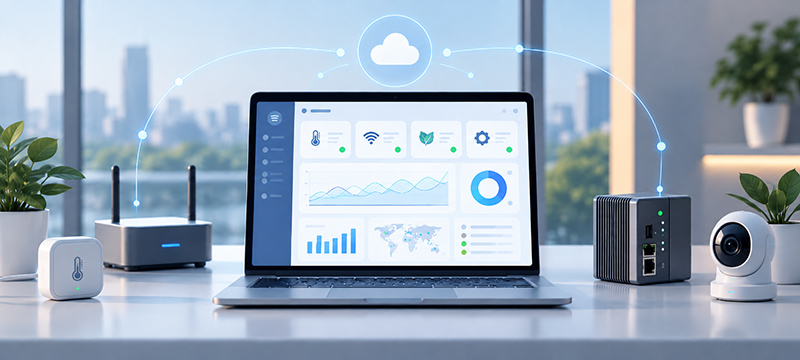
Technology can be sophisticated without making brands hard to understand. For businesses built around IoT, connected devices, sensors, automation, and datathe important difference. Potential customers may appreciate your technical ability, but still want a clear answer to a simple question: what problem do you solve?
From messaging and website structure to security transparency and educational content, every touchpoint should help customers understand what the technology does and why it matters.
Lead With Problems, Not Technology
IoT and connected technology businesses naturally want to talk about what they’ve built. The challenge is that potential customers usually come with different priorities: what can they do?
Instead of opening with technical terminology, start with practical results. Connected systems can help reduce equipment downtime, improve inventory visibility, automate monitoring, or identify problems earlier. The benefit is providing context before the technical details appear.
This does not mean removing technical depth. This means organizing information in the order people want it to be.
A homepage can communicate key values clearly, while product pages, documentation, and technical resources provide more detail for visitors who need it.
When the central message remains consistent across these touch points, the brand becomes easier to understand and remember.
Provide a Credible Digital Home Brand
Websites are often where potential customers decide whether an IoT technology business deserves more attention.
That first impression depends on more than appearance. Visitors should be able to understand the product, explore relevant applications, find technical information, and determine what to do next without struggling through complex navigation.
The web address also contributes to the experience. Securing your domain registration early can help you create a clean and memorable address on your website, branded emails, marketing materials, and other digital channels.
Keep your domain as close to your brand identity as practical. Numbers, punctuation, or unnecessary extra words can make your professional presence harder to remember.
A polished digital identity starts with reducing friction where possible.
Turning Capabilities into Real-World IoT Stories
Claims such as “increasing efficiency” or “changing operations” are easy to make and difficult to evaluate.
Real-world examples are more useful.
Show how the technology fits into your actual workflow. Explain what happened before the implementation, the connected system changes, and what the user can see or control.
Businesses that offer remote monitoring, for example, can show how alerts can help teams spot abnormal conditions. Other systems may show how connected sensors reduce the need for manual inspection.
Case studies, diagrams, screenshots, product demonstrations, and measured results can all help potential buyers visualize the technology in their own environment.
Specificity builds credibility because it replaces broad promises with ones that people can scrutinize.
Make Security Part of the Trust Story
Connected technologies introduce questions about data, access, authentication, updates, and device integrity. Ignoring these concerns in public-facing communications can leave important gaps in the brand story.
That’s why security deserves more than vague claims that a platform is “secure.” It explains good practice in understandable language and provides more in-depth technical information to buyers who need it.
As connected systems become more complex, maintaining the trust and identity of IoT devices may include considerations throughout the device lifecycle rather than just during use.
Tech businesses don’t need to deal with every visitor with a security architecture on their homepage. Instead, it should make information about data protection, device management, updates, and support easy to find.
Transparency can be part of the brand itself.
Use Content to Make IoT Complexity Easier
Useful content can demonstrate expertise without repeatedly telling visitors how innovative the company is.
Start with the questions your customers are asking. How difficult is deployment? What happens when connectivity goes down? How is the device updated? What is the difference between local and cloud processing? How can technology integrate with existing systems?
These questions can be articles, videos, explanations, diagrams, FAQs, or short guides.
The best content makes complex decisions easier. It should help readers understand the tradeoffs instead of just pushing each topic into a sales pitch.
Over time, a library of useful educational materials can also support sales conversations. Instead of explaining the same concepts from scratch during every discussion, teams have clear resources they can point to when customers need additional context.
Keep the Visual System Simple
Technical material can become very visual quickly.
Dashboards, architectural diagrams, product images, device images, charts, and specifications may compete for attention. A consistent visual system helps organize the information.
Use typography, spacing, imagery, diagrams, and page layouts consistently across your website and supporting materials. The goal is not to make everything minimalist for its own sake. It is to make complex information easier to follow.
The same visual identity should be carried over to presentations, social content, documentation, newsletters, and other customer-facing materials.
Consistency creates familiarity, and familiarity can make a growing brand more established.
Let Security Strengthen Credibility
Security is not only in the technical documentation that customers find after a few meetings.
For IoT and connected technology businesses, the way security is communicated can influence how the wider brand is perceived. Clear policies, responsible data practices, and clear explanations of protections can demonstrate that security is viewed as an ongoing responsibility.
That’s important because cybersecurity can contribute to brand trust when customers can see that the systems and information they protect are taken seriously.
Don’t turn this into exaggerated marketing. Safety claims must be specific enough to support belief without promising that risk can be eliminated entirely.
Credibility often comes from explaining what you do rather than relying on reassuring adjectives.
Put the People Behind the Technology
Even the most technical businesses benefit from showing the people who design, build, support, and use their products.
Team insights, product demonstrations, implementation stories, customer experiences, and behind-the-scenes development updates can make your brand more tangible.
Social proof can also help. Customer stories, measurable project results, certifications, partnerships, and other verifiable signals give potential buyers more context when evaluating an unfamiliar business.
Early-stage companies may not have a collection of major case studies. That’s good. Helpful technical insights, transparent product updates, and insightful explanations still demonstrate knowledge and momentum without overachieving.
Keep the Brand as Connected as the Product
Digital brands must evolve as technology and business evolve.
Periodically review the website for outdated product information, outdated images, inconsistent messaging, and pages that do not reflect how customers use the technology. Pay attention to the questions prospects repeatedly ask as well. These questions can reveal information that the website cannot communicate with.
Analytics can provide another valuable perspective. Pages that get attention, resources that support questions, and the point at which visitors leave can all help refine the experience.
Ultimately, a strong IoT technology brand doesn’t need to make complex systems look simple by hiding their sophistication. It is necessary to create a known value.
Clear messaging, meaningful evidence, thoughtful design, visible security practices, and consistent communication can turn technical capabilities into recognized and trusted customers. When these elements work together, the brand becomes more recognizable before potential buyers ask for a demonstration.