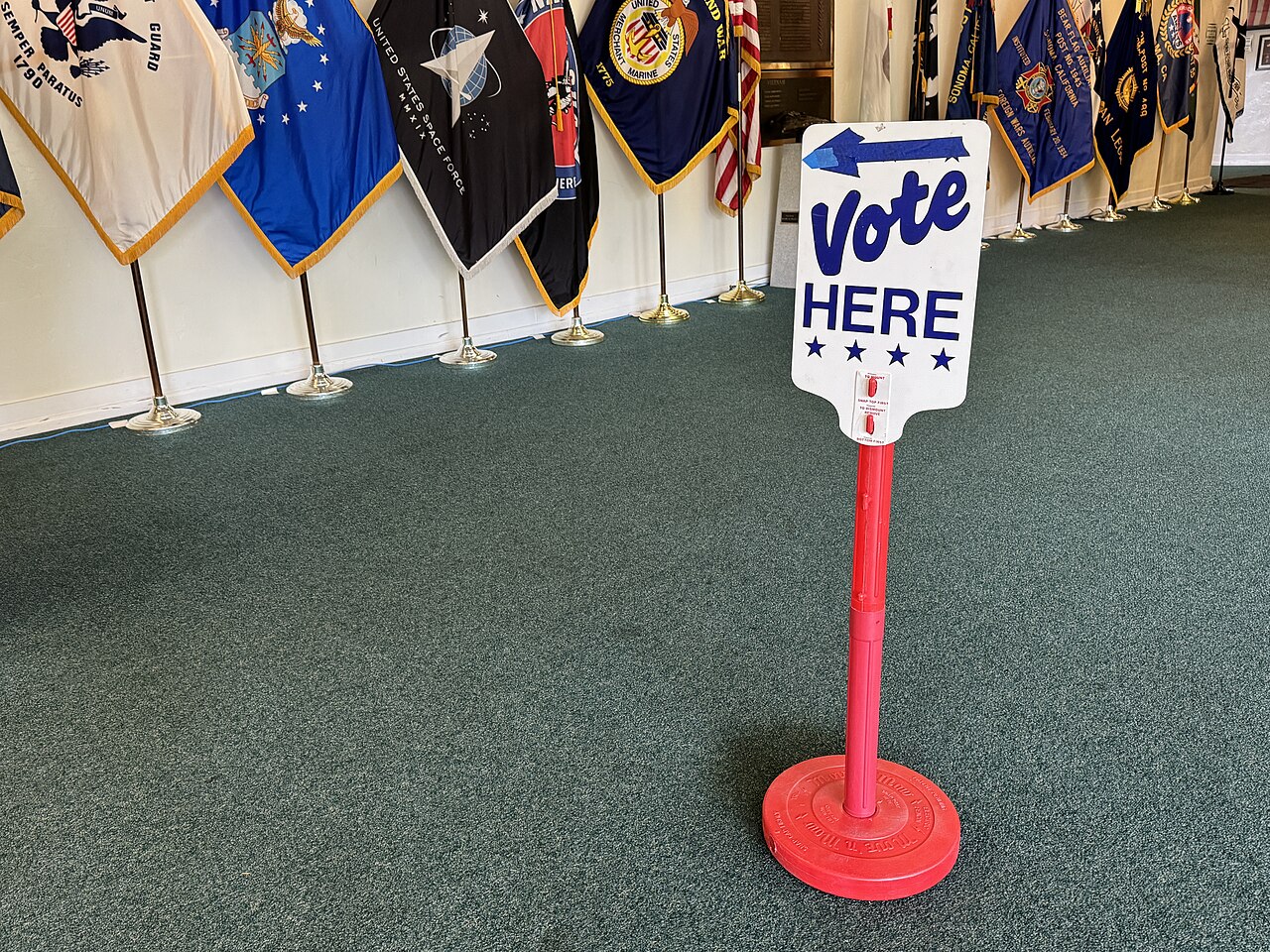
How much influence does the referendum have?
The data center industry will probably soon find out.
While much of the election buzz in Chicago has centered on the important mayoral election in February, across the country, the November election cycle will give voters in some municipalities another tool to potentially stymie the development of data centers in Illinois.
Although these measures are advisory and technically impossible to implement if passed – this is not an official moratorium, and politicians can still choose to reject public opinion and allow the development of data centers – it shows the increasingly tangled web of regulation, power concerns and opposition that have begun to surround the cash cow of commercial real estate in Illinois.
Wikimedia Commons/Missvain
Community pushback is scuttling projects in Illinois and across the country. At least 45 data center projects were scrapped nationwide in the second quarter after residents protested — more than half of all proposed developments.
“We have a pretty good sense just by looking at the polls from around the country what the numbers look like, and I think that will give us a sense of where we need to do our work,” said Brad Tietz, director of government affairs-Midwest for the Data Center Coalition.
Some communities that have data center referendums are not places where developers want to be, he said.
Voters in four cities in Madison County have an advisory vote on the construction and operation of a data center on the ballot in November: Chouteau, Granite City, Nameoki and Venice. Joliet residents and voters in Morgan County face the same advisory question.
In Bloomington, about an hour north of the state capital in Springfield, voters will consider whether to impose a moratorium on large-scale data centers in the city. The measure did not specify the length of the potential moratorium, according to WGLT.org.
Data centers have been at the heart of election campaigns across the country, with candidates and outside groups spending $86.5M on ads mentioning data centers — almost always negatively — between July and early October. Several Illinois politicians, including Chicago Mayor Brandon Johnson, have been vocal in their opposition to the asset class.
A spring poll of 800 likely 2026 voters from the Illinois Clean Jobs Coalition showed that 68% of respondents support regulations on data centers and 11% are undecided. More than half of the 21% opposed the regulation because they wanted no new data centers built.
Zoning rights are influenced by public pushback and are a “huge component” of site selection for data center development today, said Andy Cvengros, JLL’s executive director and leader of the US data center market team. A large swath of buyers Cvengros works with does not even consider sites where zoning is uncertain, he said.
“Sites that really have no path and no local support for the data center, you see a lot of reputable groups just kind of pass on, unless there is a serious power story for it makes sense,” Cvengros said.
Illinois has lagged behind other states in data center investment.
The country added more than 647 megawatts of capacity between the first half of 2021 and the first half of 2026, an investment of about $16B, according to JLL. In comparison, Virginia added more than 6,068 MW of capacity in the period, an investment of $151B, and Texas more than 7,512 MW equal to an investment of about $188B.
Cvengros said data center investment has shifted to neighboring states as hyperscalers have argued over the creation of regulatory laws in Springfield and Illinois’ long-standing privacy law that exposes them to potential liability.
“You see a ton of investment interest in northern Indiana, from east to west, a whole bunch of projects going there that are legitimate and real, hyperscaler-made. You see the same thing in southeastern Wisconsin,” Cvengros. “Illinois seems to be kind of ‘unless you have to be here’. It’s hard to keep growing on a large scale.”
The Illinois Legislature has been working on the Power Act, a bill that would require data center companies to pay for their own energy and track and report water usage, though the legislation has yet to pass. The country’s Biometric Information Privacy Act, commonly referred to as BIPA, has been on the books for nearly two decades, but strict requirements on data collection and lawsuits have deterred some data center hyperscalers, Cvengros and Tietz said.
The BIPA legislation drove at least two major hyperscalers to other states and killed a planned expansion in Illinois, Cvengros said.
Nearly a dozen states, including Illinois, have paused or canceled data center incentives since April. Earlier this summer, Governor JB Pritzker paused the 2019 program aimed at encouraging the development of data centers through tax breaks, abatement Cvengros said could make a difference in the selection of sites to the tune of hundreds of millions of dollars.
The combined forces of the public referendum, the energy readiness question, BIPA and the possibility of an upcoming omnibus package to regulate the industry are hurting Illinois’ already shaky data center sector, Tietz said.
He said the DCC’s attempt to create a statewide framework that was eventually passed did not stop the industry from continuing to ship to other states.
“The rhetoric, the opposition, layered on top of there is a very challenging regulatory environment in Illinois, companies that choose with their feet, and are building in neighboring states,” Tietz said.